


Computational analysis on verbal fluency reveals heterogeneity in subjective language interests and brain structure
- PMID: 38606311
- PMCID: PMC7615821
- DOI: 10.1016/j.ynirp.2023.100159
Computational analysis on verbal fluency reveals heterogeneity in subjective language interests and brain structure
Abstract
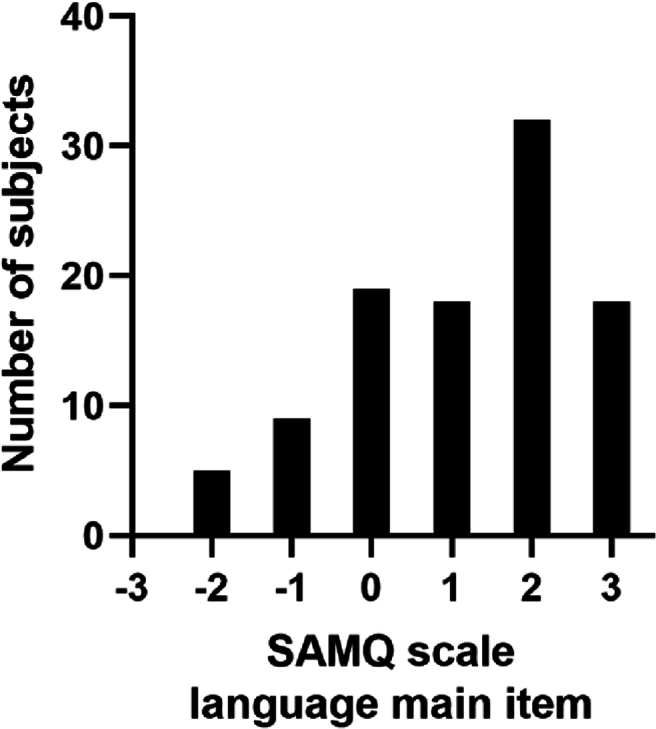
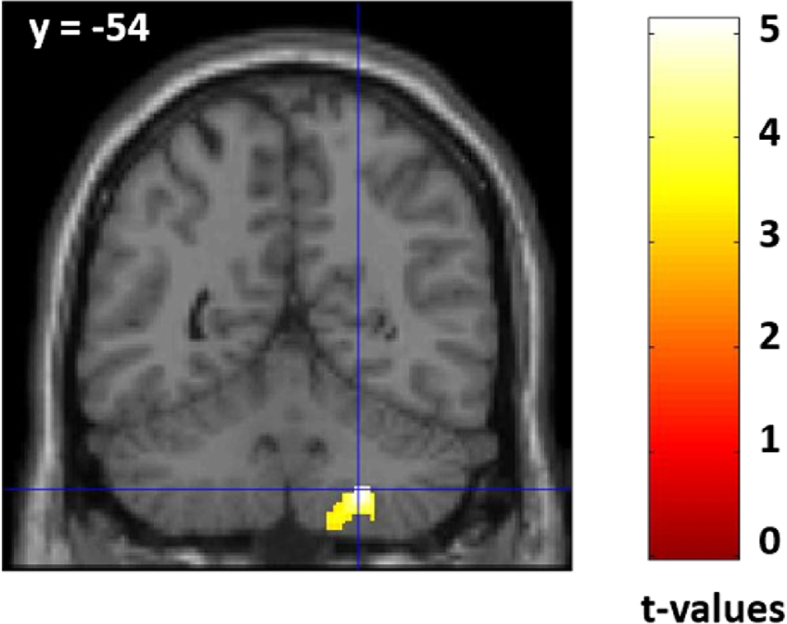
Language is an essential higher cognitive function in humans and is often affected by psychiatric and neurological disorders. Objective measures like the verbal fluency test are often used to determine language dysfunction. Recent applications of computational approaches broaden insights into language-related functions. In addition, individuals diagnosed with a psychiatric or neurological disorder also often report subjective difficulties in language-related functions. Therefore, we investigated the association between objective and subjective measures of language functioning, on the one hand, and inter-individual structural variations in language-related brain areas, on the other hand. We performed a Latent Semantic analysis (LSA) on a semantic verbal fluency task in 101 healthy adult participants. To investigate if these objective measures are associated with a subjective one, we examined assessed subjective natural tendency of interest in language-related activity with a study-specific questionnaire. Lastly, a voxel-based brain morphometry (VBM) was conducted to reveal associations between objective (LSA) measures and structural changes in language-related brain areas. We found a positive correlation between the LSA measure cosine similarity and the subjective interest in language. Furthermore, we found that higher cosine similarity corresponds to higher gray matter volume in the right cerebellum. The results suggest that people with higher interests in language access semantic knowledge in a more organized way exhibited by higher cosine similarity and have larger grey matter volume in the right cerebellum, when compared to people with lower interests. In conclusion, we demonstrate that there is inter-individual diverseness of accessing the semantic knowledge space and that it is associated with subjective language interests as well as structural differences in the right cerebellum.
Keywords: Healthy Cohort; LSA; Language; SyNoPsis; VBM; computational analysis; psychosis.
Conflict of interest statement
8 Conflict of Interest We, the authors, have no conflict of Interest to declare.
Figures
References
-
- Ashburner J., Friston K.J. Voxel-based morphometry—the methods. Neuroimage. 2000;11(6):805–821. - PubMed
-
- Berwick R.C., Friederici A.D., Chomsky N., Bolhuis J.J. Evolution, brain, and the nature of language. Trends Cognit. Sci. 2013;17(2):89–98. - PubMed
-
- Cavelti M., Kircher T., Nagels A., Strik W., Homan P. Is formal thought disorder in schizophrenia related to structural and functional aberrations in the language network? A systematic review of neuroimaging findings. Schizophr. Res. 2018;199:2–16. - PubMed