. 2022 Aug 30;1(1):10.
doi: 10.1038/s44184-022-00009-4.

Psychiatrically relevant signatures of domain-general decision-making and metacognition in the general population

Affiliations

Psychiatrically relevant signatures of domain-general decision-making and metacognition in the general population

Christopher S Y Benwell et al. Npj Ment Health Res. .

Abstract

Human behaviours are guided by how confident we feel in our abilities. When confidence does not reflect objective performance, this can impact critical adaptive functions and impair life quality. Distorted decision-making and confidence have been associated with mental health problems. Here, utilising advances in computational and transdiagnostic psychiatry, we sought to map relationships between psychopathology and both decision-making and confidence in the general population across two online studies (N's = 344 and 473, respectively). The results revealed dissociable decision-making and confidence signatures related to distinct symptom dimensions. A dimension characterised by compulsivity and intrusive thoughts was found to be associated with reduced objective accuracy but, paradoxically, increased absolute confidence, whereas a dimension characterized by anxiety and depression was associated with systematically low confidence in the absence of impairments in objective accuracy. These relationships replicated across both studies and distinct cognitive domains (perception and general knowledge), suggesting that they are reliable and domain general. Additionally, whereas Big-5 personality traits also predicted objective task performance, only symptom dimensions related to subjective confidence. Domain-general signatures of decision-making and metacognition characterise distinct psychological dispositions and psychopathology in the general population and implicate confidence as a central component of mental health.


Conflict of interest statement

The authors declare no competing interests.

Figures
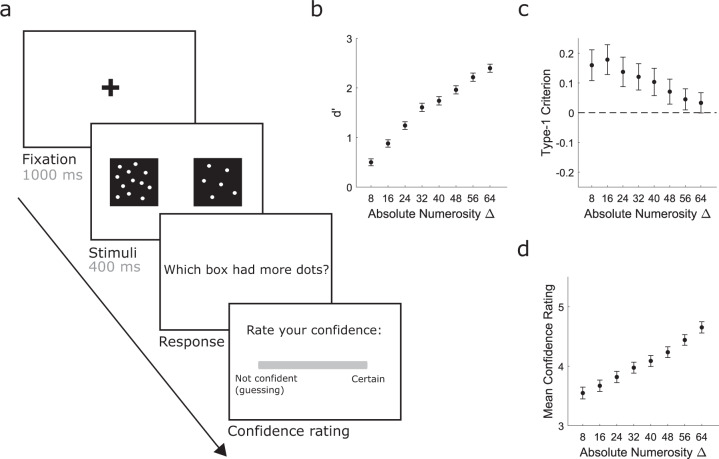
Fig. 1
Fig. 1. Perceptual decision-making task and behaviour in experiment 1 (n = 344).
a Perceptual task. On each trial, participants judged which box (left or right) contained the higher number of dots and provided a confidence rating in each decision (scale of 1–6, where 1 represented “not confident (guessing)” and 6 represented “certain”). b As expected, group-averaged d’ increased as a function of absolute numerosity difference. c Group-averaged type-1 c’ were biased towards ‘left more numerous’ responses across all evidence levels and were significantly different to 0 for all numerosity differences up to 56 dots (all p’s < .014), but not for the easiest 64 dot difference condition (p = .06). This leftward bias may reflect either the pseudoneglect phenomenon, whereby neurotypical individuals tend to judge stimuli presented in the left visual field as more salient than comparable stimuli in the right visual field, and/or a motor-response bias. d Group-averaged overall mean confidence ratings increased as a function of evidence strength. All error bars reflect 95% confidence intervals for the mean.
Fig. 2
Fig. 2. Associations between 1st- and 2nd-order decision parameters and self-reported psychopathology, additionally controlling for the influence of age and gender, in experiment 1.
a Associations between psychiatric symptom questionnaire scores and Meta-d’ parameters from separate regression models. Given that all variables were z-scored prior to entry into the regression models, the y-axis indicates the change in each decision parameter (in standard deviations) for each change of 1 standard deviation of questionnaire scores. Accuracy = d', Metacognitive sensitivity = meta-d', Metacognitive efficiency = log(meta-d'/d'). b In line with previous studies,, factor analysis on the correlation matrix of all 209 questionnaire items revealed a three-factor solution comprising anxious-depression (AD), compulsive behaviour and intrusive thought (CIT) and social withdrawal (SW). The relationships between these transdiagnostic symptom dimension scores and Meta-d’ parameters were investigated using multiple regression models. CIT showed negative relationships with both 1st-order accuracy and confidence criteria, whereas AD showed a positive relationship with confidence criteria. All error bars denote 95% Confidence Intervals for the regression coefficients. °P < 0.05 uncorrected; **P < 0.05 Bonferroni corrected for multiple comparisons over the number of dependent variables tested.
Fig. 3
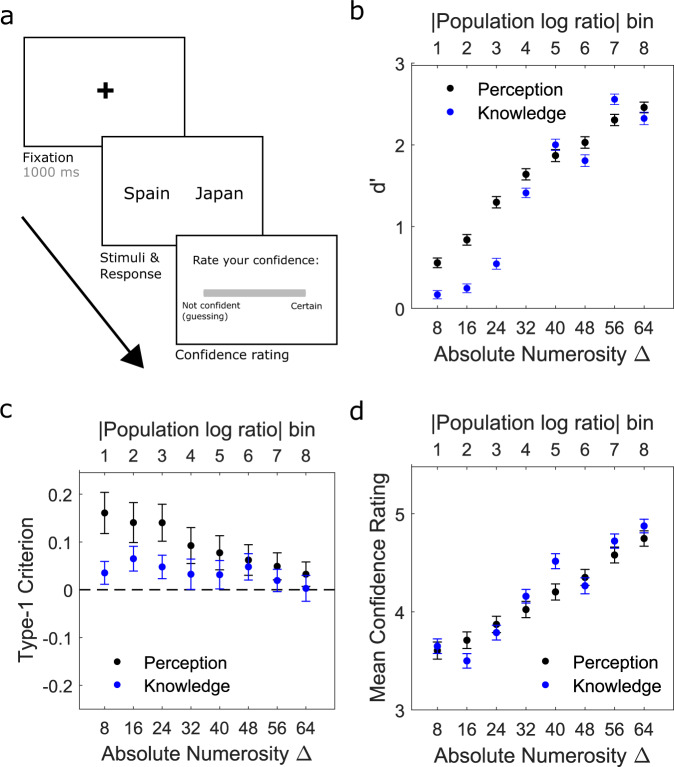
Fig. 3. Knowledge decision-making task and behaviour in study 2 (n = 473).
a In addition to the perception task, participants also completed a task which tested knowledge of national populations. On each trial, participants judged which of two countries had the higher human population and provided a confidence rating (scale of 1–6, where 1 represented “not confident (guessing)” and 6 represented “certain”). Eight evidence discriminability bins were created by grouping pairs of countries with similar population log ratios. The log ratio bins amounted to the following, ranging from least to most discriminable: bin 1 (log10 ratio = 0–0.225), bin 2 = (0.225–0.45), bin 3 (0.45–0.675), bin 4 = (0.675–0.9), bin 5 (0.9–1.125), bin 6 = (1.125–1.35), bin 7 (1.35–1.575), bin 8 = (1.575–1.8). b In both tasks, group-averaged d’ increased as a function of evidence strength. c The systematic type-1 leftward biases (here indexed by the mean type-1 c’) decreased as a function of evidence level for both tasks but were systematically stronger for the perceptual task. d Group-averaged overall mean confidence ratings increased as a function of evidence strength. All error bars reflect 95% confidence intervals for the mean.
Fig. 4
Fig. 4. Between-task comparisons of overall performance.
The data are shown for (a) type-1 accuracy (d'), (b) metacognitive sensitivity (meta-d’), (c) metacognitive efficiency (meta-d’/d’), (d) criterion (type-1 c’) and (e) type-2 criterion (confidence c'). On each box, the central line is the median, the edges of the box are the 25th and 75th percentiles, and the whiskers extend ±2.7 standard deviations from the median. *P < 0.05, **P < 0.01.
Fig. 5
Fig. 5. Between-participant Pearson correlations across the two tasks.
Data are plotted for overall (a) type-1 accuracy (d'), (b) metacognitive sensitivity (meta-d'), (c) metacognitive efficiency (meta-d'/d'), (d) criterion (type-1 c') and (e) type-2 criterion (confidence c'). *P < 0.05, **P < 0.01.
Fig. 6
Fig. 6. Associations between 1st- and 2nd-order decision parameters and self-reported psychopathology, additionally controlling for age and gender, in experiment 2.
a Associations between psychiatric symptom questionnaire scores and perceptual Meta-d’ parameters. Given that all variables were z-scored prior to entry into the regression models, the y-axis indicates the change in each decision parameter (in standard deviations) for each change of 1 standard deviation of questionnaire scores. Accuracy = d', Metacognitive sensitivity = meta-d', Metacognitive efficiency = log(meta-d'/d'). b Associations between transdiagnostic symptom dimension scores and perceptual Meta-d' parameters. c Associations between psychiatric symptom questionnaire scores and knowledge Meta-d’ parameters. d Associations between transdiagnostic symptom dimension scores and knowledge Meta-d' parameters. All error bars denote 95% Confidence Intervals for the regression coefficients. °P < 0.05 uncorrected; **P < 0.05 corrected for multiple comparisons over the number of dependent variables tested.
Fig. 7
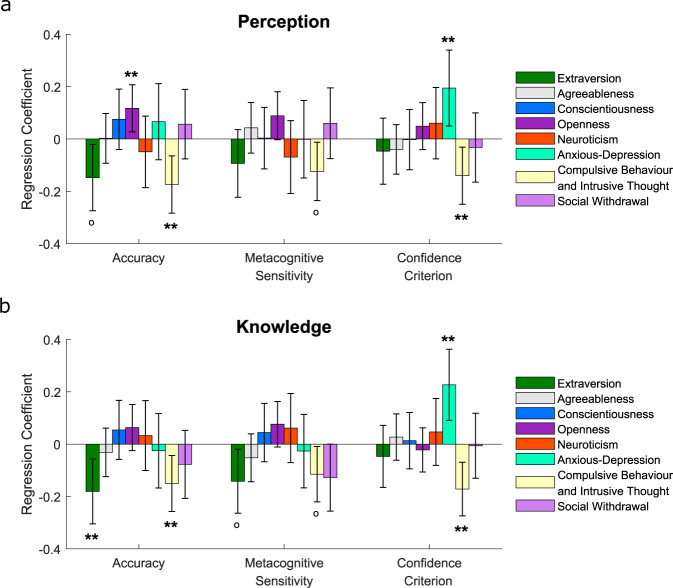
Fig. 7. Associations between 1st- and 2nd-order decision parameters and both self-reported personality traits and symptom dimensions, controlling for age and gender, in experiment 2.
Data are plotted separately for the (a) perception and (b) knowledge tasks. Note that these analyses were only performed for d', meta-d’ and confidence c' as no relationships were found with metacognitive efficiency (meta-d'/d') for any of the symptom or personality dimensions when tested alone. All error bars denote 95% Confidence Intervals for the regression coefficients. °P < 0.05 uncorrected; **P < 0.05 corrected for multiple comparisons over the number of dependent variables tested.
Fig. 8
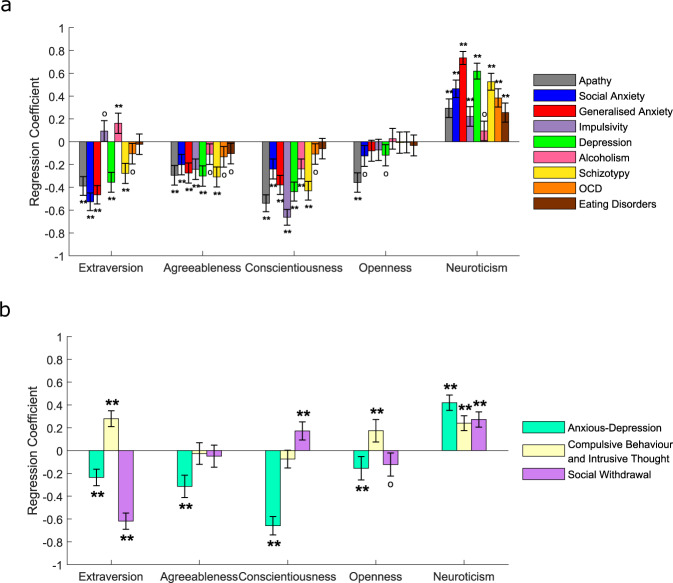
Fig. 8. Widespread associations between self-reported personality traits and psychopathology, controlling for the influence of age and gender.
a Associations between psychiatric symptom questionnaire scores and personality dimension scores from separate regression models. The y-axis indicates the change in each personality dimension score for each change of 1 standard deviation of questionnaire scores. b Associations between transdiagnostic symptom dimension scores and personality dimension scores. All error bars denote 95% Confidence Intervals for the regression coefficients. °P < 0.05 uncorrected; **P < 0.05 corrected for multiple comparisons over the number of dependent variables tested.

References

    1. Shekhar M, Rahnev D. Sources of metacognitive inefficiency. Trends Cogn. Sci. 2021;25:12–23. doi: 10.1016/j.tics.2020.10.007. - DOI - PMC - PubMed
    1. Bahrami B, et al. What failure in collective decision-making tells us about metacognition. Philos. Trans. R. Soc. B Biol. Sci. 2012;367:1350–1365. doi: 10.1098/rstb.2011.0420. - DOI - PMC - PubMed
    1. Correa CMC, et al. How the level of reward awareness changes the computational and electrophysiological signatures of reinforcement learning. J. Neurosci. 2018;38:10338–10348. doi: 10.1523/JNEUROSCI.0457-18.2018. - DOI - PMC - PubMed
    1. van den Berg R, Zylberberg A, Kiani R, Shadlen MN, Wolpert DM. Confidence is the bridge between multi-stage decisions. Curr. Biol. 2016;26:3157–3168. doi: 10.1016/j.cub.2016.10.021. - DOI - PMC - PubMed
    1. Yeung N, Summerfield C. Metacognition in human decision-making: confidence and error monitoring. Philos. Trans. R. Soc. B Biol. Sci. 2012;367:1310–1321. doi: 10.1098/rstb.2011.0416. - DOI - PMC - PubMed