


Prenatal anaemia and risk of postpartum haemorrhage: a cohort analysis of data from the Predict-PPH study
- PMID: 38609913
- PMCID: PMC11015669
- DOI: 10.1186/s12889-024-18446-5
Prenatal anaemia and risk of postpartum haemorrhage: a cohort analysis of data from the Predict-PPH study
Abstract
Background: Most previous clinical studies investigating the connection between prenatal anaemia and postpartum haemorrhage (PPH) have reported conflicting results.
Objectives: We examined the association between maternal prenatal anaemia and the risk of PPH in a large cohort of healthy pregnant women in five health institutions in Lagos, Southwest Nigeria.
Methods: This was a prospective cohort analysis of data from the Predict-PPH study that was conducted between January and June 2023. The study enrolled n = 1222 healthy pregnant women giving birth in five hospitals in Lagos, Nigeria. The study outcome, WHO-defined PPH, is postpartum blood loss of at least 500 milliliters. We used a multivariable logistic regression model with a backward stepwise conditional approach to examine the association between prenatal anaemia of increasing severity and PPH while adjusting for confounding factors.
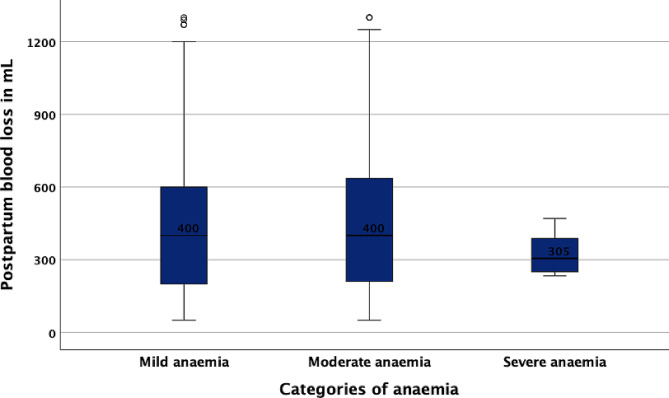
Results: Of the 1222 women recruited to the Predict-PPH study between January and June 2023, 1189 (97·3%) had complete outcome data. Up to 570 (46.6%) of the enrolled women had prenatal anaemia while 442 (37.2%) of those with complete follow-up data had WHO-defined PPH. After controlling for potential confounding factors, maternal prenatal anaemia was independently associated with PPH (adjusted odds ratio = 1.37, 95% confidence interval: 1.05-1.79). However, on the elimination of interaction effects of coexisting uterine fibroids and mode of delivery on this association, a sensitivity analysis yielded a lack of significant association between prenatal anaemia and PPH (adjusted odds ratio = 1.27, 95% confidence interval: 0.99-1.64). We also recorded no statistically significant difference in the median postpartum blood loss in women across the different categories of anaemia (P = 0.131).
Conclusion: Our study revealed that prenatal anaemia was not significantly associated with PPH. These findings challenge the previously held belief of a suspected link between maternal anaemia and PPH. This unique evidence contrary to most previous studies suggests that other factors beyond prenatal anaemia may contribute more significantly to the occurrence of PPH. This highlights the importance of comprehensive assessment and consideration of various maternal health factors in predicting and preventing this life-threatening obstetric complication.
Keywords: Blood loss; Lagos; Predict-PPH; Prenatal anaemia; WHO-defined PPH.
© 2024. The Author(s).
Conflict of interest statement
The authors declare no competing interests.
Figures

References
-
- World Health Organization. WHO Recommendations for the Prevention of Postpartum Haemorrhage Department of Making Pregnancy Safer. 2018.
-
- Wormer KC, Jamil RT, Bryant SB. Acute Postpartum Hemorrhage. 2023. - PubMed
Publication types
MeSH terms
Substances
LinkOut - more resources
Full Text Sources
Medical
