


Alpha-fetoprotein: Past, present, and future
- PMID: 38619448
- PMCID: PMC11019827
- DOI: 10.1097/HC9.0000000000000422
Alpha-fetoprotein: Past, present, and future
Abstract
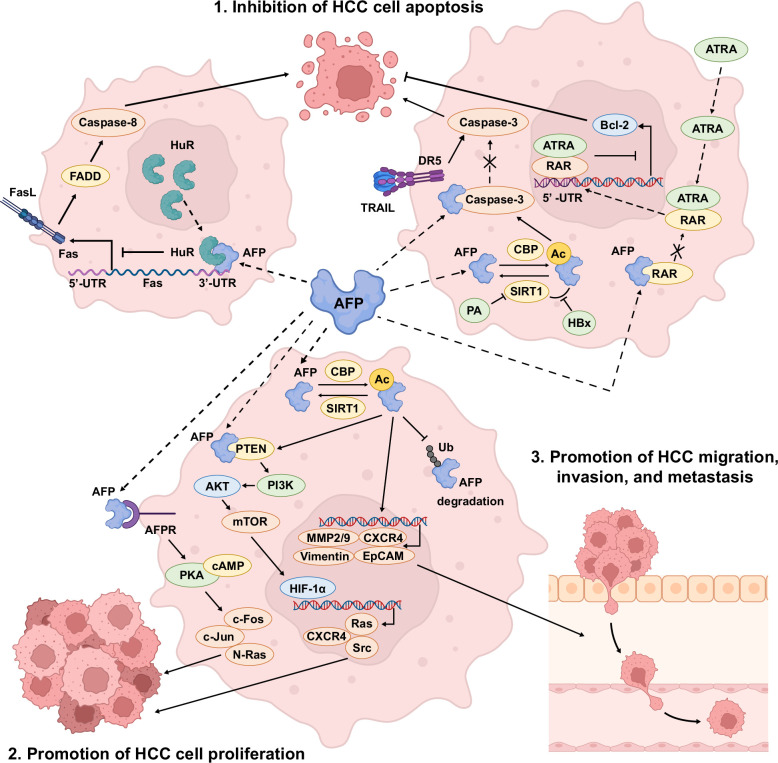
Alpha-fetoprotein (AFP) is a glycoprotein that plays an important role in immune regulation with critical involvement in early human development and maintaining the immune balance during pregnancy. Postfetal development, the regulatory mechanisms controlling AFP undergo a shift and AFP gene transcription is suppressed. Instead, these enhancers refocus their activity to maintain albumin gene transcription throughout adulthood. During the postnatal period, AFP expression can increase in the setting of hepatocyte injury, regeneration, and malignant transformation. It is the first oncoprotein discovered and is routinely used as part of a screening strategy for HCC. AFP has been shown to be a powerful prognostic biomarker, and multiple HCC prognosis models confirmed the independent prognostic utility of AFP. AFP is also a useful predictive biomarker for monitoring the treatment response of HCC. In addition to its role as a biomarker, AFP plays important roles in immune modulation to promote tumorigenesis and thus has been investigated as a therapeutic target in HCC. In this review article, we aim to provide an overview of AFP, encompassing the discovery, biological role, and utility as an HCC biomarker in combination with other biomarkers and how it impacts clinical practice and future direction.
Copyright © 2024 The Author(s). Published by Wolters Kluwer Health, Inc. on behalf of the American Association for the Study of Liver Diseases.
Conflict of interest statement
Ju Dong Yang consults for AstraZeneca, Eisai, Exact, Exelixis, Fujifilm Medical Sciences, and Merck. Vatche G. Agopian consults for Early Diagnostics and Eximius Diagnostics. Yazhen Zhu owns stock in Eximius Diagnostics. The remaining authors have no conflicts to report.
Figures
References
-
- Deutsch HF. Chemistry and biology of alpha-fetoprotein. Adv Cancer Res. 1991;56:253–312. - PubMed
-
- Nishi S. Isolation and characterization of a human fetal-alpha-globulin from the sera of fetuses and a hepatoma patient. Cancer Res. 1970;30:2507–2513. - PubMed
-
- Zizkovsky V, Strop P, Korcakova J, Havranová M, Mikes F. Fluorescence spectroscopy, fluorescence polarization, and circular dichroism in studies on pH-dependent changes in the alpha-fetoprotein molecule. Ann NY Acad Sci. 1983;417:49–56. - PubMed
-
- Kirkitadze MD, Narizhieva NV, Tomashevskiĭ A, Potekhin SA, Uverskiyiĭ VN. Stabilization of the alpha-fetoprotein structure with sucrose. Bioorg Khim. 1996;22:408–414. - PubMed
Publication types
MeSH terms
Substances
Grants and funding
LinkOut - more resources
Full Text Sources
Medical
Molecular Biology Databases
Miscellaneous
