


Applications of PLA in modern medicine
- PMID: 38620328
- PMCID: PMC7474829
- DOI: 10.1016/j.engreg.2020.08.002
Applications of PLA in modern medicine
Abstract
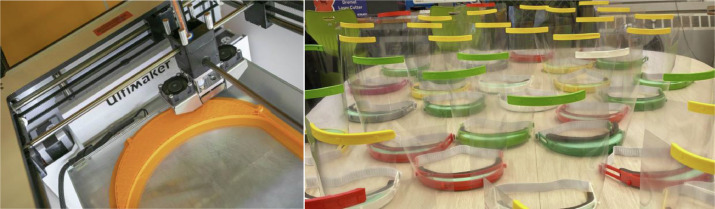
Polylactic acid (PLA) is a versatile biopolymer. PLA is synthesized with ease from abundant renewable resources and is biodegradable. PLA has shown promise as a biomaterial in a plethora of healthcare applications such as tissue engineering or regenerative medicine, cardiovascular implants, dental niches, drug carriers, orthopedic interventions, cancer therapy, skin and tendon healing, and lastly medical tools / equipment. PLA has demonstrated instrumental importance as a three-dimensionally (3D) printable biopolymer, which has further been bolstered by its role during the Coronavirus Disease of 2019 (Covid-19) global pandemic. As an abundant filament, PLA has created desperately needed personal protective equipment (PPE) and ventilator modifications. As polymer chemistry continues to advance, so too will the applications and continued efficacy of PLA-based modalities.
Keywords: Cancer therapy; Cardiovascular; Dental; Drug carriers; Orthopedics; Polylactic acid; Polymers; Tissue engineering; skin/tendon healing; surgical tools.
© 2020 The Authors. Publishing Services by Elsevier B.V. on behalf of KeAi Communications Co. Ltd.
Conflict of interest statement
The authors declare that they have no known competing financial interests or personal relationships that could have appeared to influence the work reported in this paper.
Figures
References
-
- O K. Constance; Germany: 2016. Market Study: Bioplastics (4th Edition)
-
- Jamshidian M, Tehrany EA, Imran M, Jacquot M, Desobry S. Poly-lactic acid: production, applications, nanocomposites, and release studies. Comprehens. Rev. Food Sci. Food Saf. 2010;9(5):552–571. - PubMed
-
- Farah S, Anderson DG, Langer R. Physical and mechanical properties of PLA, and their functions in widespread applications — a comprehensive review. Adv. Drug Deliv. Rev. 2016;107:367–392. - PubMed
-
- Perego G, Cella GD, Bastioli C. Effect of molecular weight and crystallinity on poly(lactic acid) mechanical properties. J. Appl. Polym. Sci. 1996;59(1):37–43.
-
- Hartmann MH. In: Biopolymers from Renewable Resources. Kaplan DL, editor. Springer Berlin Heidelberg; Berlin, Heidelberg: 1998. High molecular weight polylactic acid polymers; pp. 367–411.
LinkOut - more resources
Full Text Sources
Research Materials