


Understanding Transmission Dynamics of COVID-19-Type Infections by Direct Numerical Simulations of Cough/Sneeze Flows
- PMID: 38624374
- PMCID: PMC7268977
- DOI: 10.1007/s41403-020-00106-w
Understanding Transmission Dynamics of COVID-19-Type Infections by Direct Numerical Simulations of Cough/Sneeze Flows
Abstract
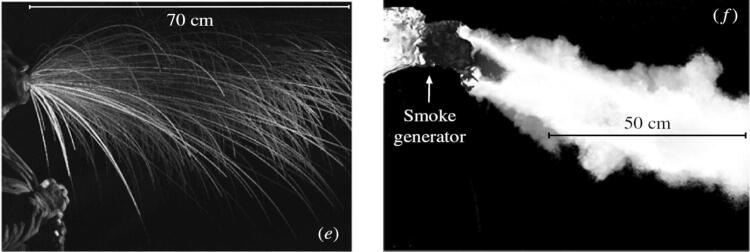
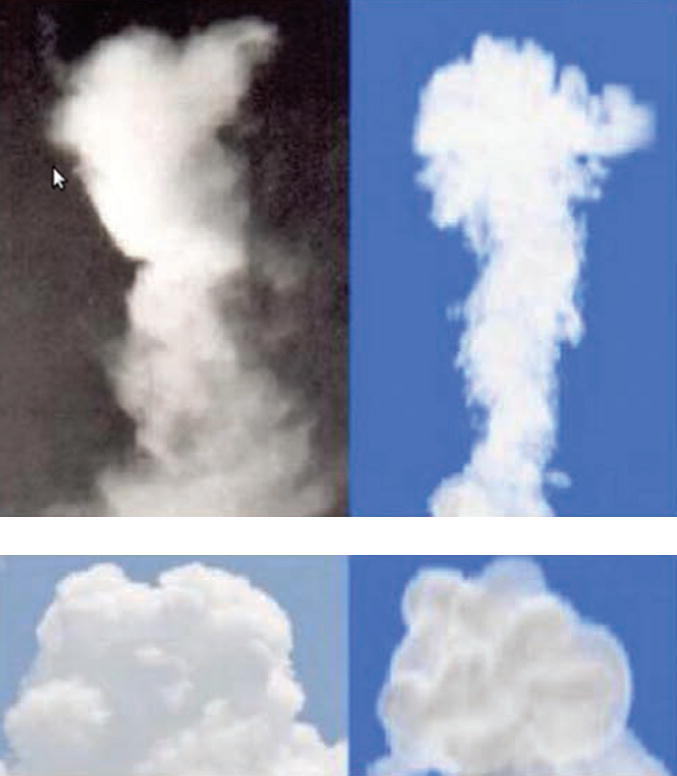
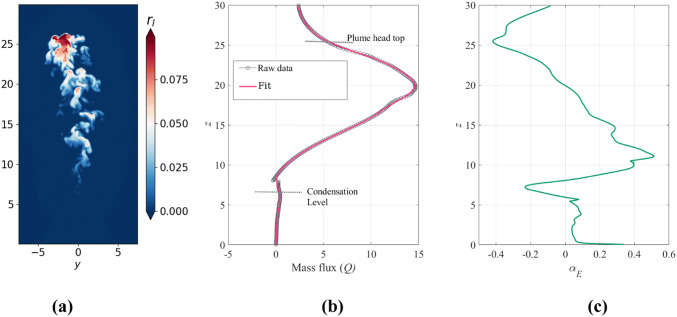
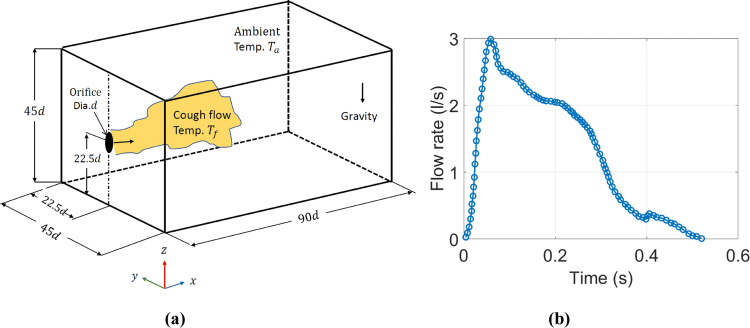
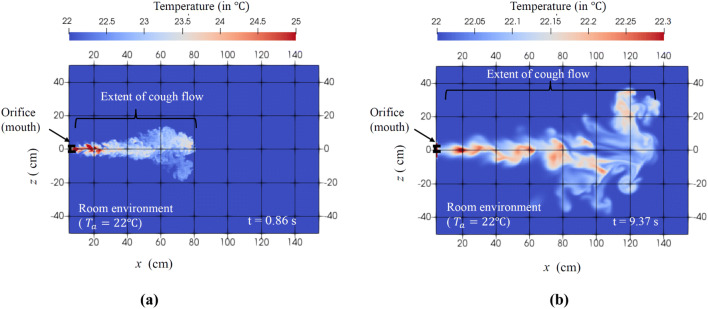
The transmission dynamics of highly contagious respiratory diseases like COVID-19 (through coughing/sneezing) is an open problem in the epidemiological studies of such diseases (Bourouiba, JAMA. https://doi.org/10.1001/jama.2020.4756. 2020). The problem is basically the fluid dynamics of a transient turbulent jet/puff with buoyancy, laden with evaporating droplets carrying the pathogen. A turbulent flow of this nature does not lend itself to reliable estimates through modeling approaches such as RANS (Reynolds-Averaged Navier-Stokes equations) or other droplet-based models. However, direct numerical simulations (DNS) of what may be called "cough/sneeze flows" can play an important role in understanding the spread of the contagion. The objective of this work is to develop a DNS code for studying cough/sneeze flows by a suitable combination of the DNS codes available with the authors (developed to study cumulus cloud flows including thermodynamics of phase change and the dynamics of small water droplets) and to generate useful data on these flows. Recent results from the cumulus cloud simulations are included to highlight the effect of turbulent entrainment (which is one of the key processes in determining the spread of the expiratory flows) on the distribution of liquid water content in a moist plume. Furthermore, preliminary results on the temperature distribution in a "dry cough" (i.e., without inclusion of liquid droplets) are reported to illustrate the large spatial extent and time duration over which the cough flow can persist after the coughing has stopped. We believe that simulations of this kind can help to devise more accurate guidelines for separation distances between neighbors in a group, design better masks, and minimize the spread of respiratory diseases of the COVID-19 type.
Keywords: COVID-19 infections; Cough/sneeze flow; Direct numerical simulation; Droplet thermodynamics; Transmission dynamics; Turbulent jet/puff.
© Indian National Academy of Engineering 2020.
Figures
References
-
- Bhat GS, Narasimha R (1996) A volumetrically heated jet: large-eddy structure and entrainment characteristics. J Fluid Mech 325:303–330 - DOI
-
- Bourouiba L, Dehandschoewercker E, Bush JWM (2014) Violent expiratory events: on coughing and sneezing. J Fluid Mech 745:537–563 - DOI
-
- Deepu P, Ravichandran S, Govindarajan R (2017) Caustics-induced coalescence of small droplets near a vortex. Phys Rev Fluids 2:024305 - DOI
LinkOut - more resources
Full Text Sources