


Modelling the impact of hybrid immunity on future COVID-19 epidemic waves
- PMID: 38627637
- PMCID: PMC11020923
- DOI: 10.1186/s12879-024-09282-4
Modelling the impact of hybrid immunity on future COVID-19 epidemic waves
Abstract
Background: Since the emergence of SARS-CoV-2 (COVID-19), there have been multiple waves of infection and multiple rounds of vaccination rollouts. Both prior infection and vaccination can prevent future infection and reduce severity of outcomes, combining to form hybrid immunity against COVID-19 at the individual and population level. Here, we explore how different combinations of hybrid immunity affect the size and severity of near-future Omicron waves.
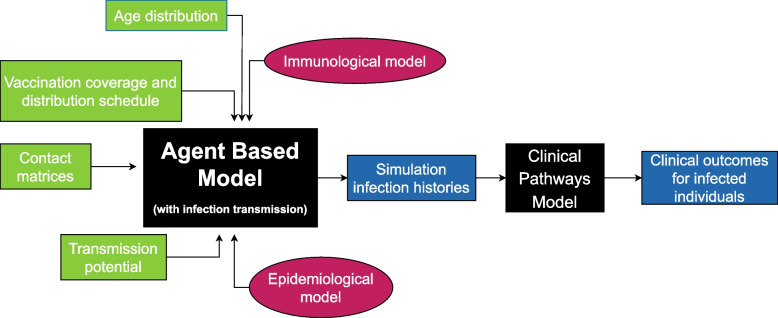
Methods: To investigate the role of hybrid immunity, we use an agent-based model of COVID-19 transmission with waning immunity to simulate outbreaks in populations with varied past attack rates and past vaccine coverages, basing the demographics and past histories on the World Health Organization Western Pacific Region.
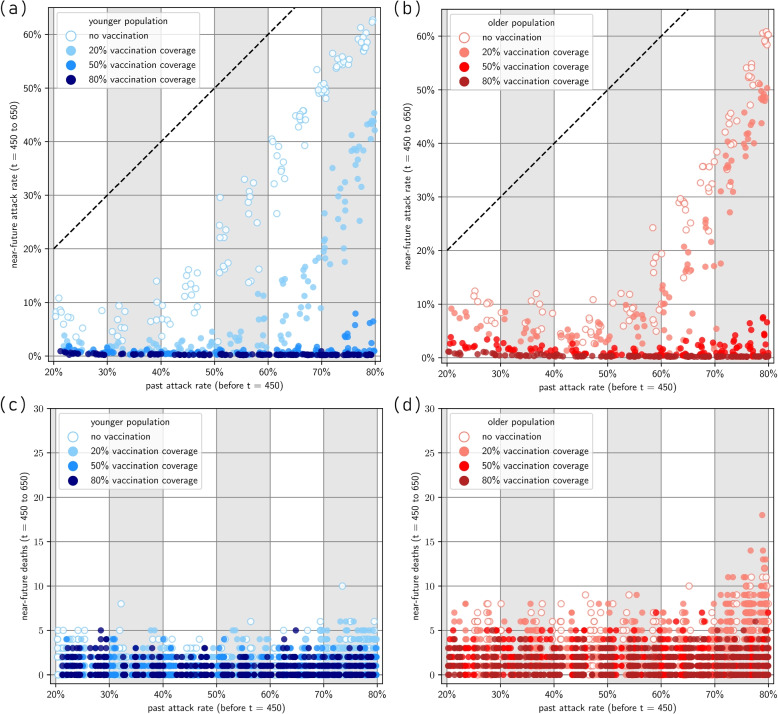
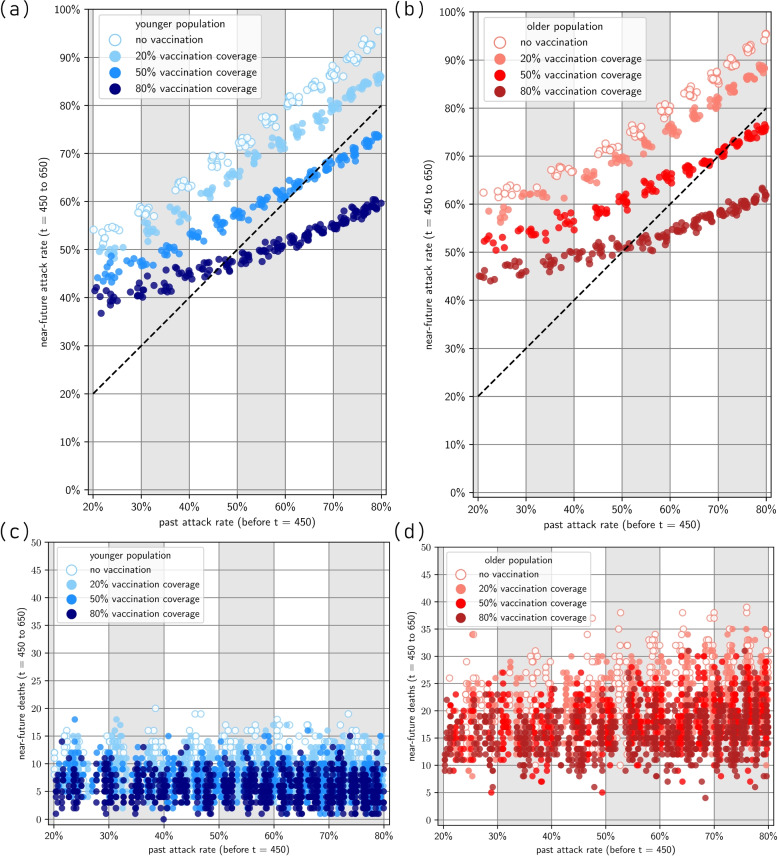
Results: We find that if the past infection immunity is high but vaccination levels are low, then the secondary outbreak with the same variant can occur within a few months after the first outbreak; meanwhile, high vaccination levels can suppress near-term outbreaks and delay the second wave. Additionally, hybrid immunity has limited impact on future COVID-19 waves with immune-escape variants.
Conclusions: Enhanced understanding of the interplay between infection and vaccine exposure can aid anticipation of future epidemic activity due to current and emergent variants, including the likely impact of responsive vaccine interventions.
Keywords: Epidemiology; Mathematical modelling; Vaccination; Variants.
© 2024. The Author(s).
Conflict of interest statement
The authors declare that they have no competing interests.
Figures


References
-
- World Health Organization. Tracking SARS-CoV-2 variants. https://www.who.int/activities/tracking-SARS-CoV-2-variants. Accessed 2022. - PubMed
-
- World Health Organization. WHO SAGE Roadmap for prioritizing uses of COVID-19 vaccines. 2022. WHO Reference Number: WHO/2019-nCoV/Vaccines/SAGE/Prioritization/2022.1. https://www.who.int/publications/i/item/WHO-2019-nCoV-Vaccines-SAGE-Prio....
-
- World Health Organization. Coronavirus disease (COVID-19) Weekly Epidemiological Update and Weekly Operational Update. 2023. https://www.who.int/emergencies/diseases/novel-coronavirus-2019/situatio....
-
- World Health Organization. Interim statement on hybrid immunity and increasing population seroprevalence rates. 2022. https://www.who.int/news/item/01-06-2022-interim-statement-on-hybrid-imm.... Accessed 10 Mar 2023.
MeSH terms
Substances
Grants and funding
- GNT1170960/Australian National Health and Medical Research Council
- GNT1170960/Australian National Health and Medical Research Council
- GNT1170960/Australian National Health and Medical Research Council
- GNT1170960/Australian National Health and Medical Research Council
- 2021/GNT2009278/Australian National Health and Medical Research Council
- GNT1170960/Australian National Health and Medical Research Council
- GNT1170960/Australian National Health and Medical Research Council
- 2022/GNT2009278/Australian National Health and Medical Research Council
- GNT1170960/Australian National Health and Medical Research Council
- GNT1170960/Australian National Health and Medical Research Council
LinkOut - more resources
Full Text Sources
Medical
Miscellaneous
