Aplasia cutis congenita type VII of the lower extremity: a favourable disease course with minimal conservative treatment
- PMID: 38631814
- PMCID: PMC11029262
- DOI: 10.1136/bcr-2023-257572
Aplasia cutis congenita type VII of the lower extremity: a favourable disease course with minimal conservative treatment
Abstract
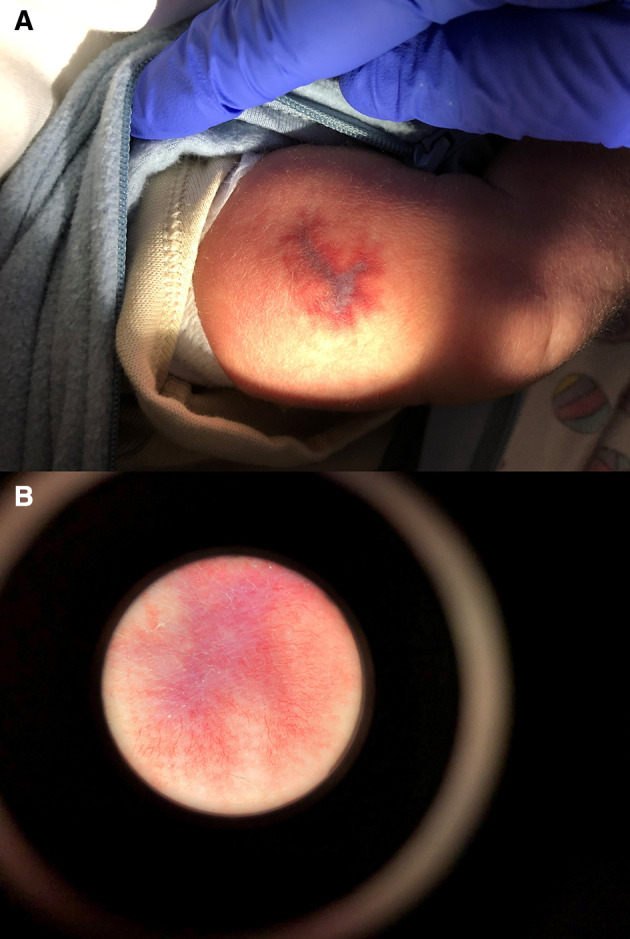
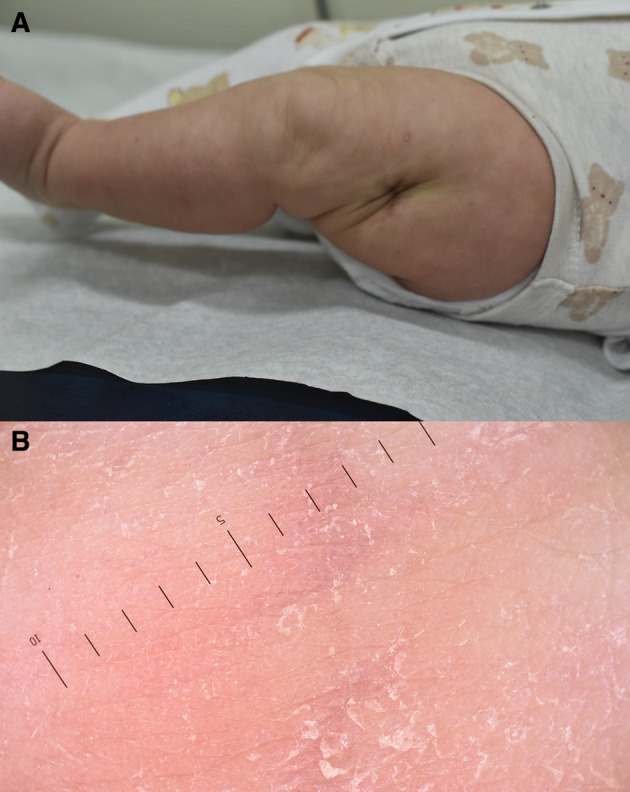
Aplasia cutis congenita (ACC) is a group of rare heterogeneous disorders characterised by absent areas of skin at birth. The majority of cases involve the scalp region. ACC limited to one lower limb is extremely rare. We report an usual case of ACC limited to the left thigh of which healing occurred in utero. The case was managed conservatively and the disease course has been favourable with no limitations in limb function and an entirely normal development. Most cases of ACC are self-healing, justifying a conservative approach. This holds further true for ACC limited to one lower limb where the majority of cases reported to date show a favourable disease course with minimal conservative treatment.
Keywords: Dermatological; Dermatology; Medical management; Skin.
© BMJ Publishing Group Limited 2024. Re-use permitted under CC BY-NC. No commercial re-use. See rights and permissions. Published by BMJ.
Conflict of interest statement
Competing interests: None declared.
Figures
References
Publication types
MeSH terms
LinkOut - more resources
Full Text Sources