


High visual salience of alert signals can lead to a counterintuitive increase of reaction times
- PMID: 38632303
- PMCID: PMC11024089
- DOI: 10.1038/s41598-024-58953-4
High visual salience of alert signals can lead to a counterintuitive increase of reaction times
Abstract
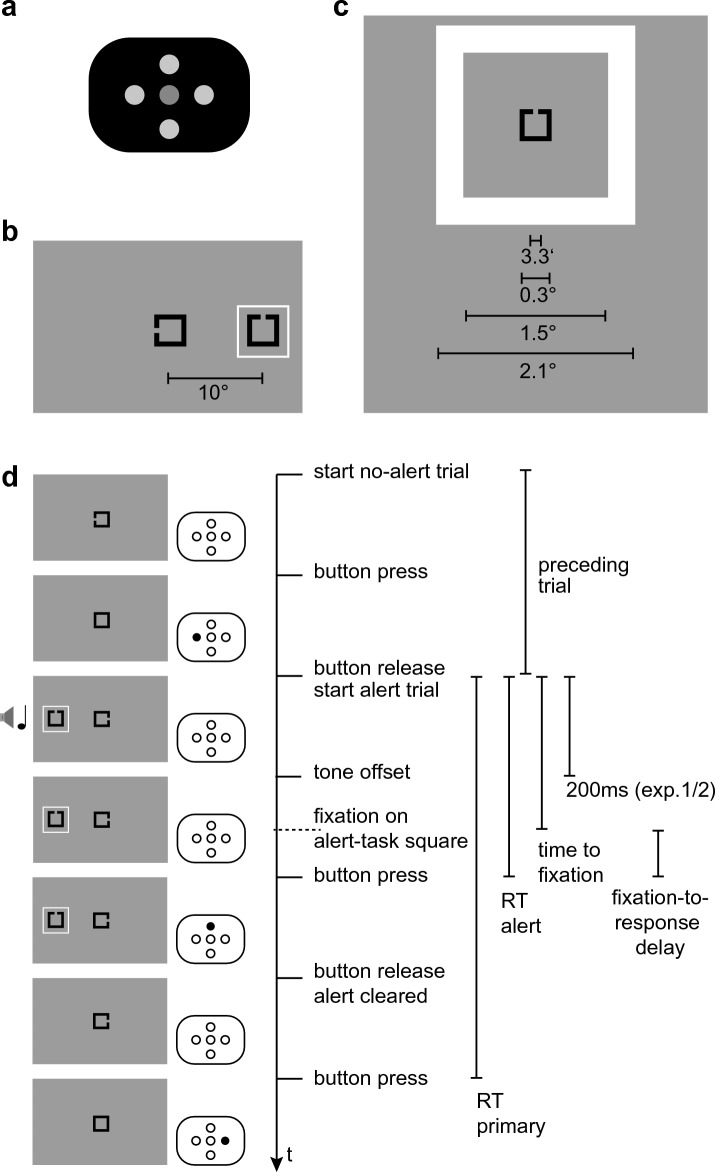
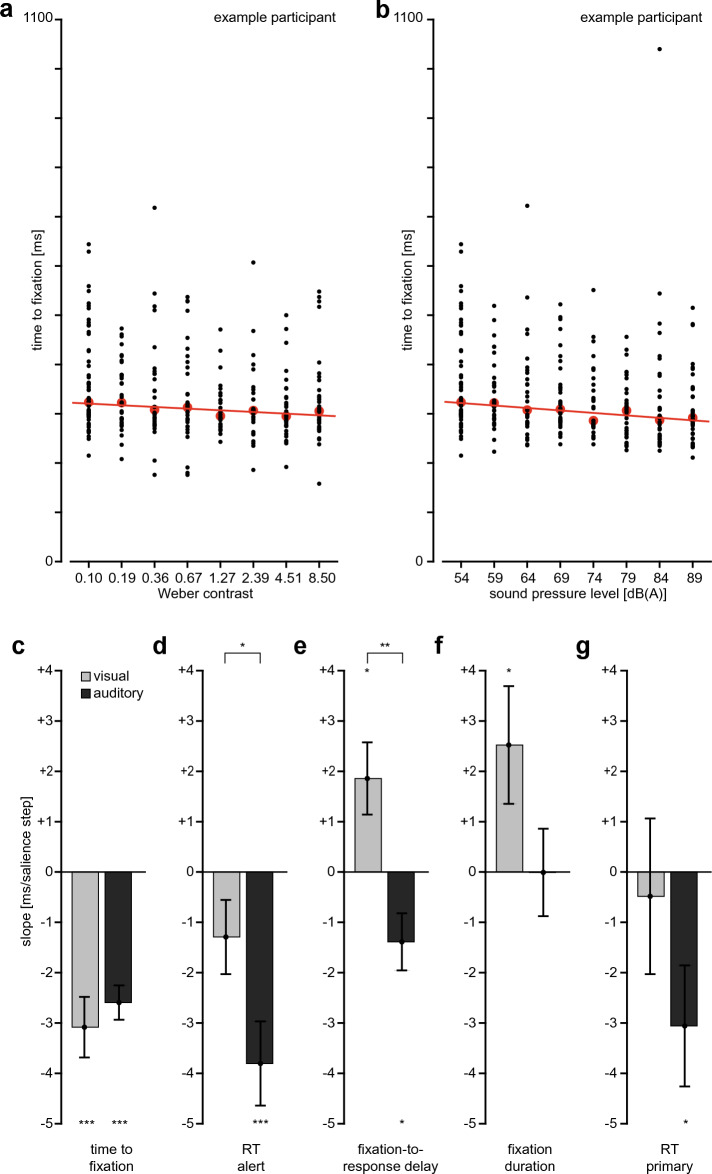
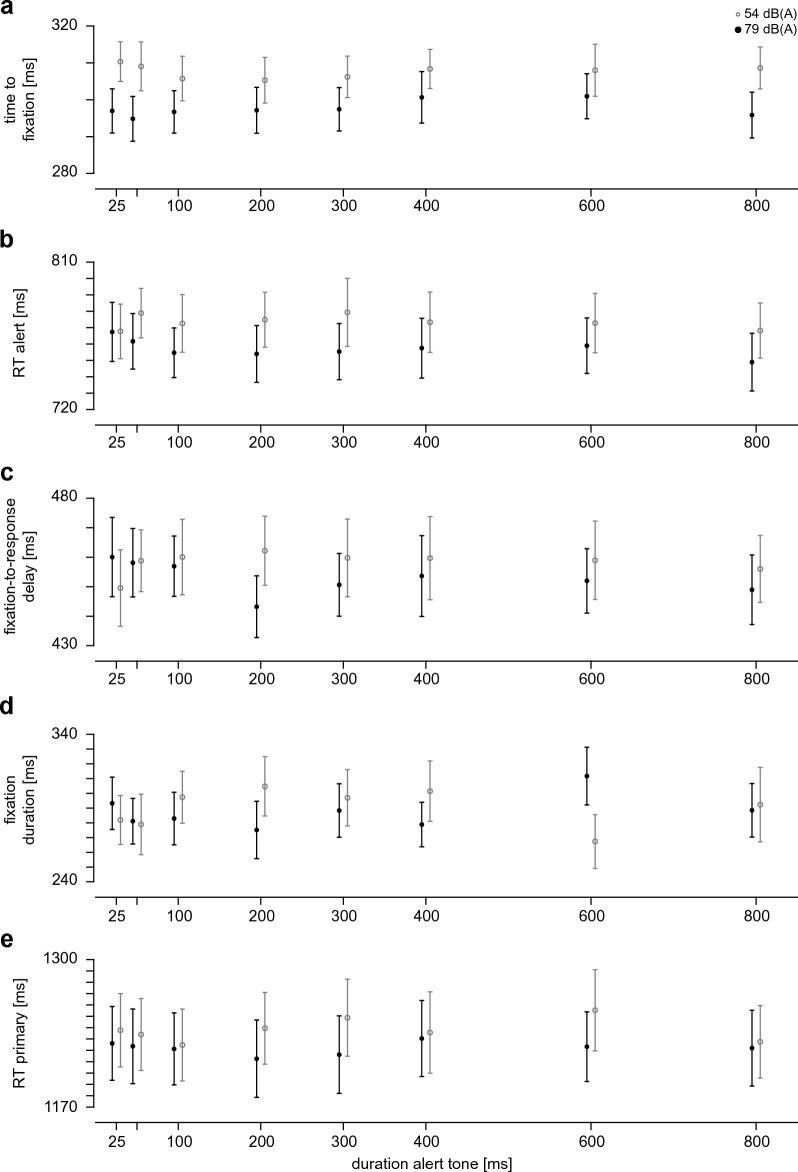
It is often assumed that rendering an alert signal more salient yields faster responses to this alert. Yet, there might be a trade-off between attracting attention and distracting from task execution. Here we tested this in four behavioral experiments with eye-tracking using an abstract alert-signal paradigm. Participants performed a visual discrimination task (primary task) while occasional alert signals occurred in the visual periphery accompanied by a congruently lateralized tone. Participants had to respond to the alert before proceeding with the primary task. When visual salience (contrast) or auditory salience (tone intensity) of the alert were increased, participants directed their gaze to the alert more quickly. This confirms that more salient alerts attract attention more efficiently. Increasing auditory salience yielded quicker responses for the alert and primary tasks, apparently confirming faster responses altogether. However, increasing visual salience did not yield similar benefits: instead, it increased the time between fixating the alert and responding, as high-salience alerts interfered with alert-task execution. Such task interference by high-salience alert-signals counteracts their more efficient attentional guidance. The design of alert signals must be adapted to a "sweet spot" that optimizes this stimulus-dependent trade-off between maximally rapid attentional orienting and minimal task interference.
© 2024. The Author(s).
Conflict of interest statement
The authors declare no competing interests.
Figures



References
-
- McLaughlin AC, Mayhorn CB. Designing effective risk communications for older adults. Saf. Sci. 2014;61:59–65. doi: 10.1016/j.ssci.2012.05.002. - DOI
-
- Fagerlönn J. Urgent alarms in trucks: Effects on annoyance and subsequent driving performance. Intell. Trans. Sys. 2011;5(4):252–258. doi: 10.1049/iet-its.2010.0165. - DOI
MeSH terms
Grants and funding
LinkOut - more resources
Full Text Sources
