. 2024 Apr 18;18(1):30.
doi: 10.1007/s12105-024-01640-7.

Seven Steps to Financial Health

Affiliations

Seven Steps to Financial Health

Lester D R Thompson et al. Head Neck Pathol. .

Abstract

Physicians and dentists have a very limited exposure to personal financial management and yet find themselves in the top 10% of earners in the United States of America. Education loans, practice expenses, and high standards of living obligate them to be good financial stewards to succeed financially. Anecdotal personal experience and review. The article establishes seven steps to implement as medical/dental students, interns, residents, or practicing doctors to move towards financial health and security. The steps include (1) saving enough; (2) good debt management; (3) being tax savvy; (4) obtaining the correct insurance; (5) making wise investments; (6) if choosing to marry, avoid divorce; and (7) keeping track with periodic progress assessment. Each of these steps contains several components that can aid and guide physicians and dentists in their financial arc of development over their professional career and into retirement, considering generational wealth transfer or charitable donation as ultimate goals. This brief guide is based on my own financial journey to achieve long-term financial independence: start early, use simple tax deferred investments without chasing trends while keeping fees down, live within your means, and adequately insure your income.

Keywords: Dentists; Financial management; Goals; Marriage; Medical; Physicians; Retirement; Students.


Conflict of interest statement

The authors certify that they have no affiliations with or involvement in any organization or entity with any financial interest or non-financial interest in the subject matter or materials discussed in this manuscript.

Figures
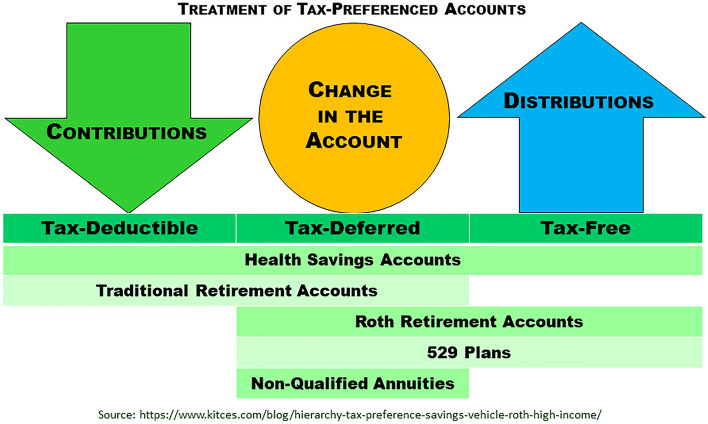
Fig. 1
Fig. 1
A diagrammatic representation of general groups of savings accounts and tax preferenced treatment of contributions, growth, and distributions
Fig. 2
Fig. 2
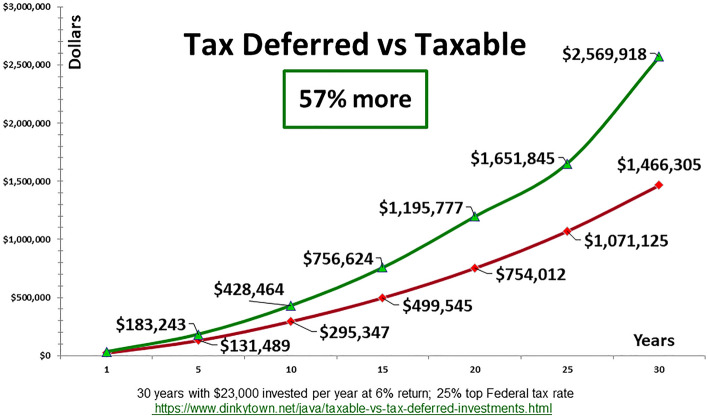
The graph shows the difference between the amount of money accumulated over a 30-year time horizon invested in tax-deferred (green) versus taxable (red) vehicles based on $23,000 invested per year with a 6% return using a 25% federal income tax bracket. The $23,000 was selected as it is the 401(k) general limit in 2024, not considering catch-up contributions that are possible starting at age 50. Further, an average 25% Federal marginal tax rate was applied, recognizing tax efficient allocation, where bond interest and unqualified dividends would have higher marginal Federal tax rates than would qualified dividends and long-term capital gains
Fig. 3
Fig. 3
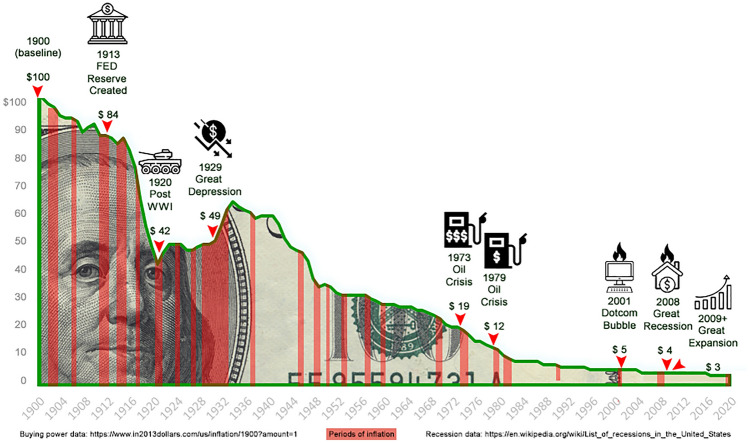
The buying power of US $100 based on inflation from 1900 to 2020, with major events that may have contributed to inflationary pressures. The red shaded areas represent recessions in the economy
Fig. 4
Fig. 4
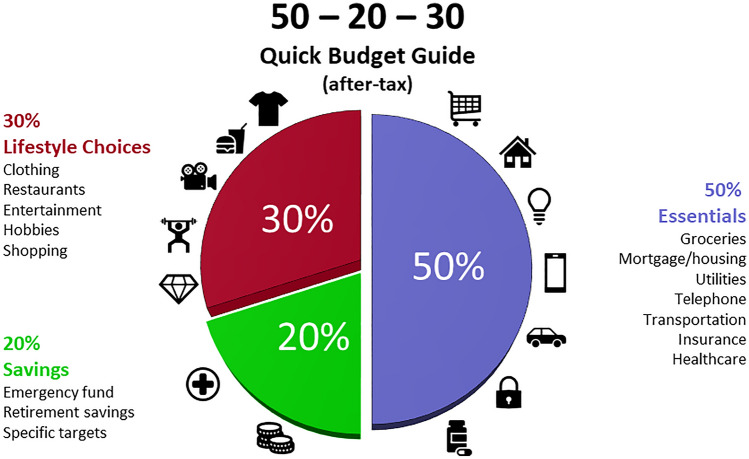
A general budget guide using the 50-20-30 principle, identifying essentials, lifestyle choices, and savings
Fig. 5
Fig. 5
There are several different ways of assessing credit risk, with the FICO® score one of the most popular. The inner circle indicates the factors and their weighting in calculating the overall score, while the outer sunburst demonstrate the major score brackets and what percentage of people fall within that category
Fig. 6
Fig. 6
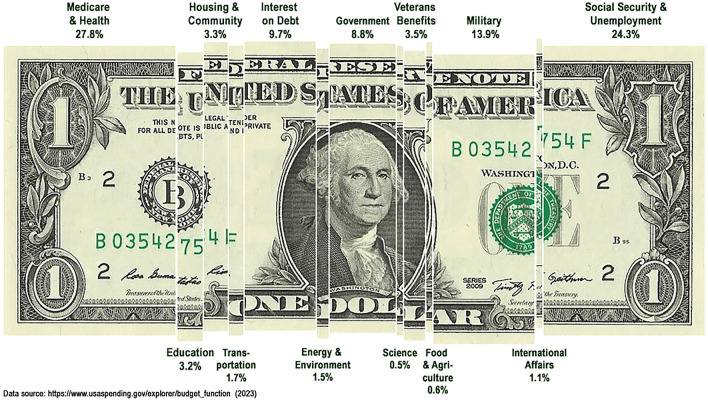
A diagrammatic representation of how United States Federal income tax is spent (in percentages) for the most recent year available (although generally only fractionally different year to year). Major categories (Medicare, social security, and military) dwarf spending on education, energy and science
Fig. 7
Fig. 7
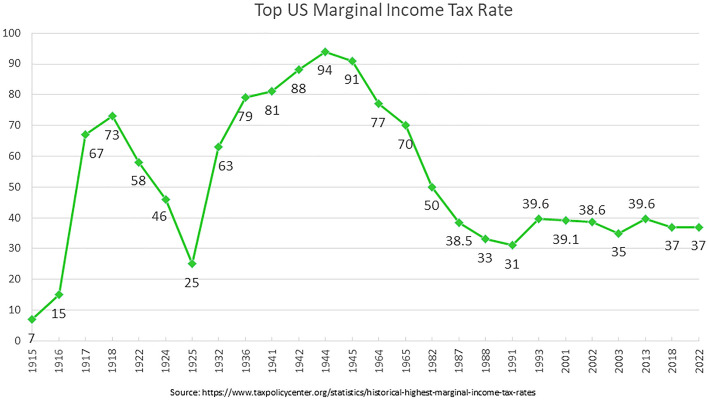
The various top marginal United States income tax rate from 1915 to the present. The number indicates the top rate that year. The horizontal axis only lists the year in which a tax change was implemented
Fig. 8
Fig. 8
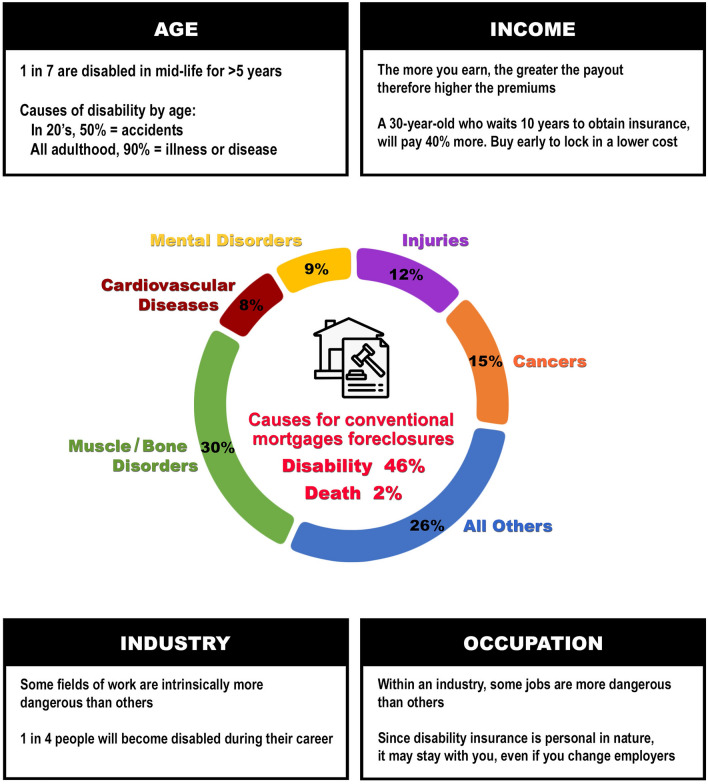
Disability insurance is a complex selection process, with many different factors highlighted that must be considered before making a decision. Age, income, industry and occupation are the cornerstones of cost determination, recognizing the types of disabilities experienced and key factors to consider
Fig. 9
Fig. 9
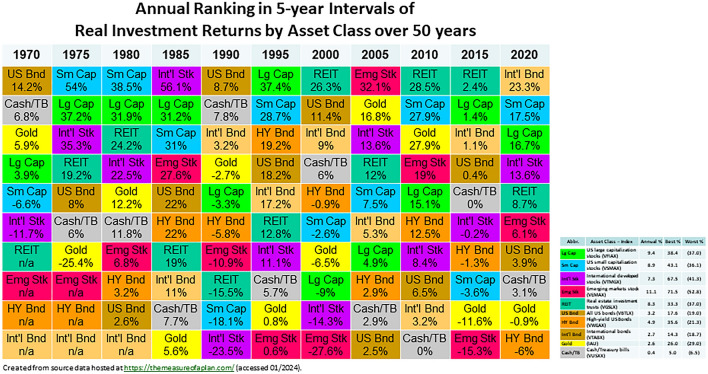
This heat map shows the real investment returns for various classes of assets for that year, shown in 5-year intervals over the past 50 years. The data show that no asset class regularly outperforms any others, and thus a well-balanced portfolio yields the best long-term results
Fig. 10
Fig. 10
The annual returns (shown in 3-year intervals) of stocks (represented by the S&P 500 index; red line), bonds (represented by a highly rated bond index; blue line), and United States Treasury bills from 1928 to 2023 (green line). The erratic (ventricular fibrillation-like) pattern underscores return variations by year
Fig. 11
Fig. 11
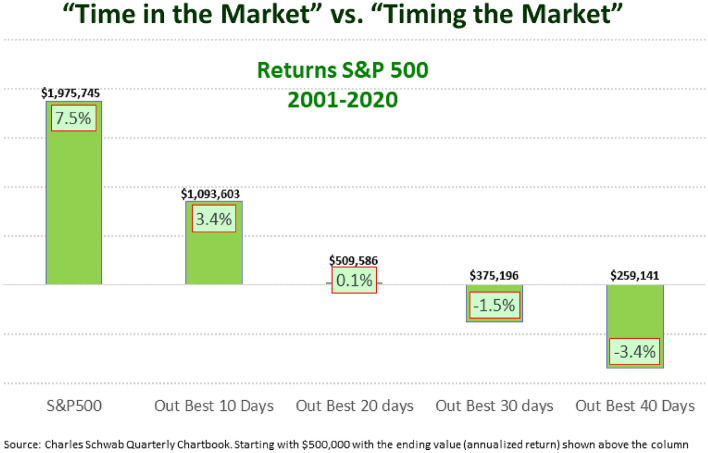
Time in the market is a much more important long-term consideration when evaluating returns than trying to time the market. If you were out of the market for the various days listed, the % shows the annualized return over the 20-year time horizon. The total dollar value of the investment of $500,000 is shown above the respective column to show the difference in final value
Fig. 12
Fig. 12
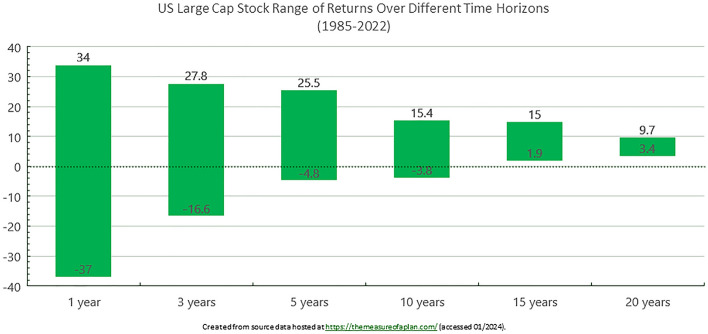
This graphic demonstrates the best and worst percentage returns for stocks over specified periods. The illustrations shows that over longer time horizons (15 years or more), US large capitalization stocks have not had a negative return
Fig. 13
Fig. 13
This monthly financial calendar is an example of a periodic approach to financial matters performed routinely giving an excellent chance of accurately monitoring and adjusting your financial health plan

References

    1. Grewal K, Sweeney MJ (2021) An innovative approach to educating medical students about personal finance. Cureus 13(6):e15579 - PMC - PubMed
    1. Dhaliwal G, Chou CL (2007) A brief educational intervention in personal finance for medical residents. J Gen Intern Med 22(3):374–377 - PMC - PubMed
    1. Royce TJ, Davenport KT, Dahle JM (2019) A burnout reduction and wellness strategy: personal financial health for the medical trainee and early career radiation oncologist. Pract Radiat Oncol 9(4):231–238 - PubMed
    1. Roberts WC (2020) The importance of acquiring financial security for physicians. Am J Med 133(12):1403–1405 - PMC - PubMed
    1. Teichman JM, Cecconi PP, Bernheim BD, Novarro NK, Monga M, DaRosa D et al (2005) How do residents manage personal finances? Am J Surg 189(2):134–139 - PubMed

LinkOut - more resources