


Adherence to Non-Pharmacological Interventions in Parkinson's Disease: A Rapid Evidence Assessment of the Literature
- PMID: 38640167
- PMCID: PMC11380228
- DOI: 10.3233/JPD-230266
Adherence to Non-Pharmacological Interventions in Parkinson's Disease: A Rapid Evidence Assessment of the Literature
Abstract
Background: Low adherence to non-pharmacological interventions can impact treatment effectiveness. Yet, there is limited information on adherence barriers and facilitators to non-pharmacological interventions in Parkinson's disease (PD).
Objective: 1) To examine the quality of adherence reporting and 2) to identify key determinants of adherence to PD non-pharmacological interventions.
Methods: A rapid evidence assessment was conducted, following PRISMA guidelines, that included controlled studies of exercise, physiotherapy, occupational therapy, speech-language therapy with explicit reporting of 'adherence' OR 'compliance', published in the last 15 years. Data extracted included: adherence rates, adherence outcomes, and factors associated with adherence. A collaborative thematic analysis was conducted to identify determinants of adherence.
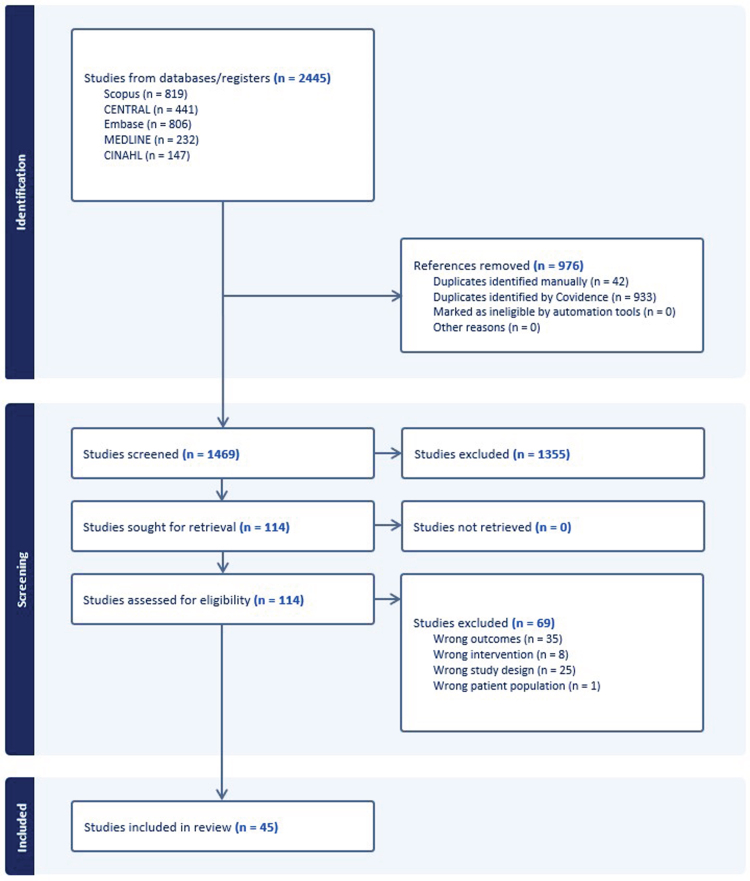
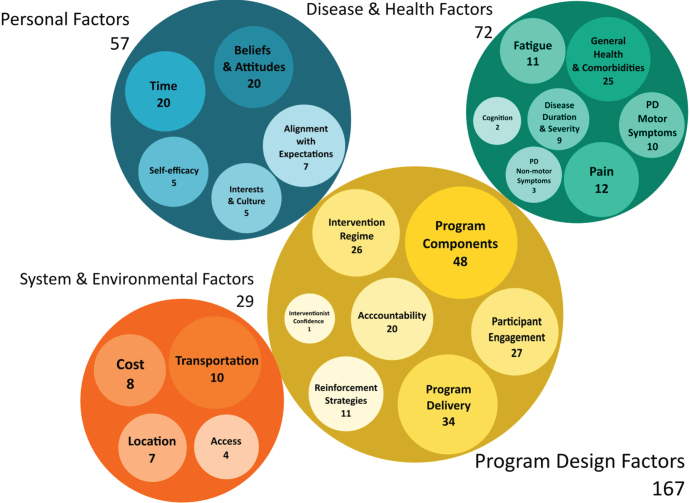
Results: The search yielded 2,445 articles of which 114 met criteria for full screening with 45 studies meeting all inclusion criteria. High quality adherence data that aligned with the intervention goals were reported by 22.22%(N = 10) of studies, with the majority reporting attendance/attrition rates only 51.11%(N = 23). Four major themes (34 subthemes) emerged: disease and health, personal, program design, and system and environmental.
Conclusions: There has been limited progress in the quality of adherence reporting in PD non-pharmacological interventions over the last decade. Acknowledging this limitation, key determinants of adherence included: alignment with personal beliefs, attitudes, and expectations; the demands of the intervention and worsening disease symptoms and personal/time obligations; and accessibility and safety concerns. Program design elements found to facilitate adherence included: opportunities for social engagement and in-person offerings linked to higher levels of interventionist support, performative feedback, and social reinforcement.
Keywords: Parkinson’s disease; adherence; clinical trial; compliance; exercise; non-pharmacological interventions; occupational therapy; physiotherapy; rehabilitation; speech-language therapy.
Conflict of interest statement
AR receives honoraria from the World Parkinson Congress and Parkinson Canada and sits on the Research Advisory Board for Parkinson Canada. Her research is funded by the National Institutes of Health (USA), the Ontario Brain Institute, McKnight Brain Research Foundation, and the Canada Research Chairs program. JL, NA, and IC have no conflicts to report.
Figures
References
-
- Allen NE, Sherrington C, Paul SS, Canning CG (2011) Balance and falls in Parkinson’s disease: A meta-analysis of the effect of exercise and motor training. Mov Disord 26, 1605–1615. - PubMed
Publication types
MeSH terms
LinkOut - more resources
Full Text Sources
Medical
Miscellaneous
