


Foster Care Leads to Lower Irritability Among Adolescents with a History of Early Psychosocial Deprivation
- PMID: 38642277
- PMCID: PMC11288996
- DOI: 10.1007/s10802-024-01193-x
Foster Care Leads to Lower Irritability Among Adolescents with a History of Early Psychosocial Deprivation
Abstract
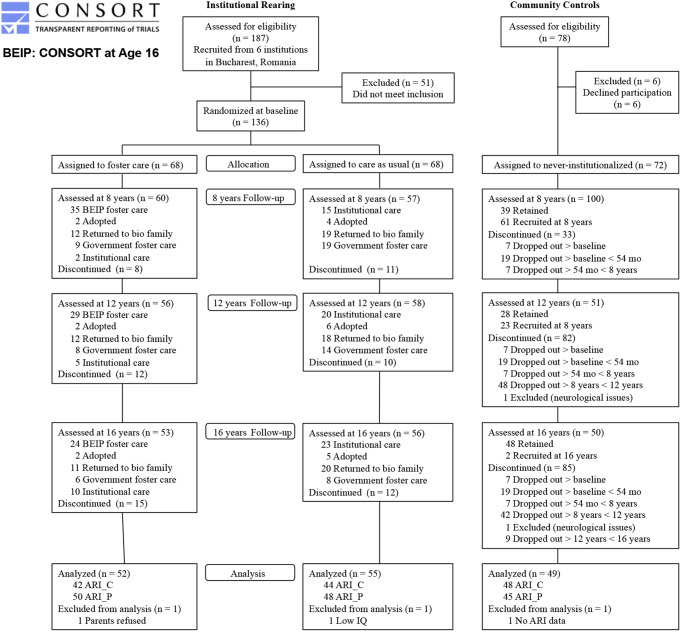
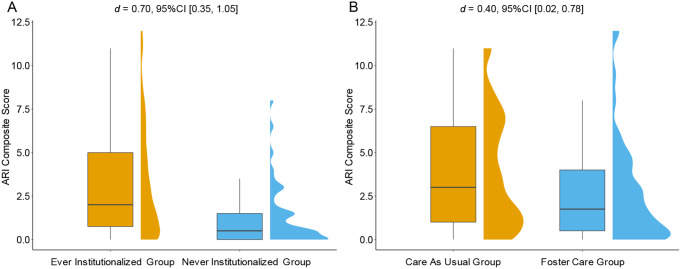
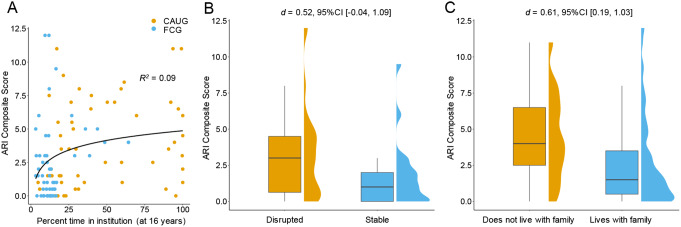
Irritability reflects a propensity for frustration and anger, and is a transdiagnostic symptom of both externalizing and internalizing psychopathology. While early adverse experiences are associated with higher levels of irritability, experiences of early psychosocial deprivation and whether family-based placements can mitigate the impact on subsequent irritability, remain underexplored. The current study examined irritability in 107 16-year-olds with a history of institutional care from a randomized controlled trial of foster care as an alternative to institutional care and 49 community comparison children. At age 16 years, irritability was assessed using parent- and self-report forms of the Affective Reactivity Index. Compared to community adolescents, those with a history of institutional care exhibited significantly elevated irritability levels. Among those who experienced institutional care, those randomized to foster care had lower levels of irritability compared to participants randomized to the care-as-usual group, and this effect persists after controlling for baseline negative emotionality. These findings suggest a causal link between high-quality foster care and lower irritability following psychosocial deprivation. Additionally, longer duration in institutional care and non-family placement at age 16 years were associated with higher levels of irritability, highlighting the role of caregiving in explaining variation in irritability in adolescence. Policies that support long-term, high-quality family placements for children without regular caregivers should be prioritized.
Keywords: Adolescence; Early caregiving environment; Institutional care; Irritability.
© 2024. The Author(s).
Conflict of interest statement
The authors have no relevant financial or non-financial interests to disclose.
Figures
References
-
- American Psychiatric Association (2013). Diagnostic and statistical manual of mental disorders: DSM-5 (Vol. 5). American psychiatric association Washington, DC.
-
- Benarous, X., Consoli, A., Cohen, D., Renaud, J., Lahaye, H., & Guilé, J. M. (2019). Suicidal behaviors and irritability in children and adolescents: A systematic review of the nature and mechanisms of the association. European Child & Adolescent Psychiatry, 28(5), 667–683. 10.1007/s00787-018-1234-9 - DOI - PubMed
-
- Bielas, H., Barra, S., Skrivanek, C., Aebi, M., Steinhausen, H. C., Bessler, C., & Plattner, B. (2016). The associations of cumulative adverse childhood experiences and irritability with mental disorders in detained male adolescent offenders. Child and Adolescent Psychiatry and Mental Health, 10(1), 1–10. 10.1186/s13034-016-0122-7 - DOI - PMC - PubMed
-
- Brotman, M. A., Schmajuk, M., Rich, B. A., Dickstein, D. P., Guyer, A. E., Costello, E. J., Egger, H. L., Angold, A., Pine, D. S., & Leibenluft, E. (2006). Prevalence, clinical correlates, and longitudinal course of severe mood dysregulation in children. Biological Psychiatry, 60(9), 991–997. 10.1016/j.biopsych.2006.08.042 - DOI - PubMed
Publication types
MeSH terms
Grants and funding
LinkOut - more resources
Full Text Sources