


Predictors of mortality and poor outcome for patients with severe infectious encephalitis in the intensive care unit: a cross-sectional study
- PMID: 38644471
- PMCID: PMC11034050
- DOI: 10.1186/s12879-024-09312-1
Predictors of mortality and poor outcome for patients with severe infectious encephalitis in the intensive care unit: a cross-sectional study
Abstract
Background: There are few thorough studies assessing predictors of severe encephalitis, despite the poor prognosis and high mortality associated with severe encephalitis. The study aims to evaluate the clinical predictors of mortality and poor outcomes at hospital discharge in patients with severe infectious encephalitis in intensive care units.
Method: In two Chinese hospitals, a retrospective cohort study comprising 209 patients in intensive care units suffering from severe infectious encephalitis was carried out. Univariate and multivariate logistic regression analyses were used to identify the factors predicting mortality in all patients and poor outcomes in all survivors with severe infectious encephalitis.
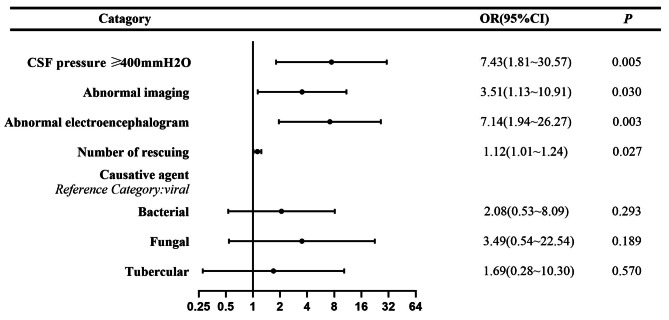
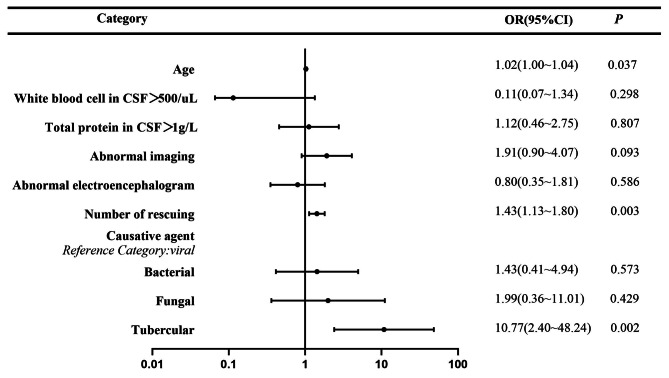
Results: In our cohort of 209 patients with severe encephalitis, 22 patients died, yielding a mortality rate of 10.5%. Cerebrospinal fluid pressure ≥ 400mmH2O (OR = 7.43), abnormal imaging (OR = 3.51), abnormal electroencephalogram (OR = 7.14), and number of rescues (OR = 1.12) were significantly associated with an increased risk of mortality in severe infectious encephalitis patients. Among the 187 survivors, 122 (65.2%) had favorable outcomes, defined as the modified Rankine Scale (mRS) score (0 ~ 3), and 65(34.8%) had poor outcomes (mRS scores 4 ~ 5). Age (OR = 1.02), number of rescues (OR = 1.43), and tubercular infection (OR = 10.77) were independent factors associated with poor outcomes at discharge in all survivors with severe infectious encephalitis.
Conclusions: Multiple clinical, radiologic, and electrophysiological variables are independent predictive indicators for mortality and poor outcomes in patients with severe encephalitis in intensive care units. Identifying these outcome predictors early in patients with severe encephalitis may enable the implementation of appropriate medical treatment and help reduce mortality rates.
Keywords: Encephalitis; Intensive care units; Mortality; Outcome; Predictor.
© 2024. The Author(s).
Conflict of interest statement
The authors declare no conflict of interest.
The authors declare no competing interests.
Figures
References
Publication types
MeSH terms
Grants and funding
- 2022BCA039/Key Research and Development Project of Hubei Province
- 2022BCA039/Key Research and Development Project of Hubei Province
- 2022BCA039/Key Research and Development Project of Hubei Province
- 2022BCA039/Key Research and Development Project of Hubei Province
- 2022BCA039/Key Research and Development Project of Hubei Province
LinkOut - more resources
Full Text Sources
