


Warming and altered precipitation independently and interactively suppress alpine soil microbial growth in a decadal-long experiment
- PMID: 38647539
- PMCID: PMC11034942
- DOI: 10.7554/eLife.89392
Warming and altered precipitation independently and interactively suppress alpine soil microbial growth in a decadal-long experiment
Abstract
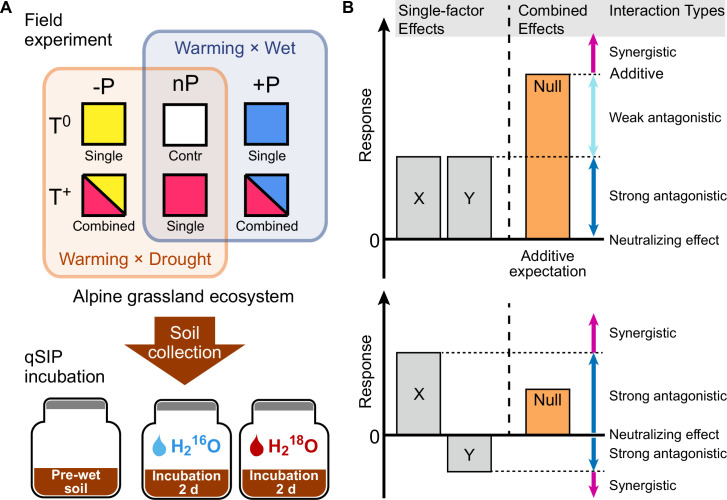
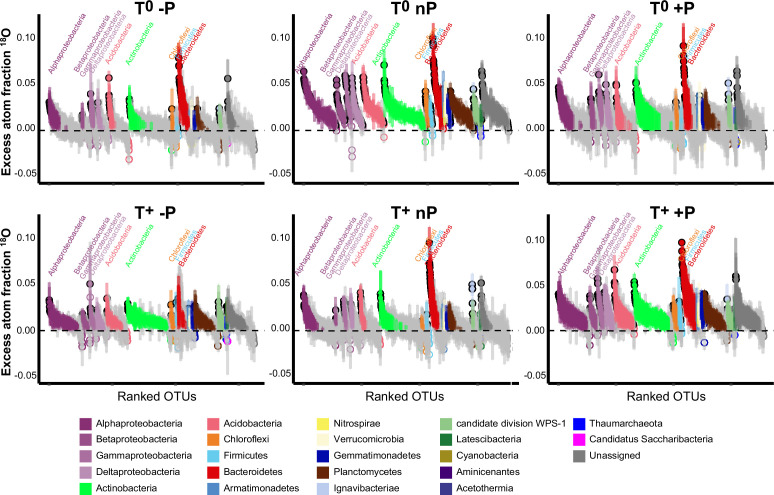
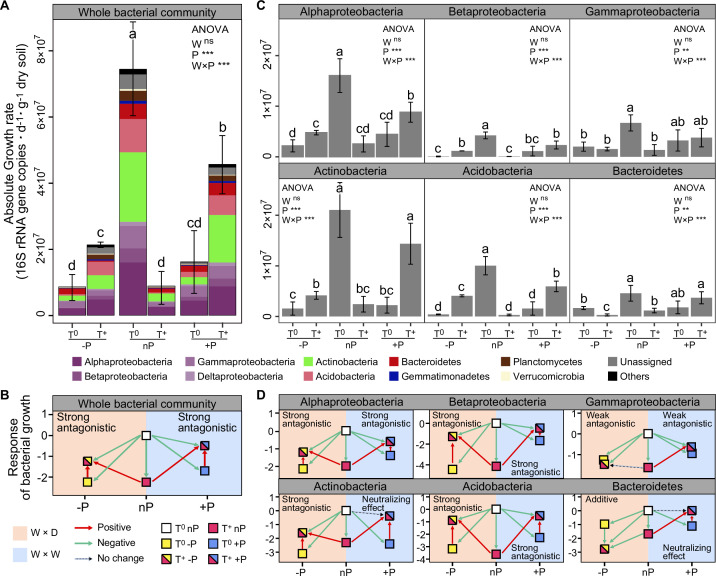
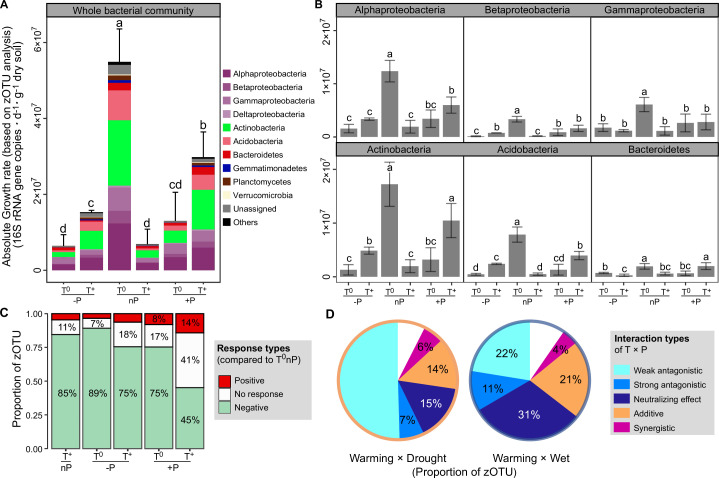
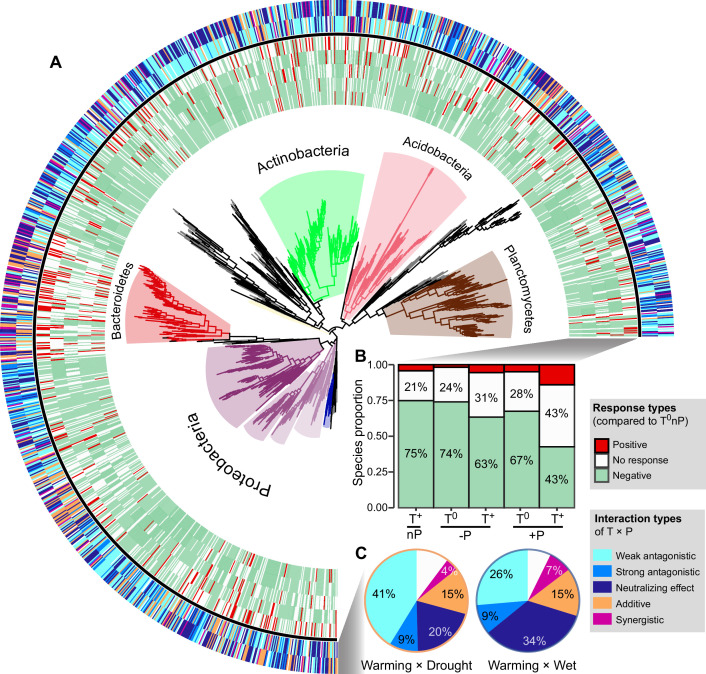
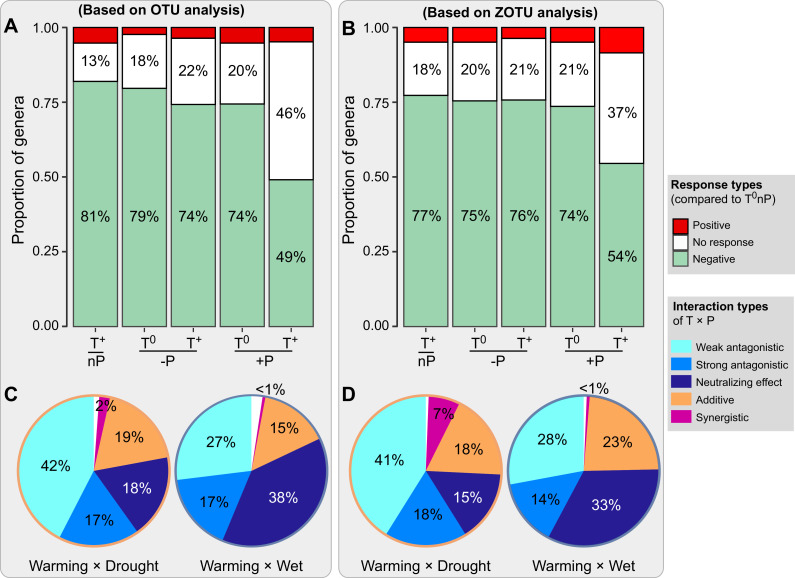
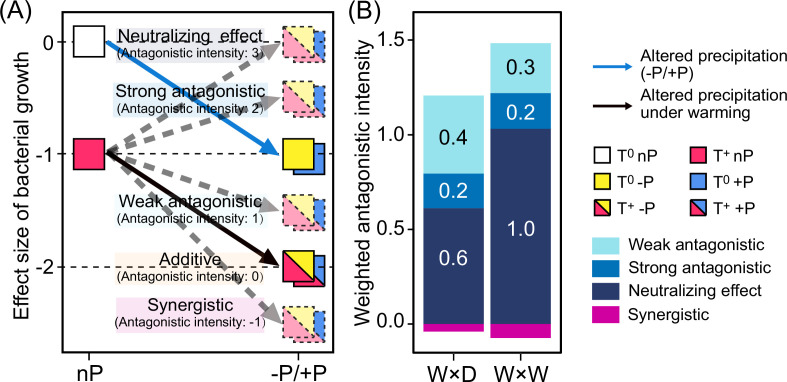
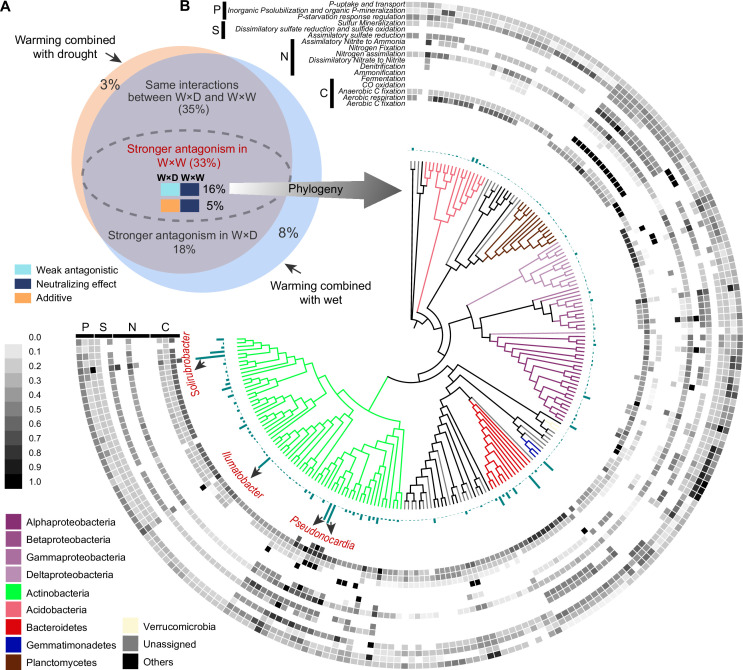
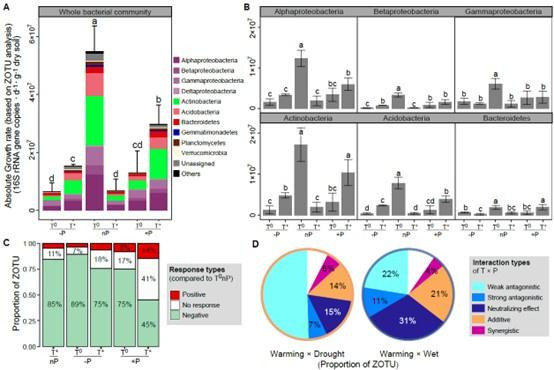
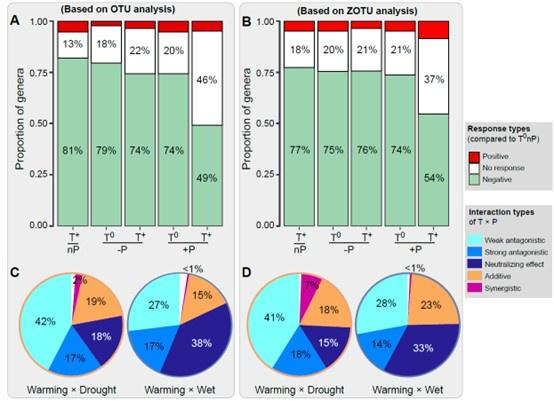
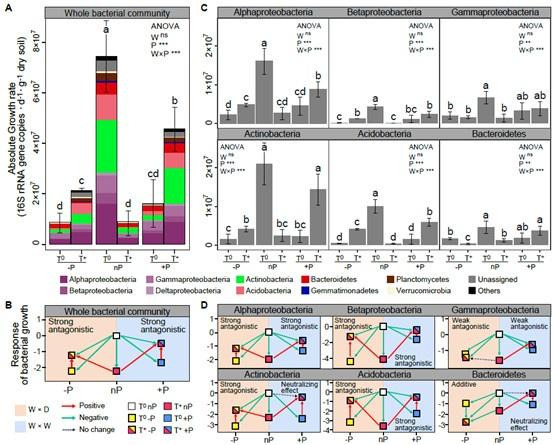
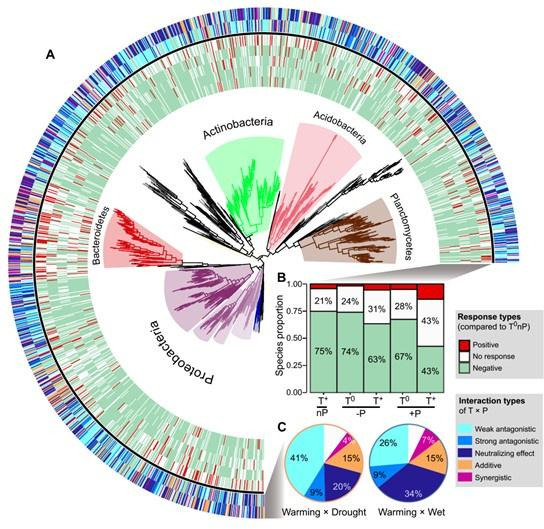
Warming and precipitation anomalies affect terrestrial carbon balance partly through altering microbial eco-physiological processes (e.g., growth and death) in soil. However, little is known about how such processes responds to simultaneous regime shifts in temperature and precipitation. We used the 18O-water quantitative stable isotope probing approach to estimate bacterial growth in alpine meadow soils of the Tibetan Plateau after a decade of warming and altered precipitation manipulation. Our results showed that the growth of major taxa was suppressed by the single and combined effects of temperature and precipitation, eliciting 40-90% of growth reduction of whole community. The antagonistic interactions of warming and altered precipitation on population growth were common (~70% taxa), represented by the weak antagonistic interactions of warming and drought, and the neutralizing effects of warming and wet. The members in Solirubrobacter and Pseudonocardia genera had high growth rates under changed climate regimes. These results are important to understand and predict the soil microbial dynamics in alpine meadow ecosystems suffering from multiple climate change factors.
Keywords: altered precipitation; ecology; microbial population growth; multifactor interaction; quantitative stable isotope probing; the Tibetan Plateau; warming.
© 2023, Ruan et al.
Conflict of interest statement
YR, NL, SJ, XJ, JH, QS, ZN No competing interests declared
Figures
Update of
- doi: 10.1101/2023.06.08.544195
- doi: 10.7554/eLife.89392.1
- doi: 10.7554/eLife.89392.2
References
-
- Bardgett RD, Manning P, Morriën E, De Vries FT. Hierarchical responses of plant–soil interactions to climate change: consequences for the global carbon cycle. Journal of Ecology. 2013;101:334–343. doi: 10.1111/1365-2745.12043. - DOI
-
- Blazewicz SJ, Hungate BA, Koch BJ, Nuccio EE, Morrissey E, Brodie EL, Schwartz E, Pett-Ridge J, Firestone MK. Taxon-specific microbial growth and mortality patterns reveal distinct temporal population responses to rewetting in a California grassland soil. The ISME Journal. 2020;14:1520–1532. doi: 10.1038/s41396-020-0617-3. - DOI - PMC - PubMed
-
- Boot CM, Schaeffer SM, Schimel JP. Static osmolyte concentrations in microbial biomass during seasonal drought in a California grassland. Soil Biology and Biochemistry. 2013;57:356–361. doi: 10.1016/j.soilbio.2012.09.005. - DOI
Publication types
MeSH terms
Substances
Grants and funding
LinkOut - more resources
Full Text Sources
