


Enhanced Stability, Superior Anti-Corrosive, and Tribological Performance of Al2O3 Water-based Nanofluid Lubricants with Tannic Acid and Carboxymethyl Cellulose over SDBS as Surfactant
- PMID: 38649440
- PMCID: PMC11035603
- DOI: 10.1038/s41598-024-59010-w
Enhanced Stability, Superior Anti-Corrosive, and Tribological Performance of Al2O3 Water-based Nanofluid Lubricants with Tannic Acid and Carboxymethyl Cellulose over SDBS as Surfactant
Abstract
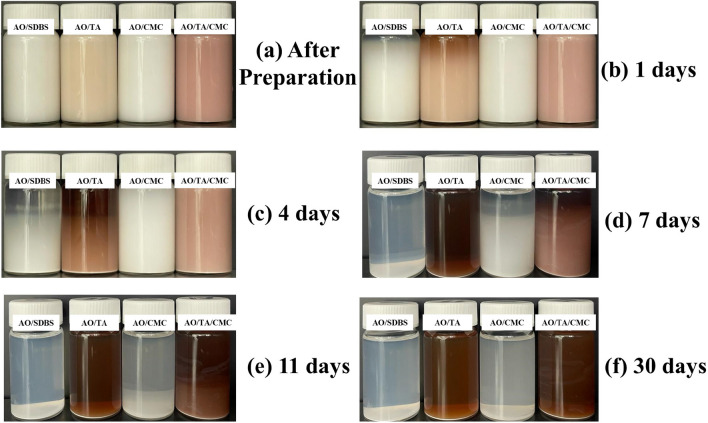
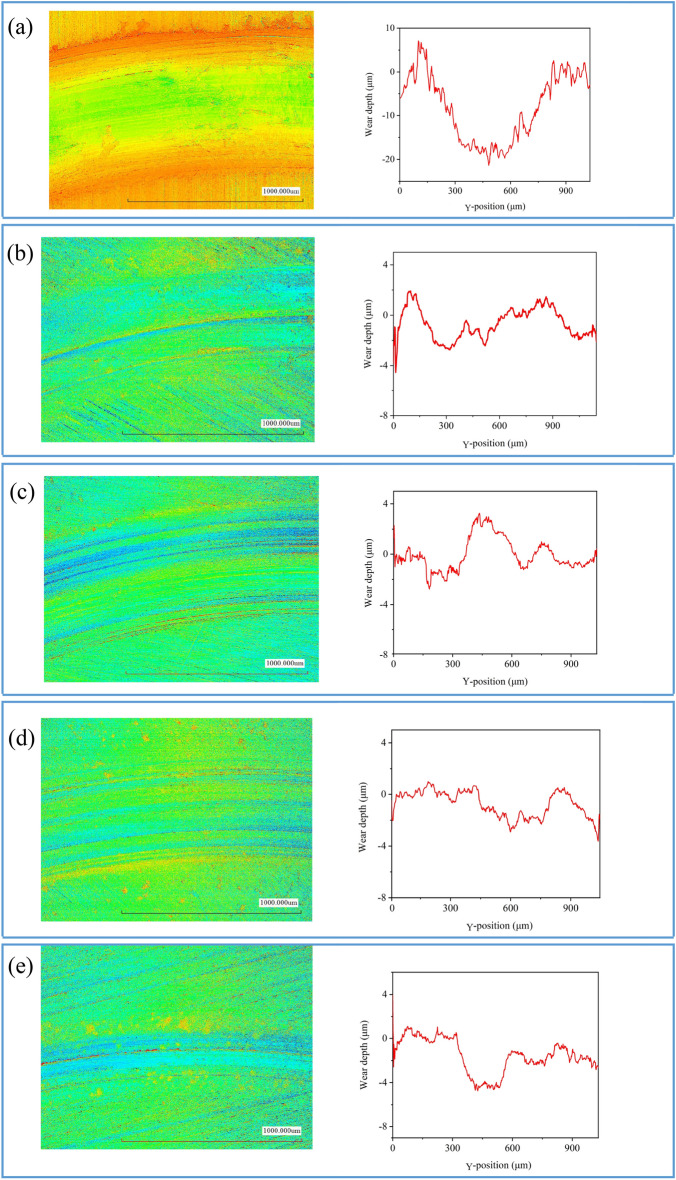
In this research work, the stability, tribological, and corrosion properties of a water-based Al2O3 nanofluid (0.5 wt%) formulated with tannin acid (TA) and carboxymethyl cellulose (CMC) as dispersants or surfactants were investigated. For comparative purposes, sodium dodecylbenzene sulfonate (SDBS) was also incorporated. The stability of the nanofluid was assessed through zeta potential measurements and photo-capturing, revealing the effectiveness of TA and CMC in preventing nanoparticle agglomeration. Tribological properties were examined using a pin-on-disk apparatus, highlighting the tribofilm of Al2O3 that enhanced lubricating properties of the nanofluid by the SEM, resulting in reduced friction and wear of the contacting surfaces. Sample with the addition of both TA and CMC exhibited the best tribological performance, with a ~ 20% reduction in the friction coefficient and a 59% improvement in wear rate compared to neat nanofluid without TA and CMC. Additionally, the corrosion resistance of the nanofluids were evaluated via weight loss and electrochemical impedance spectroscopy. The nanofluid sample containing both TA and CMC exhibited the lowest corrosion rate, with 97.6% improvement compared to sample without them. This study provides valuable insights into the potential applications of TA and CMC-based Al2O3 nanofluids as effective and environmentally friendly solutions for coolant or lubrication in cutting processes.
Keywords: Alumunium oxide; Carboxymethyl cellulose; Nanofluid; SDBS; Tannin acid.
© 2024. The Author(s).
Conflict of interest statement
The authors declare no competing interests.
Figures






References
-
- Jin W, et al. Investigation of thermal conductivity enhancement of water-based graphene and graphene/MXene nanofluids. J. Mol. Liq. 2022;367:120455. doi: 10.1016/j.molliq.2022.120455. - DOI
-
- Wu L, et al. Ultra-dispersive sulfonated graphene as water-based lubricant additives for enhancing tribological performance. Tribol. Int. 2022;174:107759. doi: 10.1016/j.triboint.2022.107759. - DOI
-
- Pandey K, Datta S, Roy T. Machinability of Inconel 825 under nano-Al2O3 based nanofluid minimum quantity lubrication. Sādhanā. 2022;47:127. doi: 10.1007/s12046-022-01888-1. - DOI
-
- Sha JY, et al. Corrosion inhibition behaviour of sodium dodecyl benzene sulphonate for brass in an Al2O3 nanofluid and simulated cooling water. Corros. Sci. 2019;148:123–133. doi: 10.1016/j.corsci.2018.12.006. - DOI
-
- Ali MKA, et al. Improving the tribological characteristics of piston ring assembly in automotive engines using Al2O3 and TiO2 nanomaterials as nano-lubricant additives. Tribol. Int. 2016;103:540–554. doi: 10.1016/j.triboint.2016.08.011. - DOI
Grants and funding
LinkOut - more resources
Full Text Sources
