


Navigating challenges: a socioecological analysis of sexual and reproductive health barriers among Eritrean refugee women in Ethiopia, using a key informant approach
- PMID: 38658003
- PMCID: PMC11043775
- DOI: 10.1136/bmjopen-2023-080654
Navigating challenges: a socioecological analysis of sexual and reproductive health barriers among Eritrean refugee women in Ethiopia, using a key informant approach
Abstract
Objectives: The study aimed to explore the experiences and perceptions of healthcare providers (HCPs) regarding the sexual and reproductive health (SRH) challenges of Eritrean refugee women in Ethiopia.
Design: A qualitative exploratory design with the key informant approach.
Setting and participants: The study was conducted in the Afar regional state, North East, Ethiopia. The study participants were HCP responsible for providing SRH care for refugee women.
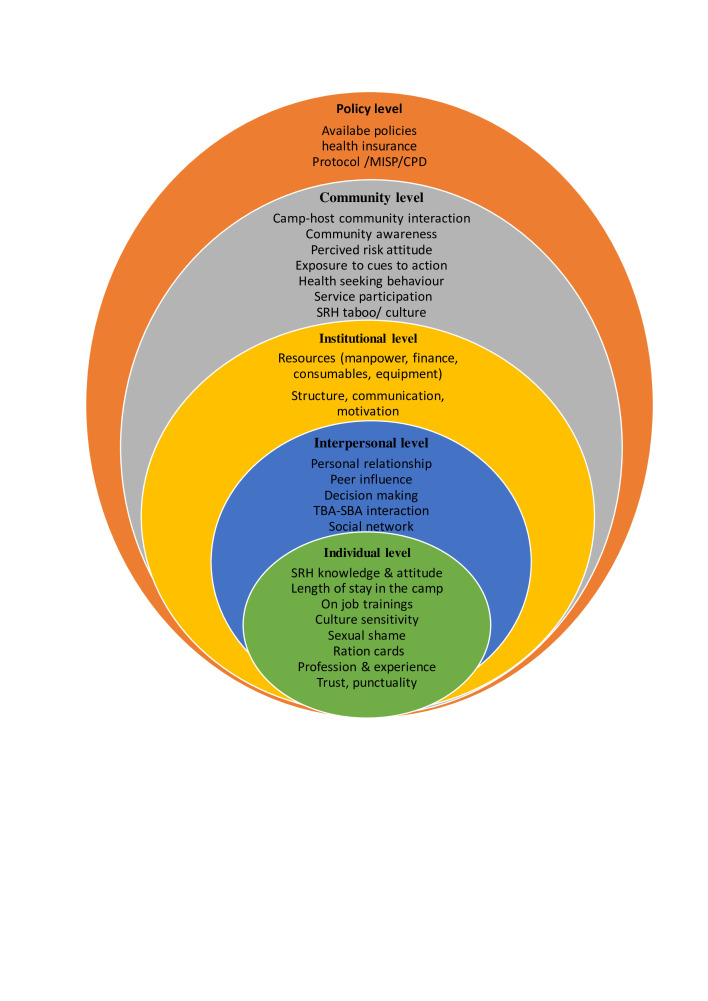
Results: Eritrean refugee women have worse health outcomes than the host population. The SRH needs were found to be hindered at multiple layers of socioecological model (SEM). High turnover and shortage of HCP, restrictive laws, language issues, cultural inconsistencies and gender inequalities were among the main barriers reported. Complex multistructural factors are needed to improve SRH needs of Eritrean refugee women.
Conclusions: A complex set of issues spanning individual needs, social norms, community resources, healthcare limitations and structural mismatches create significant barriers to fulfilling the SRH needs of Eritrean refugee women in Ethiopia. Factors like limited awareness, cultural taboos, lack of safe spaces, inadequate healthcare facilities and restrictive policies all contribute to the severe limitations on SRH services available in refugee settings. The overlap in findings underscores the importance of developing multilevel interventions that are culturally sensitive to the needs of refugee women across all SEM levels. A bilateral collaboration between Refugees and Returnees Service (RRS) structures and the Asayta district healthcare system is critically important.
Keywords: Health policy; PUBLIC HEALTH; QUALITATIVE RESEARCH; REPRODUCTIVE MEDICINE.
© Author(s) (or their employer(s)) 2024. Re-use permitted under CC BY. Published by BMJ.
Conflict of interest statement
Competing interests: The authors declare that they have no competing interests
Figures
References
-
- WHO . Report on the health of refugees and migrants in the WHO European region: no public health without refugee and migrant health. WHO: Denmark; 2018.
-
- World Health Organization . Adolescent pregnancy: evidence brief. World Health Organization; 2019.
-
- World Health Organization . Universal health coverage for sexual and reproductive health: evidence brief. World Health Organization; 2020.
-
- Jannat S, Sifat RI, Khisa M. Sexual and reproductive health conditions of women: insights from Rohingya refugee women in Bangladesh. Sex Res Soc Policy 2023;20:855–68. 10.1007/s13178-022-00758-z - DOI
Publication types
MeSH terms
LinkOut - more resources
Full Text Sources
Miscellaneous
