


Barriers to clinical remission in severe asthma
- PMID: 38658975
- PMCID: PMC11044532
- DOI: 10.1186/s12931-024-02812-3
Barriers to clinical remission in severe asthma
Abstract
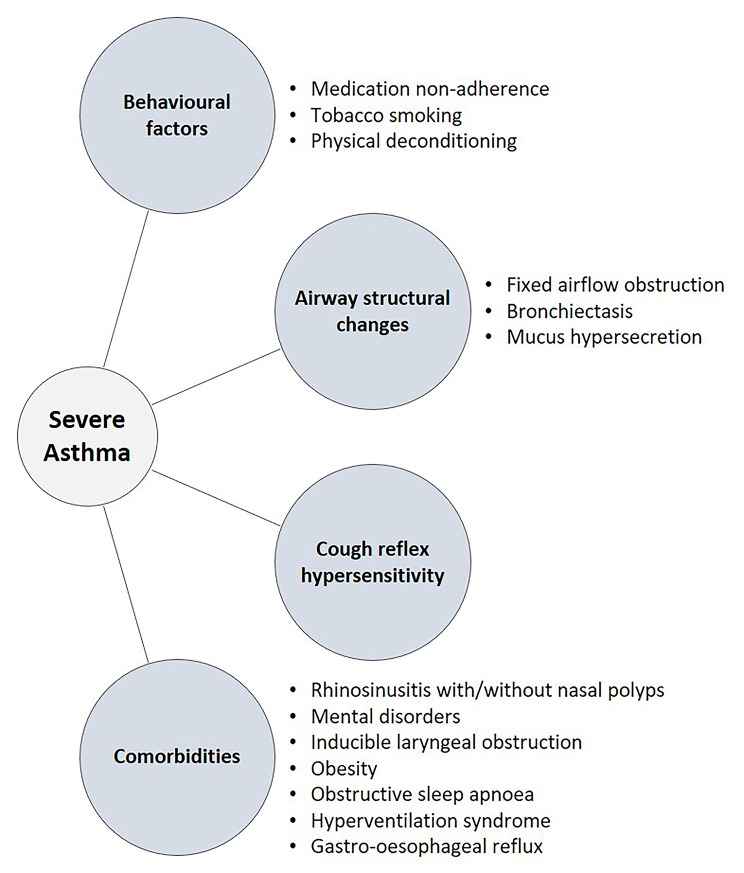
Severe asthma is associated with an increased risk for exacerbations, reduced lung function, fixed airflow obstruction, and substantial morbidity and mortality. The concept of remission in severe asthma as a new treatment goal has recently gained attention due to the growing use of monoclonal antibody therapies, which target specific pathologic pathways of inflammation. This review evaluates the current definitions of asthma remission and unveils some of the barriers for achieving this state in the severe asthma population. Although there is no unified definition, the concept of clinical remission in asthma should be based on a sustained period of symptom control, elimination of oral corticosteroid exposure and exacerbations, and stabilization of pulmonary function. The conjugation of these criteria seems a realistic treatment target in a minority of asthmatic patients. Some unmet needs in severe asthma may affect the achievement of clinical remission. Late intervention with targeted therapies in the severe asthma population may increase the risk of corticosteroid exposure and the development of irreversible structural airway changes. Moreover, airway infection is an important component in persistent exacerbations in patients on biologic therapies. Phenotyping exacerbations may be useful to guide therapy decisions and to avoid the liberal use of oral corticosteroids. Another challenge associated with the aim of clinical remission in severe asthma is the multifaceted interaction between the disease and its associated comorbidities. Behavioural factors should be evaluated in case of persistent symptoms despite optimised treatment, and assessing biomarkers and targeting treatable traits may allow for a more objective way of reaching remission. The concept of clinical remission will benefit from an international consensus to establish unifying criteria for its assessment, and it should be addressed in the future management guidelines.
Keywords: Asthma; Biologics; Clinical remission.
© 2024. The Author(s).
Conflict of interest statement
The authors declare no competing interests.
Figures
References
-
- Global Initiative for Asthma. Global Strategy for Asthma Management and Prevention. 2023.
-
- Domingo Ribas C, Carrillo Díaz T, Blanco Aparicio M, Martínez Moragón E, Banas Conejero D, Sánchez Herrero MG. REal worlD effectiveness and safety of Mepolizumab in a multicentric Spanish cohort of Asthma patients stratified by eosinophils: the REDES Study. Drugs. 2021;81(15):1763–74. doi: 10.1007/s40265-021-01597-9. - DOI - PMC - PubMed
-
- Bourdin A, Bjermer L, Brightling C, Brusselle GG, Chanez P, Chung KF et al. ERS/EAACI statement on severe exacerbations in asthma in adults: facts, priorities and key research questions. Eur Respir J. 2019;54(3). - PubMed
Publication types
MeSH terms
Substances
LinkOut - more resources
Full Text Sources
Medical
