


Clinical-based phenotypes in children with pediatric post-COVID-19 condition
- PMID: 38664324
- PMCID: PMC11269322
- DOI: 10.1007/s12519-024-00805-2
Clinical-based phenotypes in children with pediatric post-COVID-19 condition
Erratum in
-
Correction to: Clinical-based phenotypes in children with pediatric post-COVID-19 condition.World J Pediatr. 2024 Jul 2. doi: 10.1007/s12519-024-00826-x. Online ahead of print. World J Pediatr. 2024. PMID: 38954138 No abstract available.
Abstract
Background: Pediatric post coronavirus disease 2019 (COVID-19) condition (PPCC) is a heterogeneous syndrome, which can significantly affect the daily lives of children. This study aimed to identify clinically meaningful phenotypes in children with PPCC, to better characterize and treat this condition.
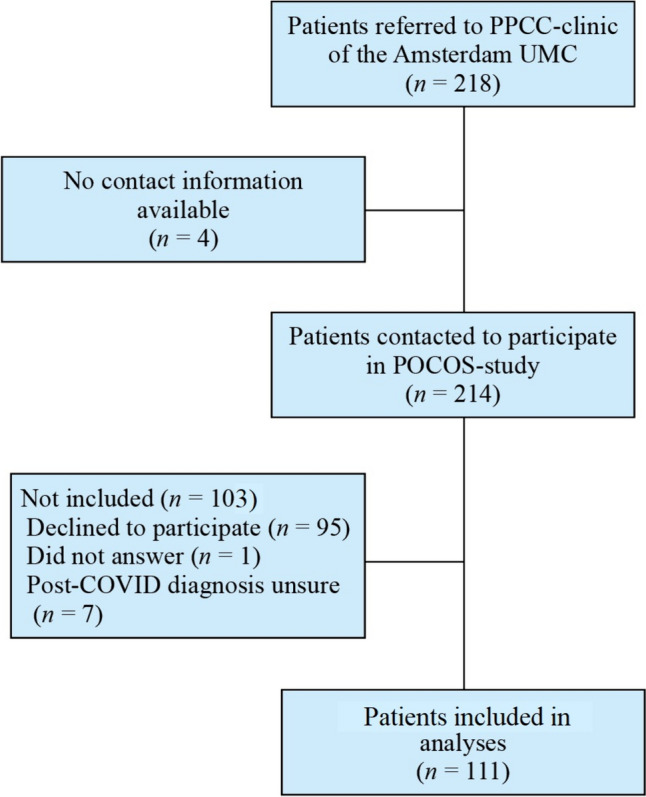
Methods: Participants were children with physician-diagnosed PPCC, referred to the academic hospital Amsterdam UMC in the Netherlands between November 2021 and March 2023. Demographic factors and information on post-COVID symptoms, comorbidities, and impact on daily life were collected. Clinical clusters were identified using an unsupervised and unbiased approach for mixed data types.
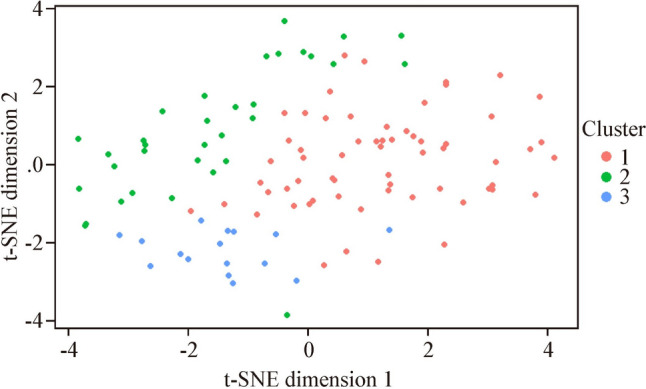
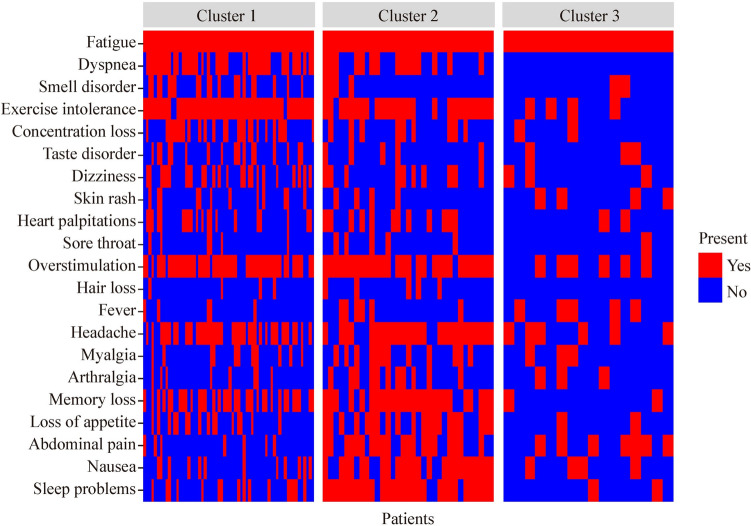
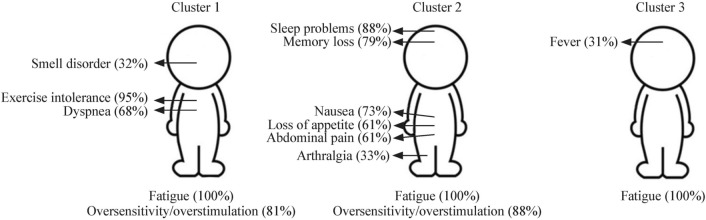
Results: Analysis of 111 patients (aged 3-18 years) revealed three distinct clusters within PPCC. Cluster 1 (n = 62, median age = 15 years) predominantly consisted of girls (74.2%). These patients suffered relatively more from exercise intolerance, dyspnea, and smell disorders. Cluster 2 (n = 33, median age = 13 years) contained patients with an even gender distribution (51.5% girls). They suffered from relatively more sleep problems, memory loss, gastrointestinal symptoms, and arthralgia. Cluster 3 (n = 16, median age = 11 years) had a higher proportion of boys (75.0%), suffered relatively more from fever, had significantly fewer symptoms (median of 5 symptoms compared to 8 and 10 for clusters 1 and 2 respectively), and experienced a lower impact on daily life.
Conclusions: This study identified three distinct clinical PPCC phenotypes, with variations in sex, age, symptom patterns, and impact on daily life. These findings highlight the need for further research to understand the potentially diverse underlying mechanisms contributing to post-COVID symptoms in children.
Keywords: Adolescents; Clusters; Long COVID; Pediatric; Phenotypes; Post-COVID syndrome.
© 2024. The Author(s).
Conflict of interest statement
NLCE, BJM, LCR, HMA, BG, AAMI, AMW, BCLH, OKJ, HS and TLSWJ have nothing to declare. M-ZAH is the PI of a public private consortium [P4O2 (Precision Medicine for More Oxygen)] sponsored by Health Holland involving many private partners that contribute in cash and/or in kind (AbbVie. Boehringer Ingelheim, Breathomix, Clear, Fluidda, Ortec Logiqcare, Olive, Philips, Quantib-U, Smartfish, Clear, SODAQ, Thirona, Roche, TopMD, Novartis, RespiQ). She received unrestricted research grants from GSK and Boehringer Ingelheim and received the Vertex innovation award grant, and had honoraria paid to institution by GSK, Boehringer Ingelheim and Astra Zeneca. MZAH is also the chair of DSMB of a study on BPD in neonates and the president of FIGON (Federation Innovative drug research in the Netherlands). GJB has received a grant from Danone Research and has a patent planned for amino acid composition of infant formulas. He is a member of the national health council (unpaid) and the director of the national Human Milk Bank (unpaid).
Figures
Comment in
-
The importance of post-COVID condition phenotypes characterization to decipher the mechanisms underlying this post-viral syndrome.World J Pediatr. 2024 Jun;20(6):633-634. doi: 10.1007/s12519-024-00812-3. World J Pediatr. 2024. PMID: 38833083 No abstract available.
References
-
- World Health Organization (WHO). Coronavirus disease (COVID-19) pandemic. 2020.https://www.who.int/europe/emergencies/situations/covid-19. Accessed October 23, 2023.
MeSH terms
LinkOut - more resources
Full Text Sources
Medical
