


Respiratory Viral Coinfections: Insights into Epidemiology, Immune Response, Pathology, and Clinical Outcomes
- PMID: 38668271
- PMCID: PMC11053695
- DOI: 10.3390/pathogens13040316
Respiratory Viral Coinfections: Insights into Epidemiology, Immune Response, Pathology, and Clinical Outcomes
Abstract
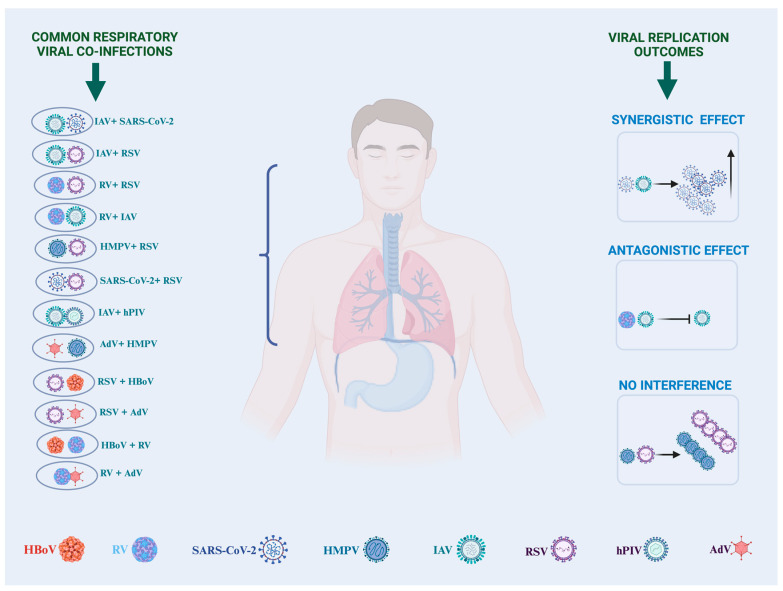
Respiratory viral coinfections are a global public health threat that poses an economic burden on individuals, families, and healthcare infrastructure. Viruses may coinfect and interact synergistically or antagonistically, or their coinfection may not affect their replication rate. These interactions are specific to different virus combinations, which underlines the importance of understanding the mechanisms behind these differential viral interactions and the need for novel diagnostic methods to accurately identify multiple viruses causing a disease in a patient to avoid misdiagnosis. This review examines epidemiological patterns, pathology manifestations, and the immune response modulation of different respiratory viral combinations that occur during coinfections using different experimental models to better understand the dynamics respiratory viral coinfection takes in driving disease outcomes and severity, which is crucial to guide the development of prevention and treatment strategies.
Keywords: coinfection; infectious disease; respiratory via infections; viral; virus.
Conflict of interest statement
The authors declare no conflicts of interest.
Figures
References
-
- Franz A., Adams O., Willems R., Bonzel L., Neuhausen N., Schweizer-Krantz S., Ruggeberg J.U., Willers R., Henrich B., Schroten H., et al. Correlation of viral load of respiratory pathogens and co-infections with disease severity in children hospitalized for lower respiratory tract infection. J. Clin. Virol. 2010;48:239–245. doi: 10.1016/j.jcv.2010.05.007. - DOI - PMC - PubMed
Publication types
MeSH terms
Grants and funding
LinkOut - more resources
Full Text Sources
