


Exploring the Role of Complexity in Health Care Technology Bottom-Up Innovations: Multiple-Case Study Using the Nonadoption, Abandonment, Scale-Up, Spread, and Sustainability Complexity Assessment Tool
- PMID: 38669076
- PMCID: PMC11087855
- DOI: 10.2196/50889
Exploring the Role of Complexity in Health Care Technology Bottom-Up Innovations: Multiple-Case Study Using the Nonadoption, Abandonment, Scale-Up, Spread, and Sustainability Complexity Assessment Tool
Abstract
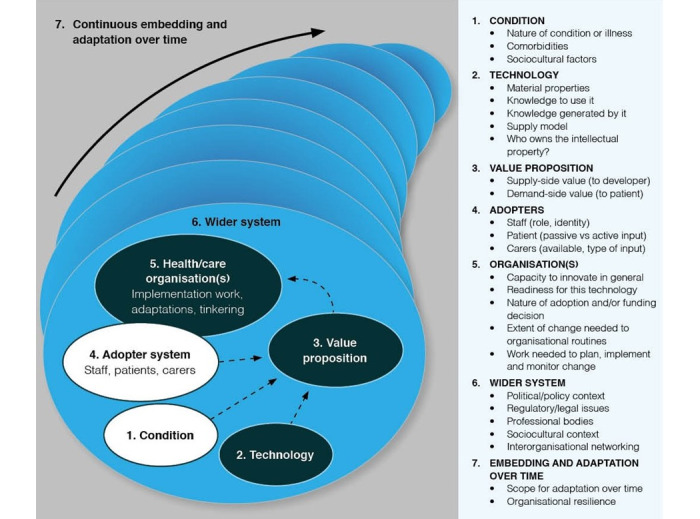
Background: New digital technology presents new challenges to health care on multiple levels. There are calls for further research that considers the complex factors related to digital innovations in complex health care settings to bridge the gap when moving from linear, logistic research to embracing and testing the concept of complexity. The nonadoption, abandonment, scale-up, spread, and sustainability (NASSS) framework was developed to help study complexity in digital innovations.
Objective: This study aims to investigate the role of complexity in the development and deployment of innovations by retrospectively assessing challenges to 4 digital health care innovations initiated from the bottom up.
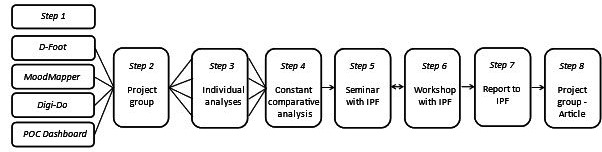
Methods: A multicase retrospective, deductive, and explorative analysis using the NASSS complexity assessment tool LONG was conducted. In total, 4 bottom-up innovations developed in Region Västra Götaland in Sweden were explored and compared to identify unique and shared complexity-related challenges.
Results: The analysis resulted in joint insights and individual learning. Overall, the complexity was mostly found outside the actual innovation; more specifically, it related to the organization's readiness to integrate new innovations, how to manage and maintain innovations, and how to finance them. The NASSS framework sheds light on various perspectives that can either facilitate or hinder the adoption, scale-up, and spread of technological innovations. In the domain of condition or diagnosis, a well-informed understanding of the complexity related to the condition or illness (diabetes, cancer, bipolar disorders, and schizophrenia disorders) is of great importance for the innovation. The value proposition needs to be clearly described early to enable an understanding of costs and outcomes. The questions in the NASSS complexity assessment tool LONG were sometimes difficult to comprehend, not only from a language perspective but also due to a lack of understanding of the surrounding organization's system and its setting.
Conclusions: Even when bottom-up innovations arise within the same support organization, the complexity can vary based on the developmental phase and the unique characteristics of each project. Identifying, defining, and understanding complexity may not solve the issues but substantially improves the prospects for successful deployment. Successful innovation within complex organizations necessitates an adaptive leadership and structures to surmount cultural resistance and organizational impediments. A rigid, linear, and stepwise approach risks disregarding interconnected variables and dependencies, leading to suboptimal outcomes. Success lies in embracing the complexity with its uncertainty, nurturing creativity, and adopting a nonlinear methodology that accommodates the iterative nature of innovation processes within complex organizations.
Keywords: NASSS-CAT; bottom-up innovation; complexity; digital; eHealth; health care; mobile phone; nonadoption, abandonment, scale-up, spread, and sustainability complexity assessment tool.
©Ulla Hellstrand Tang, Frida Smith, Ulla Leyla Karilampi, Andreas Gremyr. Originally published in JMIR Human Factors (https://humanfactors.jmir.org), 26.04.2024.
Conflict of interest statement
Conflicts of Interest: None declared.
Figures
References
-
- Chan S. Complex adaptive systems. Massachusetts Institute of Technology. 2001. [2024-04-08]. https://web.mit.edu/esd.83/www/notebook/Complex%20Adaptive%20Systems.pdf .
-
- Greenhalgh T, Papoutsi C. Studying complexity in health services research: desperately seeking an overdue paradigm shift. BMC Med. 2018 Jun 20;16(1):95. doi: 10.1186/s12916-018-1089-4. https://bmcmedicine.biomedcentral.com/articles/10.1186/s12916-018-1089-4 10.1186/s12916-018-1089-4 - DOI - PMC - PubMed
-
- Tsoukas H. Don't simplify, complexify: from disjunctive to conjunctive theorizing in organization and management studies. J Manage Stud. 2016 Jul 11;54(2):132–53. doi: 10.1111/joms.12219. - DOI
-
- Jacob C, Lindeque J, Klein A, Ivory C, Heuss S, Peter MK. Assessing the quality and impact of eHealth tools: systematic literature review and narrative synthesis. JMIR Hum Factors. 2023 Mar 23;10:e45143. doi: 10.2196/45143. https://humanfactors.jmir.org/2023//e45143/ v10i1e45143 - DOI - PMC - PubMed
-
- Eldh AC, Sverker A, Bendtsen P, Nilsson E. Health care professionals' experience of a digital tool for patient exchange, anamnesis, and triage in primary care: qualitative study. JMIR Hum Factors. 2020 Dec 14;7(4):e21698. doi: 10.2196/21698. https://humanfactors.jmir.org/2020/4/e21698/ v7i4e21698 - DOI - PMC - PubMed
Publication types
MeSH terms
LinkOut - more resources
Full Text Sources
Miscellaneous
