


Neuroendocrine cells initiate protective upper airway reflexes
- PMID: 38669574
- PMCID: PMC11407116
- DOI: 10.1126/science.adh5483
Neuroendocrine cells initiate protective upper airway reflexes
Abstract
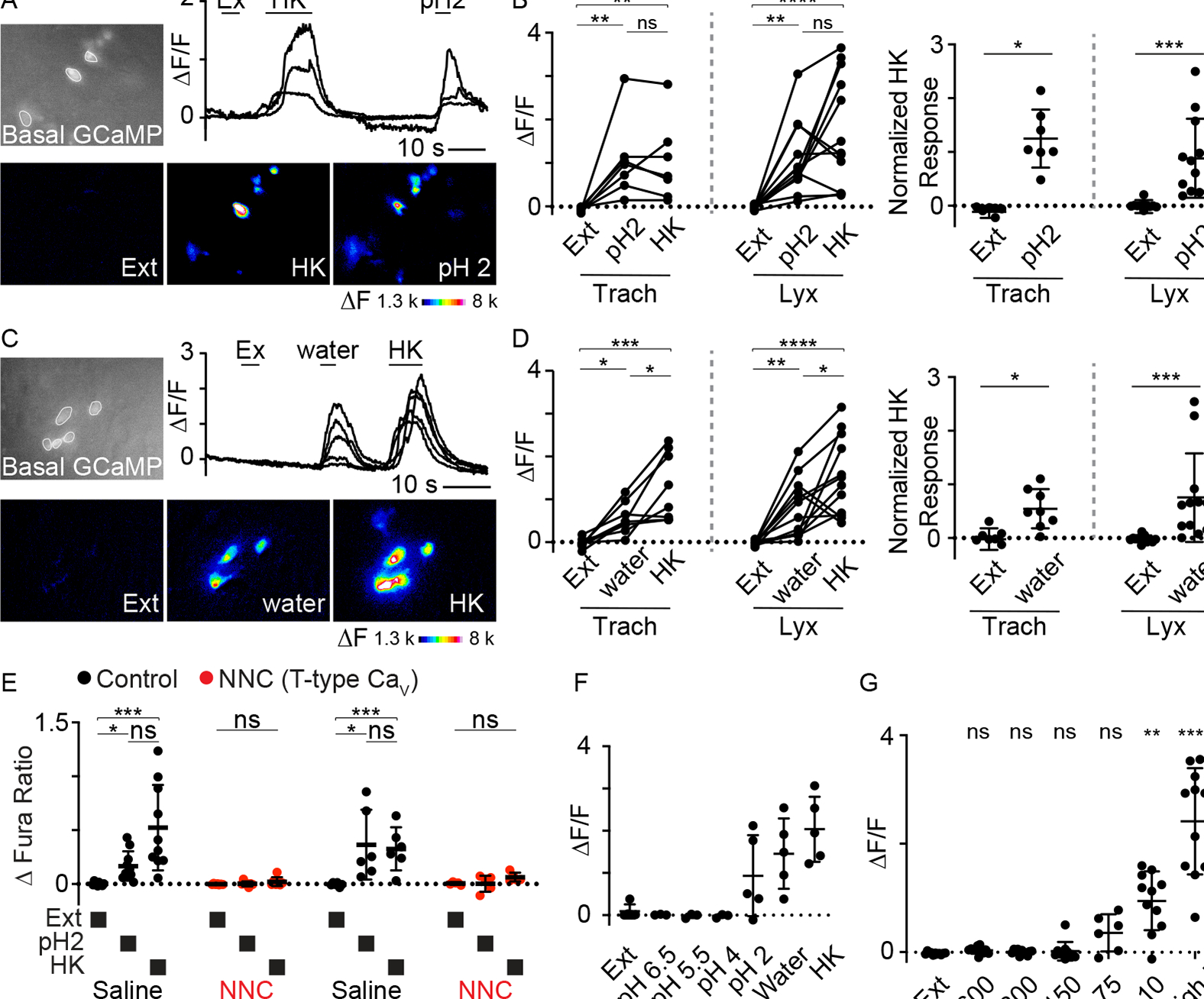
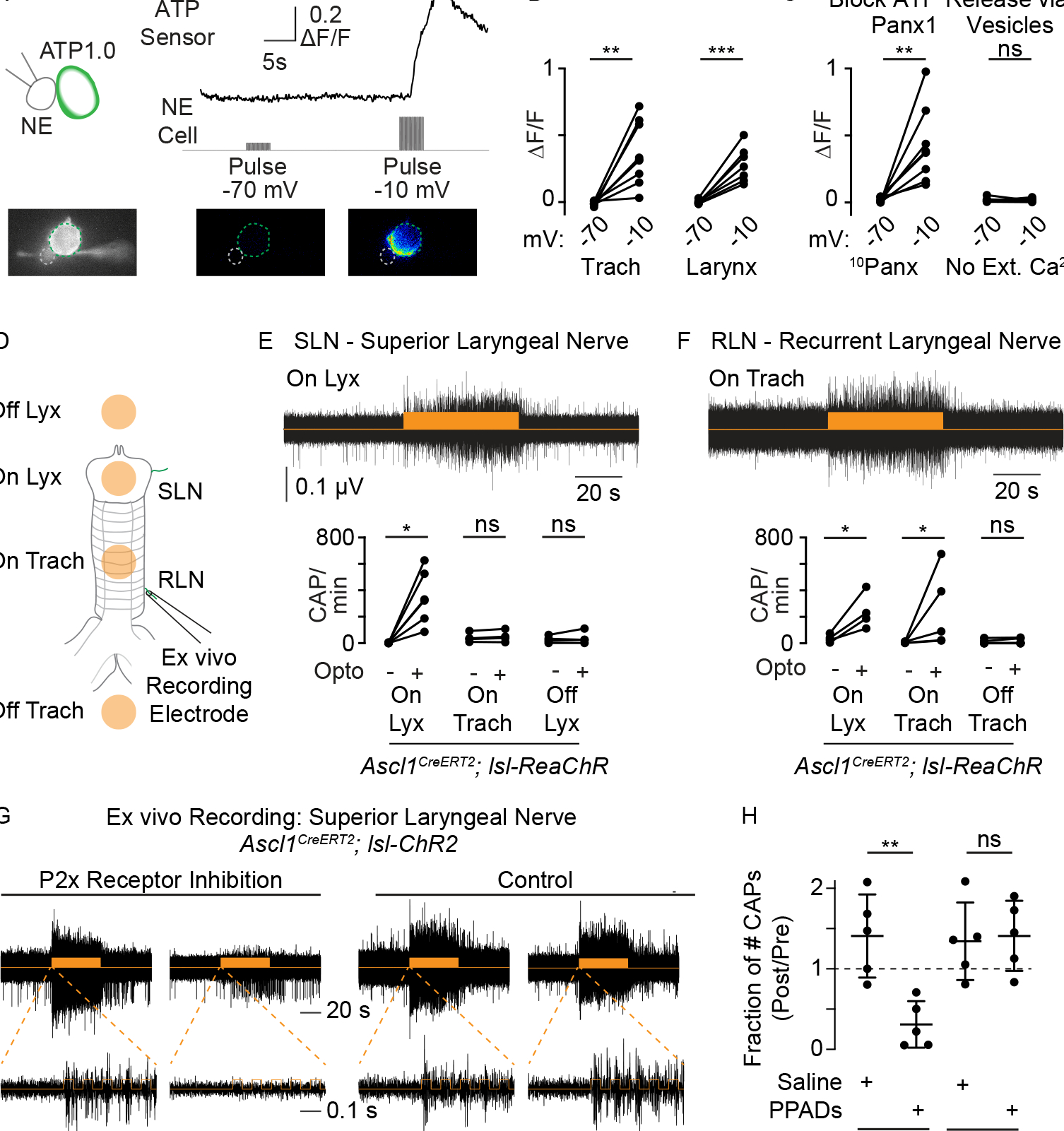
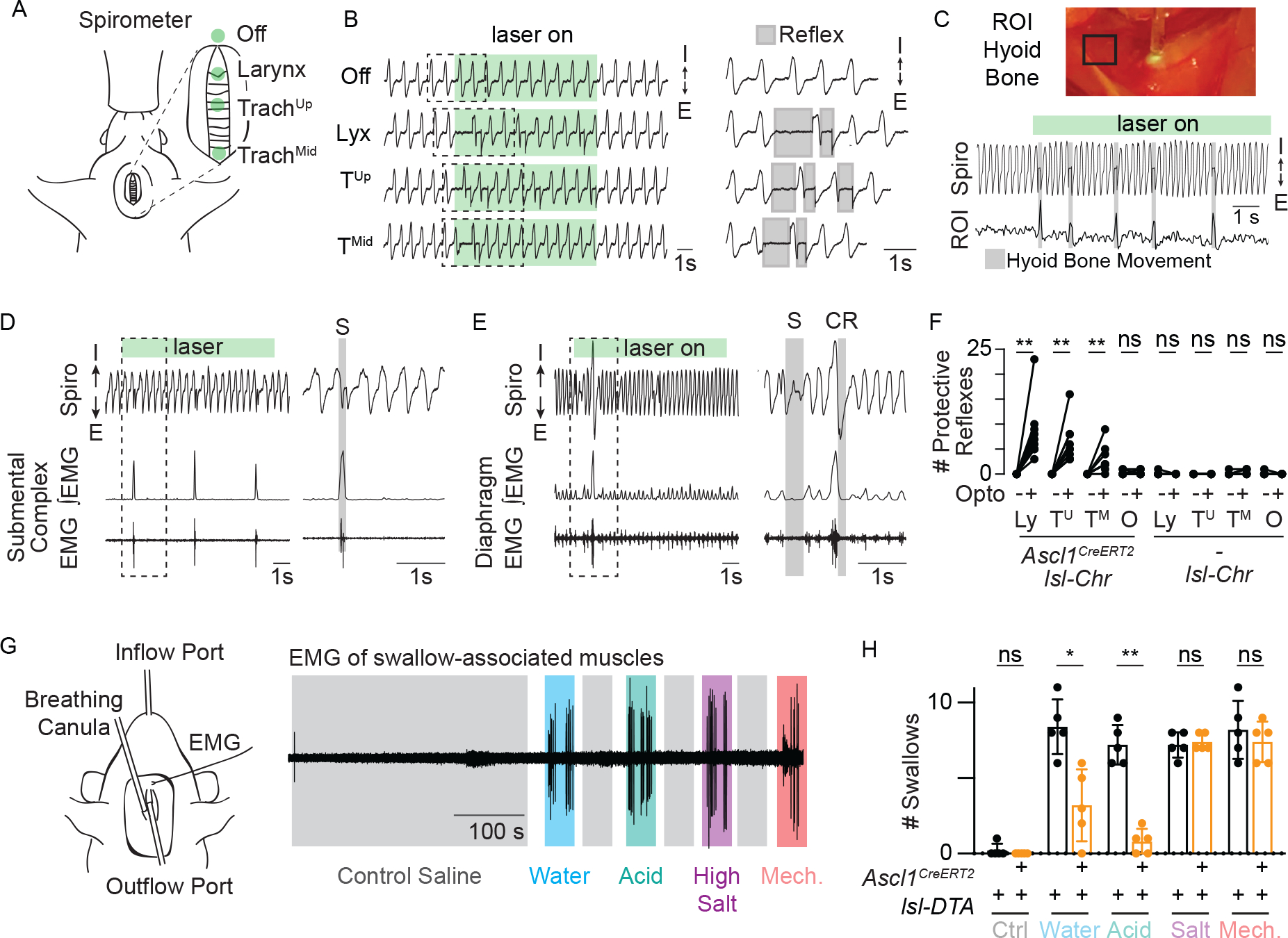
Airway neuroendocrine (NE) cells have been proposed to serve as specialized sensory epithelial cells that modulate respiratory behavior by communicating with nearby nerve endings. However, their functional properties and physiological roles in the healthy lung, trachea, and larynx remain largely unknown. In this work, we show that murine NE cells in these compartments have distinct biophysical properties but share sensitivity to two commonly aspirated noxious stimuli, water and acid. Moreover, we found that tracheal and laryngeal NE cells protect the airways by releasing adenosine 5'-triphosphate (ATP) to activate purinoreceptive sensory neurons that initiate swallowing and expiratory reflexes. Our work uncovers the broad molecular and biophysical diversity of NE cells across the airways and reveals mechanisms by which these specialized excitable cells serve as sentinels for activating protective responses.
Conflict of interest statement
Figures


Comment in
-
Sentinels of the airways.Science. 2024 Apr 19;384(6693):269-270. doi: 10.1126/science.ado9995. Epub 2024 Apr 18. Science. 2024. PMID: 38669581
References
-
- Daniels SK, Brailey K, Priestly DH, Herrington LR, Weisberg LA, Foundas AL, Aspiration in patients with acute stroke. Arch Phys Med Rehabil. 79, 14–19 (1998). - PubMed
-
- Doggett DL, Tappe KA, Mitchell MD, Chapell R, Coates V, Turkelson CM, Prevention of pneumonia in elderly stroke patients by systematic diagnosis and treatment of dysphagia: An evidence-based comprehensive analysis of the literature. Dysphagia. 16, 279–295 (2001). - PubMed
-
- Lee LY, Yu J, Sensory nerves in lung and airways. Compr. Physiol. 4, 287–324 (2014). - PubMed
Publication types
MeSH terms
Substances
Grants and funding
LinkOut - more resources
Full Text Sources
Molecular Biology Databases
