. 2024 May 14;57(5):1141-1159.e11.
doi: 10.1016/j.immuni.2024.03.022. Epub 2024 Apr 25.

Eliciting a single amino acid change by vaccination generates antibody protection against group 1 and group 2 influenza A viruses

Affiliations

Eliciting a single amino acid change by vaccination generates antibody protection against group 1 and group 2 influenza A viruses

Rashmi Ray et al. Immunity. .

Abstract

Broadly neutralizing antibodies (bnAbs) targeting the hemagglutinin (HA) stem of influenza A viruses (IAVs) tend to be effective against either group 1 or group 2 viral diversity. In rarer cases, intergroup protective bnAbs can be generated by human antibody paratopes that accommodate the conserved glycan differences between the group 1 and group 2 stems. We applied germline-engaging nanoparticle immunogens to elicit a class of cross-group bnAbs from physiological precursor frequency within a humanized mouse model. Cross-group protection depended on the presence of the human bnAb precursors within the B cell repertoire, and the vaccine-expanded antibodies enriched for an N55T substitution in the CDRH2 loop, a hallmark of the bnAb class. Structurally, this single mutation introduced a flexible fulcrum to accommodate glycosylation differences and could alone enable cross-group protection. Thus, broad IAV immunity can be expanded from the germline repertoire via minimal antigenic input and an exceptionally simple antibody development pathway.

Keywords: human antibody repertoire; immunogen; influenza virus; somatic hypermutation; universal; vaccine.


Conflict of interest statement

Declaration of interests D.L. reports SAB membership for Metaphore Bio (a Flagship company) and consultancy relationships with Tendel Therapies and Lattice Therapeutics Inc. F.D.B. has consultancy relationships with Adimab and Third Rock Ventures and is Chief Editor of The EMBO Journal. M.K. is listed as inventor of patents on vaccine immunogens used in this study filed by the U.S. Department of Health and Human Services.

Figures
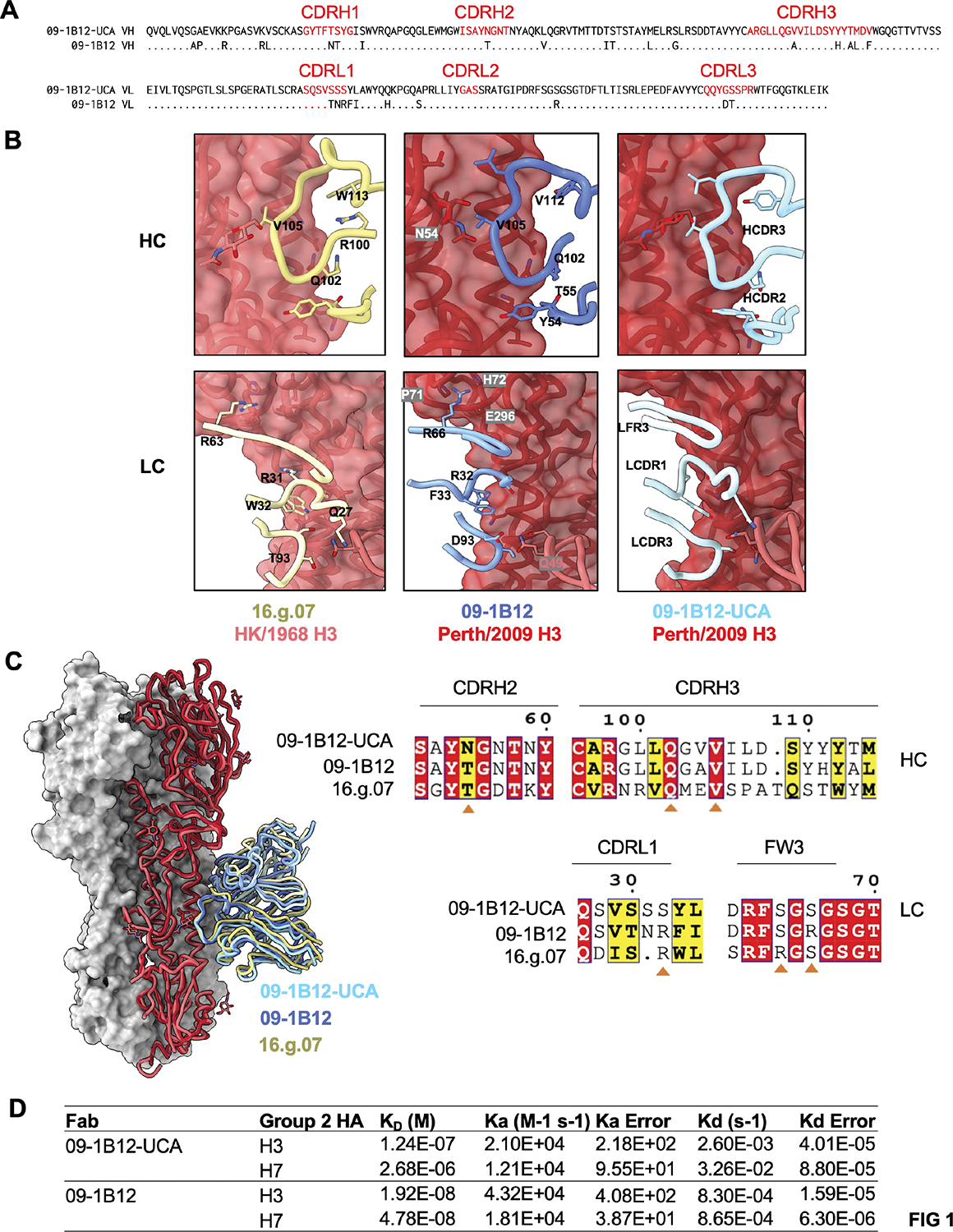
Figure 1.
Figure 1.. Germline VH1–18 QxxV bnAb shows natural affinity for HA from group 2 IAV.
(A) Alignment of VH and VL amino acid sequences of 09–1B12-UCA vs mature 09–1B12. (B) CryoEM structure of 09–1B12-UCA and crystal structure of 09–1B12 in complex with H3 trimer bearing the H3ssF stem sequence (A/Perth/16/2009= red). Additional comparison is made with 16.g.07 (5KAN), another VH1–18 QxxV class bnAb (with H3 trimer A/Hong Kong/1/1968 = pink). (C) Overlay of the three antibodies along with conservation of antibody contacts sites in their HC and LC sequences (orange triangle). (D) Affinities of the germline versus mature forms of 09–1B12 for group 2 HA trimers (H3 from A/Perth/16/2009 and H7 from A/Shanghai/02/2013) [global fitting from four dilution curves for each antibody type (0.625 mM, 1.25 mM, 2.5 mM, and 5 mM), one experiment]. The HC and LC nucleotide sequences of 09–1B12-UCA was derived previously. Natural gHgL affinities for H7 and H3 trimers are also seen for multiple VH1–18 QxxV bnAb class members (10−6-10−8 M) (Table S3). See also Figure S1 and Tables S1, S2 (in relation to B,C).
Figure 2.
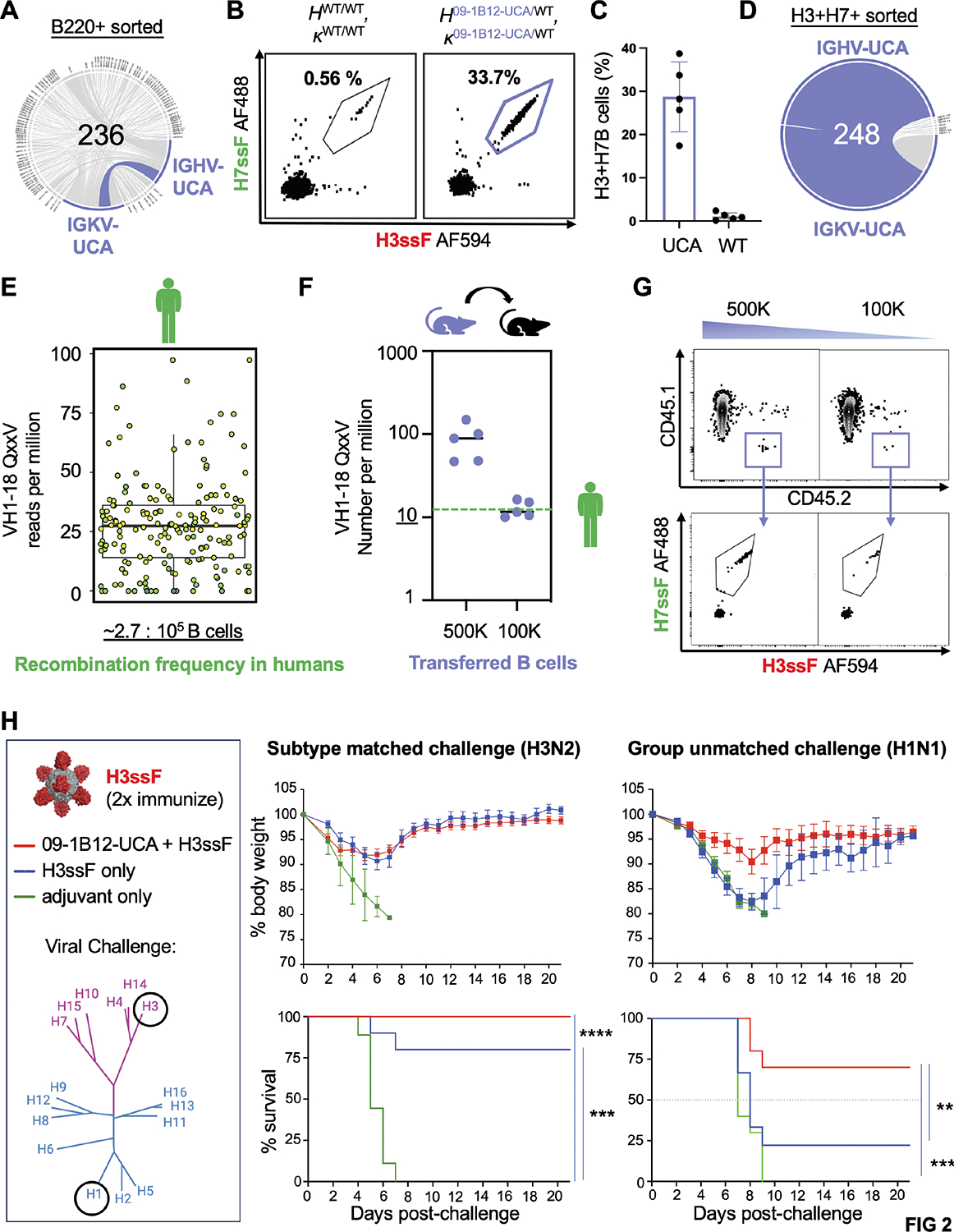
Figure 2.. A group 2 HA stem immunogen elicits vaccine protection from group-unmatched influenza virus, but only when VH1–18 QxxV bnAb precursors are present at physiological frequency.
(A) HC and LC sequencing of B220+ cells from CD45.2 09–1B12-UCA donor mice (H09–1B12-UCA/WT, κ09–1B12-UCA/WT) (one mouse, one experiment). Of these cells 11.02% were paired IGHV/IGKV for the VH1–18 QxxV 09–1B12-UCA sequence. (B) B220+ B cell cross-reactivity to H3ssF-AF594 and H7ssF-AF488 in WT C57Bl/6 versus 09–1B12-UCA donor mice. These cross-reactive B cells were also not specific for the ferritin scaffold as they did not bind H3ssF-KO or H7ssF-KO (central stem epitope KO = N-linked glycan at 45HA2). (C) Proportion of the H3+/H7+ cross-reactive B cells in WT C57Bl/6 versus 09–1B12-UCA donor mice (H3ssF+/H7ssF+/ H3ssF-KO/H7ssF-KO) (n=5, mean ± SD, one experiment). (D) Enrichment of the VH1–18 QxxV UCA in cross-reactive B cells was observed at 83.5% (one mouse, one experiment). (E) Box plot of frequencies of the VH1–18 QxxV bnAb precursors among IgM antibody repertoires of n=10 human subjects. A box plot containing the biological and technical replicates is presented; a separate breakdown of these values in each individual human subject is presented in Figure S4A. From this data we obtain a median bnAb precursor frequency of 2.7 per 100,000 B cells. (F,G) To recapitulate this value in the B cell repertoires of CD45.1 mice, we transferred CD45.2 09–1B12-UCA B cells (H09–1B12-UCA/WT, κ09–1B12-UCA/WT) at increasing amounts and then measured the VH1–18 QxxV bnAb precursor frequency (H3ssF+/H7ssF+/ H3ssF-KO/H7ssF-KO) in the spleen of the recipient mice. Transfer of 100,000 09–1B12-UCA B cells reproducibly gave a value of ~1 in 100,000 B cells (n=5 recipient mice per transfer amount, one experiment), consequently this was the VH1–18 QxxV bnAb precursor frequency used in all subsequent immunization experiments. (H) 09–1B12-UCA B cells were transferred (or not transferred) to recipient mice that were 2x sequentially immunized with H3ssF (day 0 prime + day 42 boost) and then lethally challenged (day 56) with subtype matched H3N2 influenza virus [108 TCID50/ml X-31] or group unmatched H1N1 influenza virus [104 TCID50/ml mouse-adapted A/California/2009 (maA/Cal/09),]. The genetic distance of these influenza virus subtypes is also shown by the accompanying phylogenetic tree of HA IAV diversity (group 2 = purple, group 1 = blue). Weight loss and survival were monitored over 21 days. For subtype-matched H3N2 challenge: ****P<0.0001 between 09–1B12-UCA cells + H3ssF versus Sigma adjuvant; ***P<0.001 between H3ssF alone vs Sigma adjuvant (n=10 mice per group, Mantel-Cox test of survivorship, one experiment). For group-unmatched H1N1: **P<0.025 between 09–1B12-UCA cells + H3ssF vs H3ssF alone; ***P<0.001 between 09–1B12-UCA cells + H3ssF vs Sigma adjuvant alone, where the n=2 surviving from H3ssF only group (absence of 09–1B12-UCA cells) was not statistically significant (P>0.05) (n=10 mice per group, Mantel-Cox test of survivorship, one experiment). See also Figure S2 and S3 (in relation to A–D) and Figure S4 (in relation to E).
Figure 3.
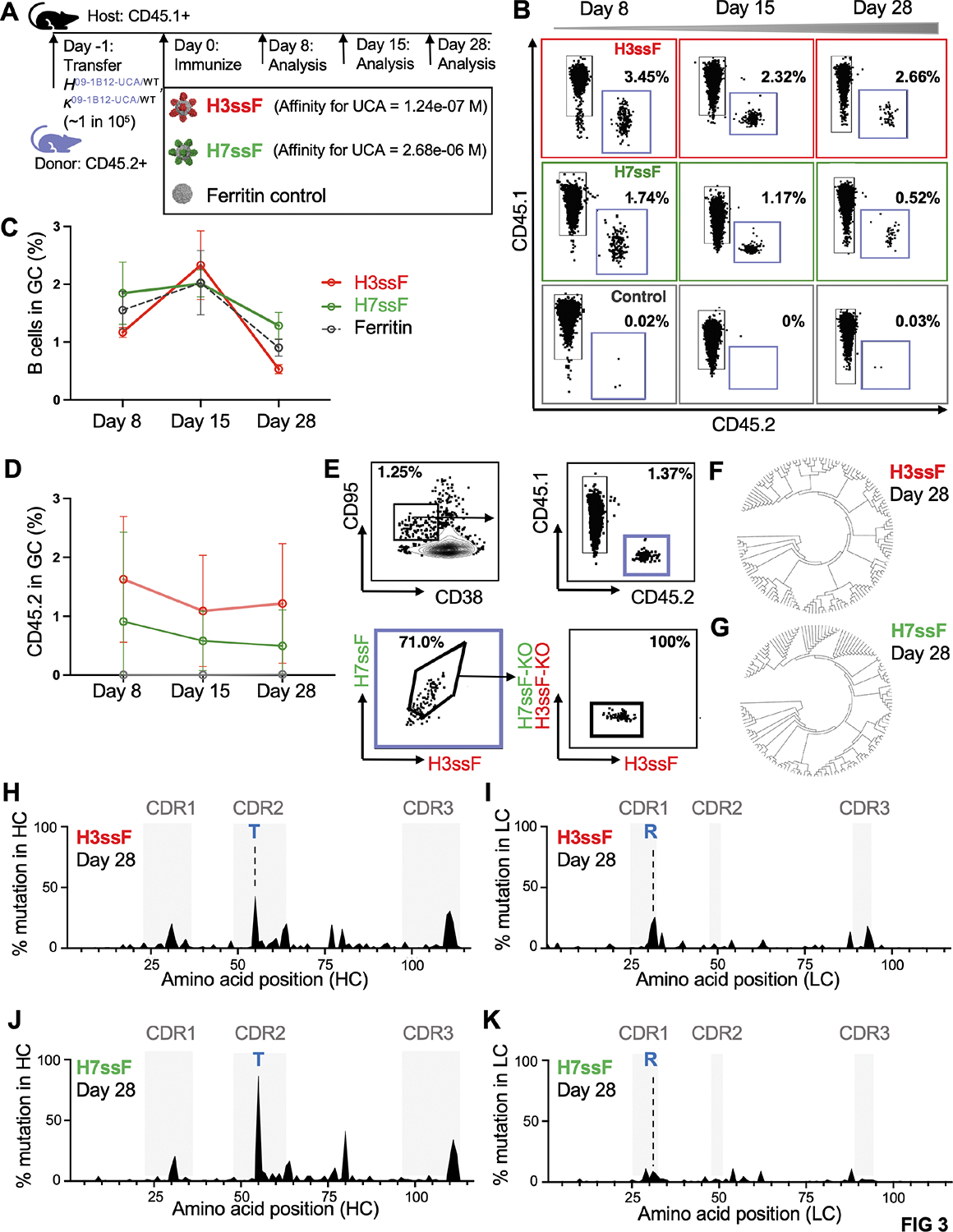
Figure 3.. Stem nanoparticles selectively expand VH1–18 QxxV bnAb precursors from physiological frequency in the antibody repertoire and induce diversification through somatic hypermutation in GCs.
(A) Schematic of adoptive transfer performed at precursor frequencies of ~1 per 105 09–1B12-UCA B cells into WT mice at day −1 and subsequent single immunization of higher affinity H3ssF or lower affinity H7ssF. Naked ferritin particles were also given as a control. All vaccines were adjuvanted by the Sigma Adjuvant System. Spleens were sampled at the time points indicated. (B) Representative flow plots of CD45.2 B cells being recruited to GCs at days 8, 15, and 28 post-vaccination. (C) The percentage of GC B cells in the CD45.1 host was quantified at each time point (n=5 mice per immunogen, mean ± SD, one experiment). (D) The percentage of CD45.2 B cells within the host GCs each time point (n=5 mice per immunogen, mean ± SD, one experiment). (E) The GC CD45.2 B cells were also marked by epitope specificity to the central stem site [H3ssF+/H7ssF+/H3ssF-KO/H7ssF-KO (central stem epitope KO =N-linked glycan at 45HA2)] and single GC CD45.2 B cells in this gate were sorted by FACS and subjected to BCR sequencing. Results presented in B-E were recapitulated if H7 and H3 trimers were used (instead of nanoparticles) as the antigen B cell probes (Figure S5C–G). (F, G) HC nucleotide diversification of H3ssF+/H7ssF+/H3ssF-KO/H7ssF-KO B cell clones at 28 days after immunization with H3ssF or H7ssF. (H) Mutation frequency in the HC amino acid sequence at 28 days post immunization with H3ssF. (I) Mutation frequency in the paired LC amino sequence at 28 days post immunization with H3ssF. (J) Mutation frequency in the HC amino sequence at 28 days post immunization with H7ssF. (K) Mutation frequency in the paired LC amino sequence at 28 days post immunization with H7ssF. (H-K) Blue letters mark enrichment of amino acid mutations also present in mature 09–1B12 and 16.g.07. Data from (F-K) is from 125 GC BCRs for H3ssF (n=3 mice), 111 GC BCRs for H7ssF (n=3 mice); one experiment. See also Figure S5 (in relation to A–E) and Table S4 (in relation to F–K).
Figure 4.
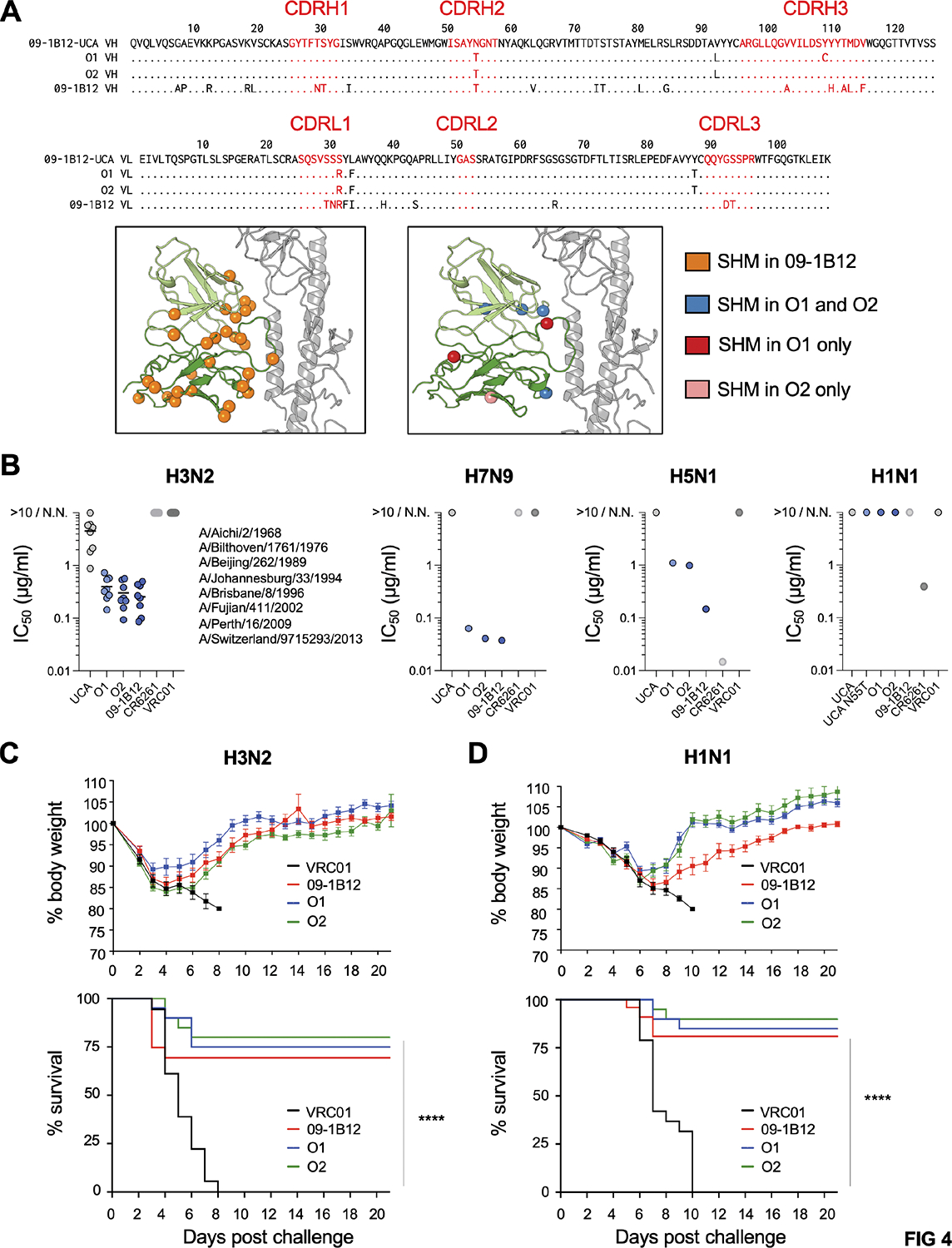
Figure 4.. Vaccine expansion of cross-group protective IAV bnAbs that use minimal SHM.
(A) O1 and O2 were example mAbs expanded after a single immunization with H3ssF or H7ssF, respectively. O1 and O2 sequences contain some of the mutations present in mature 09–1B12, but have far lower SHM, as noted in the amino acid alignments and antibody structure. (B) Neutralization activities of 09–1B12-UCA, O1, O2 and 09–1B12 across: H3N2 (eight diverse viral strains covering >50 years of diversification: A/Aichi/2/1968, A/Bilthoven/1761/1976 A/Beijing/353/1989, A/Johannesburg/33/1994, A/Brisbane/8/1996, A/Fujian/411/2002, A/Perth/16/2009, A/Switzerland/9715293/2013); H7N9 (A/Shanghai/02/2013); H5N1 (A/Vietnam/1203/2004); and H1N1 (A/California/07/2009). Cross-group protecting VH1–18 QxxV bnAbs neutralize group 2 viruses but show more limited neutralizing activity against group 1 IAV,. VRC01 served as an isotype control, 09–1B12 was a positive control for group 2 IAV neutralization and CR6261 was a positive control for group 1 IAV neutralization. N.N. = non-neutralizing (each antibody was run in triplicate, one experiment). (C) Weight loss and survival from lethal H3N2 virus challenge (108 TCID50/ml X-31) following passive transfer of 5 mg/kg O1, O2, 09–1B12 or VRC01 as isotype control [n=20 mice per group, ****P<0.001 (Mantel-Cox test of survivorship), one experiment]. (D) Weight loss and survival from lethal H1N1 challenge [104 TCID50/ml maA/Cal/09,] following passive transfer of 5 mg/kg O1, O2, 09–1B12 or VRC01 as isotype control [n=20 mice per group, ****P<0.0001 (Mantel-Cox test of survivorship), one experiment]. See also Table S4 (in relation to A).
Figure 5.
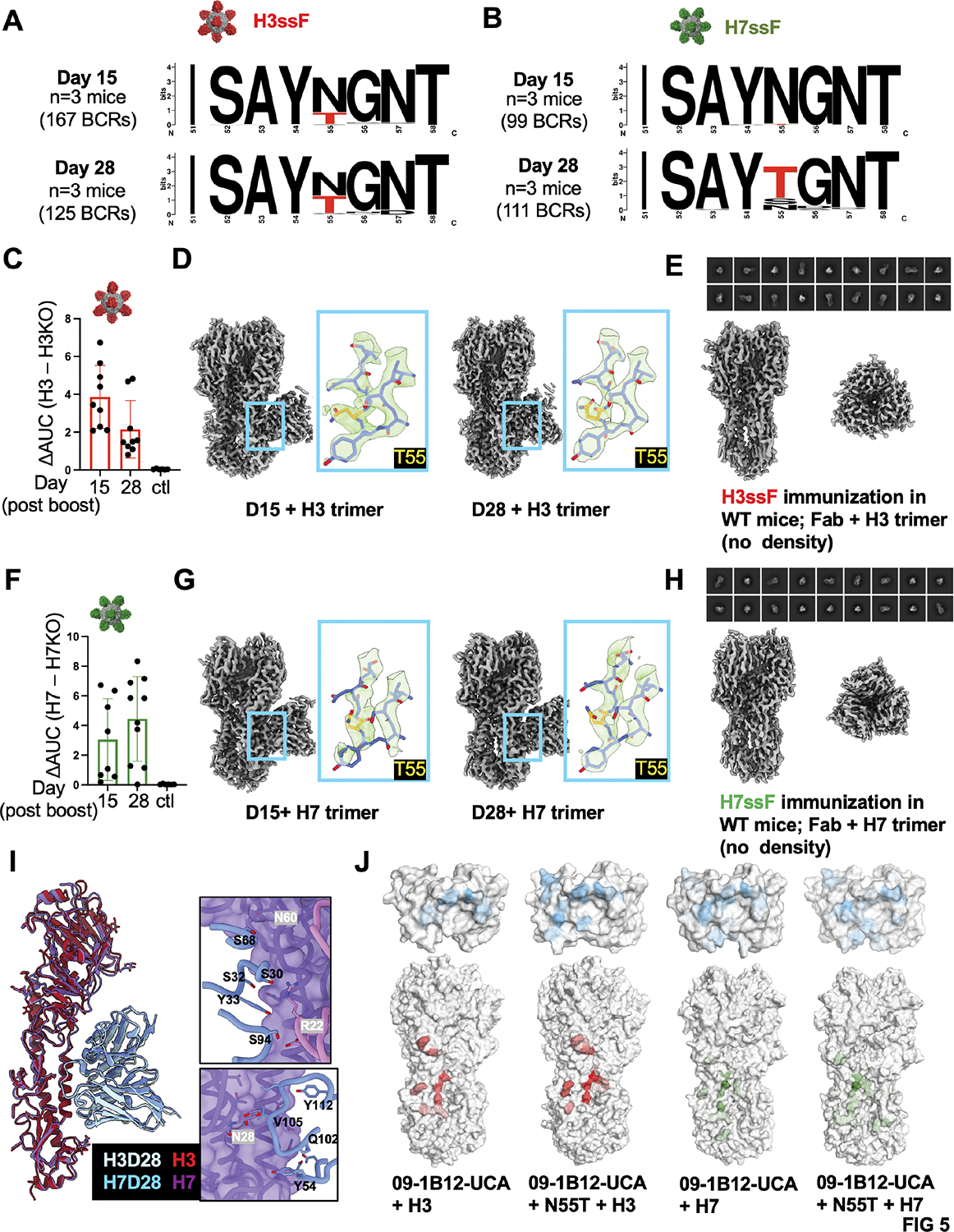
Figure 5.. Stem focused VH1–18 QxxV responses enrich for the public mutation N55T within germinal centers and serum antibodies elicited by stem nanoparticles.
(A, B) Logo plots of the CDRH2 domain of the VH1–18 QxxV class precursors enriched in the GCs at 15 and 28 days post-immunizations with H3ssF or H7ssF (see also Figure 3F–K; 167 GC BCRs for H3ssF at Day 15 (n=3 mice), 125 GC BCRs for H3ssF at Day 28 (n=3 mice), 99 GC BCRs for H7ssF at Day 15, 111 GC BCRs for H7ssF at Day 28 (n=3 mice); one experiment). (C-I) CryoEMPEM was performed on VH1–18 QxxV antibodies elicited in the serum after sequential immunization (day 0 prime + day 42 boost) with either H3ssF or H7ssF. In all cases immune sera were evaluated at 15 and 28 days post-boost. (C) H3ssF elicited IgG showing differential reactivity to H3 ± epitope KO (central stem epitope KO= N-linked glycan at 45HA2); adjuvant only is the control (n=9 at Day 15 and n=9 mice at Day 28; n=6 control mice received adjuvant only; one experiment). (D) CryoEMPEM of H3ssF immune sera at 15 and 28 days post-boost, with antibodies in complex with H3 trimer (A/Perth/16/2009) [immune sera pooled from all mice at Day 15 (one experiment); immune sera pooled from all mice at Day 28 (one experiment)]. The 09–1B12-UCA Fab was docked into the maps and the HC N55 residues are boxed in red. (E) No density of 09–1B12-like Fab in complex with H3 trimer was found in the immune sera from WT C57Bl/6 mice (lacking VH1–18 QxxV bnAb precursors) subjected to the same H3ssF immunization regimen (28 days post-boost is shown) (immune sera pooled from n= 10 mice, one experiment). (F) H7ssF-elicited IgG showing differential reactivity to H7 ± epitope KO (central stem epitope KO= N-linked glycan at 45HA2); adjuvant only is the control (n=8 mice at Day 15 and n=9 mice at Day 28; n=6 control mice received adjuvant only; one experiment). (G) CryoEMPEM of H7ssF immune sera at 15 and 28 days post-boost, with antibodies in complex with H7 trimer (A/Shanghai/02/2013) [immune sera pooled from all mice at Day 15 (one experiment); immune sera pooled from all mice at Day 28 (one experiment)]. The 09–1B12-UCA Fab was docked into the maps and the HC T55 residues are yellow. (H) No density of 09–1B12-like Fab in complex with H7 trimer was found in the immune sera from WT C57Bl/6 mice (lacking VH1–18 QxxV bnAb precursors) subjected to the same H7ssF immunization regimen (28 days post-boost is shown) (immune sera pooled from n= 10 mice, one experiment). (I) Overlapping cryo-EMPEM structure of H7ssF and H3ssF immune sera at 28 days post-boost [09–1B12-UCA Fab docked in; with LC contacts (upper panel) and HC contacts (lower panel) shown]. (J) MD simulations of 09–1B12-UCA in contact with H3 (A/Perth/16/2009) or H7 (A/Shanghai/02/2013) trimers ± N55T. The color gradient on the surface indicates the interaction time for hydrogen bonds and charged interactions (darker colors means longer interaction time). See also Table S4 (in relation to A,B) and Figure S1, Table S1 (in relation to D,G,I).
Figure 6.
Figure 6.. N55T alone enables cross-group recognition and protection.
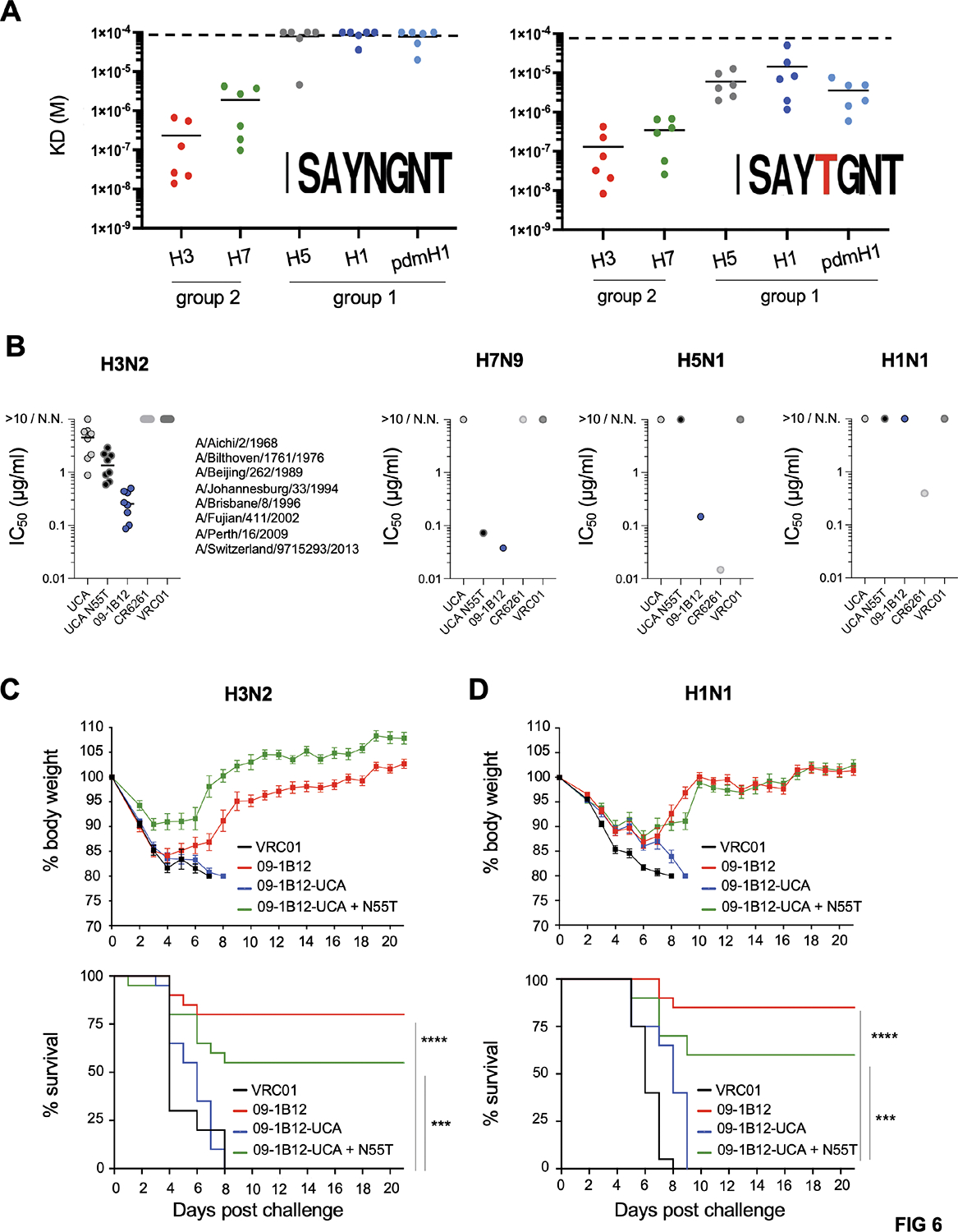
(A) Binding affinities for UCA-inferred Fabs from six VH1–18 QxxV bnAb class members ± N55T [09–1B12, 05–2A09, 05–2D04, 27–1D08, 21–1A01, 06–1F04] to group 1 and group 2 IAV HAs (H3 = A/Perth/16/2009; H7 = A/Shanghai/02/2013; H5 = A/Indonesia/05/2005; H1 = A/Michigan/45/2015; pdmH1 = A/California/07/2009) as measured by biolayer interferometry [global fitting from four dilution curves for each antibody type (0.625 mM, 1.25 mM, 2.5 mM, and 5 mM), one experiment]. Values above 100 uM are undetectable with our instrument. (B) Neutralization activities of 09–1B12-UCA, 09–1B12-UCA + N55T, and 09–1B12 across: H3N2 (eight diverse viral strains covering >50 years of diversification: A/Aichi/2/1968, A/Bilthoven/1761/1976 A/Beijing/353/1989, A/Johannesburg/33/1994, A/Brisbane/8/1996, A/Fujian/411/2002, A/Perth/16/2009, A/Switzerland/9715293/2013); H7N9 (A/Shanghai/02/2013); H5N1 (A/Vietnam/1203/2004); and H1N1 (A/California/07/2009). Cross-group protecting VH1–18 QxxV bnAbs neutralize group 2 viruses but show more limited neutralizing activity against group 1 IAV,. N.N. = non-neutralizing. VRC01 served as an isotype control, 09–1B12 was a positive control for group 2 IAV neutralization and CR6261 was a positive control for group 1 IAV neutralization. The neutralization values obtained were generated within the same experiment shown in Figure 4B and therefore contain the same positive and negative control values (each antibody was run in triplicate, one experiment). (C) Weight loss and survival from lethal H3N2 virus challenge (108 TCID50/ml X-31) following passive transfer of 5 mg/kg 09–1B12-UCA, 09–1B12-UCA + N55T, 09–1B12, or VRC01 as the isotype control [n=20 mice per group, ****P<0.0001, ***P<0.001 (Mantel-Cox test of survivorship)]. (D) Weight loss and survival from lethal H1N1 virus challenge [104 TCID50/ml maA/Cal/09,] following passive transfer of 5 mg/kg 09–1B12-UCA, 09–1B12-UCA + N55T, 09–1B12 or VRC01 as isotype control [n=20 mice per group, ****P<0.0001, ***P<0.001 (Mantel-Cox test of survivorship)]. See also Table S3 (in relation to A) and Figure S6 (in relation to A–D).
Figure 7.
Figure 7.. N55T provides a ‘fulcrum release’ to enable recognition of group 1 and group 2 HA stems.
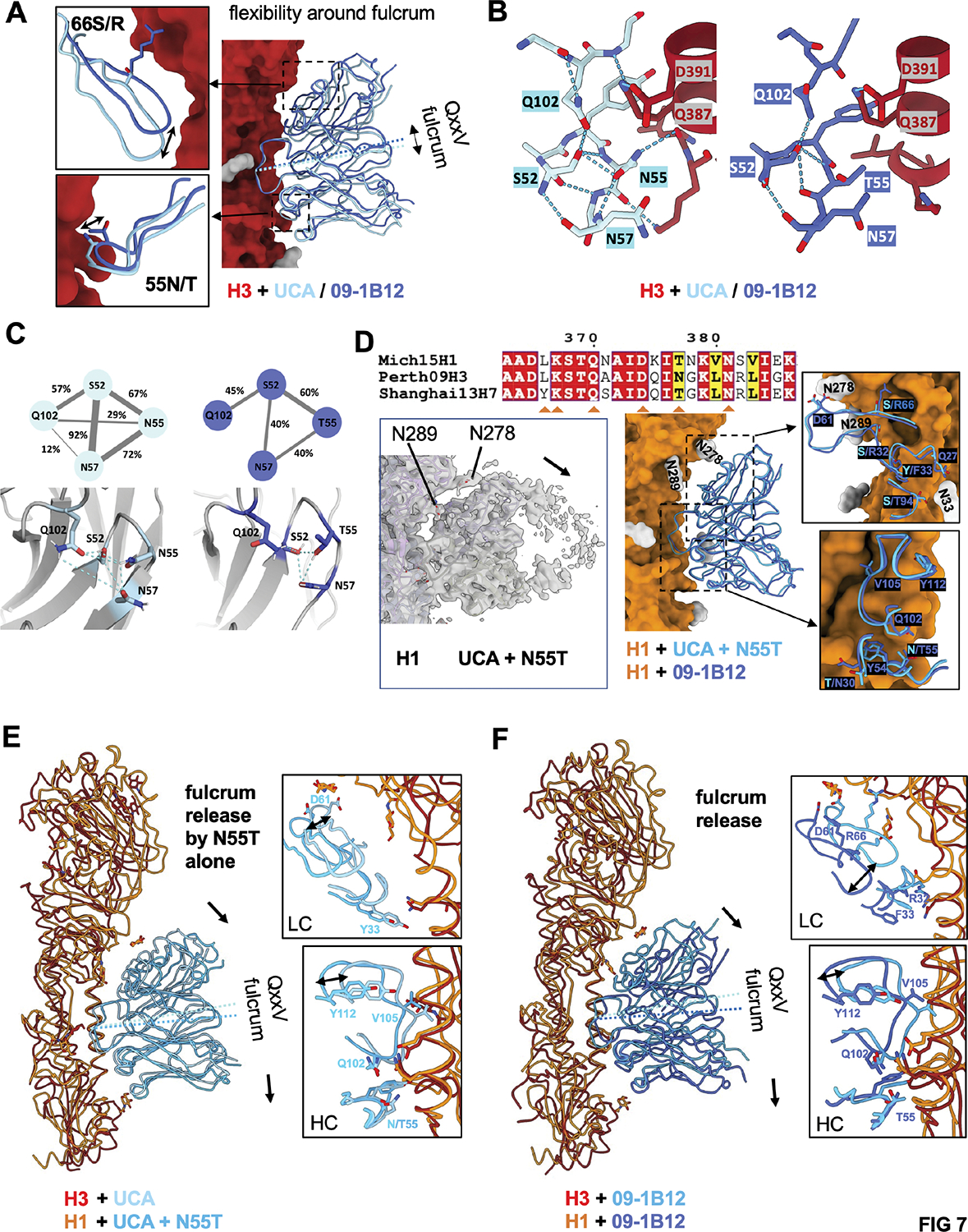
(A) Overlay of the 09–1B12-UCA and mature 09–1B12 in complex with H3 (A/Perth/16/2009; see also Figures 1B,C, S1, Tables S1, S2) illustrates the angular change where the HC and LC pivot around the QxxV fulcrum (=flexibility around the fulcrum). (B) N55 forms more hydrogen bonds with S52, N57, and Q102 in the CDRH2 and CDRH3 loops (visualized using ChimeraX). By contrast, T55 shows substantially fewer interactions to better accommodate changes in the binding angles. (C) MD simulations on the Fabs alone (without HA) show the percentages of interactions between paired residues (S52, N/T55, N57, and Q102) during simulations. (D) The cryoEM map of 09–1B12-UCA + N55T and overlayed structures of 09–1B12-UCA + N55T/09–1B12 in complex with H1 (A/Michigan/45/2015) (3.5 and 3.3 Å, respectively). A rotational tilt is imposed by group 1 IAV N-glycans at positions N289, N278, and N33 from the neighboring protomer interacting with the antibody LC. (E) N55T alone enables this tilting around the QxxV fulcrum (which we term fulcrum release) as visualized by overlay of H3 + 09–1B12-UCA co-complex with H1 + 09–1B12-UCA-N55T co-complex. (F) Fulcrum release as seen in the mature antibody as visualized by overlay of H3 + 09–1B12 co-complex with H1 + 09–1B12 co-complex. Arrows indicate the flexible antibody tilting enabled by fulcrum release to accommodate the conserved group 1 IAV glycan positions. See also Figure S1, Tables S1, S2.

References

    1. Caradonna TM, and Schmidt AG (2021). Protein engineering strategies for rational immunogen design. npj Vaccines 6, 154. - PMC - PubMed
    1. Sangesland M, and Lingwood D (2021). Antibody Focusing to Conserved Sites of Vulnerability: The Immunological Pathways for ‘Universal’ Influenza Vaccines. Vaccines 9, 125. - PMC - PubMed
    1. Angeletti D, Gibbs JS, Angel M, Kosik I, Hickman HD, Frank GM, Das SR, Wheatley AK, Prabhakaran M, Leggat DJ, McDermot AB, and Yewdell JW (2017). Defining B cell immunodominance to viruses. Nat. Immunol. 18, 456–463. - PMC - PubMed
    1. Gouma S, Anderson EM, Hensley SE. (2020). Challenges of Making Effective Influenza Vaccines. Ann. Rev. Virol. 7, 495–512. - PMC - PubMed
    1. Petrie JG, and Gordon A (2018). Epidemiological Studies to Support the Development of Next Generation Influenza Vaccines. Vaccines 6, 17. - PMC - PubMed

Publication types

MeSH terms