


Intertemporal Improvement in Physicians' Perceptions of the Short-Term Adverse Outcomes of Neonatal Pain: Results of a Two-Time-Point National Survey
- PMID: 38671688
- PMCID: PMC11049171
- DOI: 10.3390/children11040471
Intertemporal Improvement in Physicians' Perceptions of the Short-Term Adverse Outcomes of Neonatal Pain: Results of a Two-Time-Point National Survey
Abstract
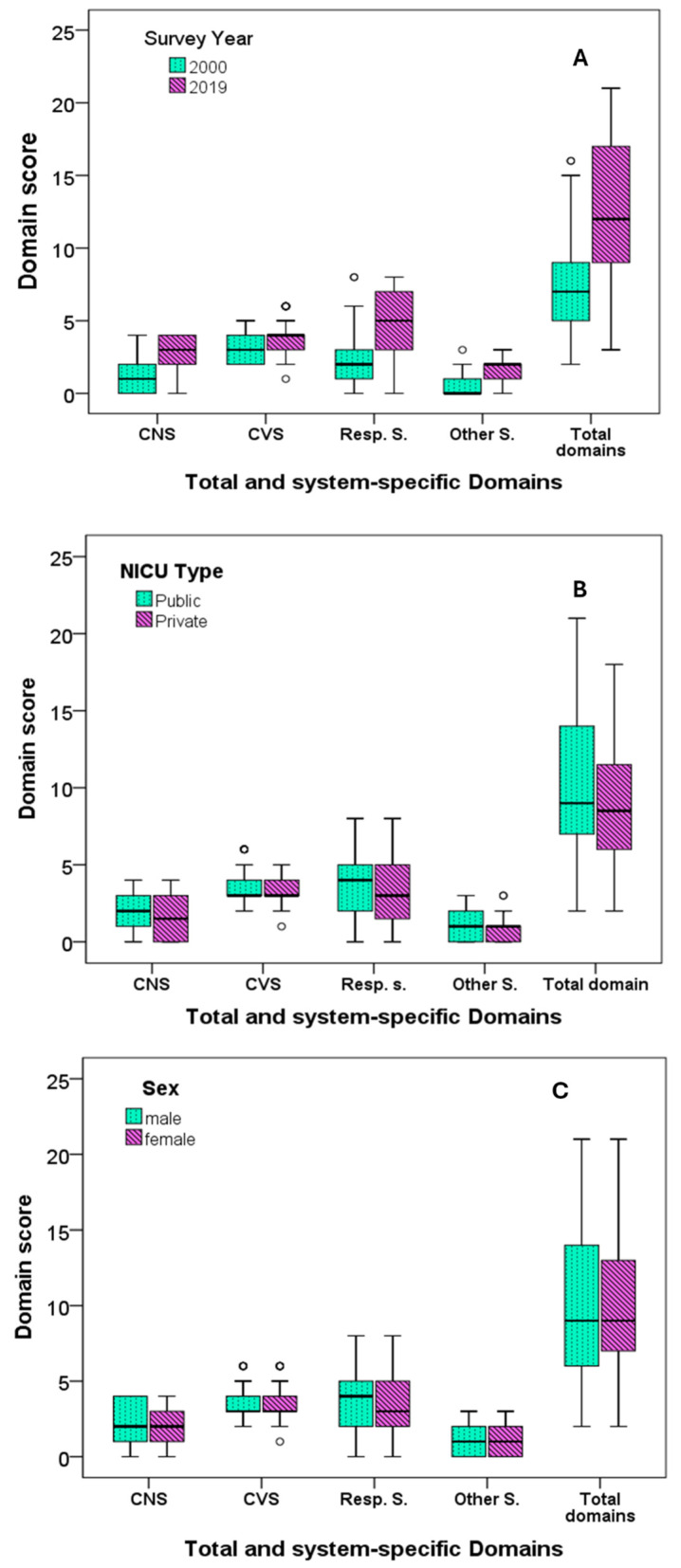
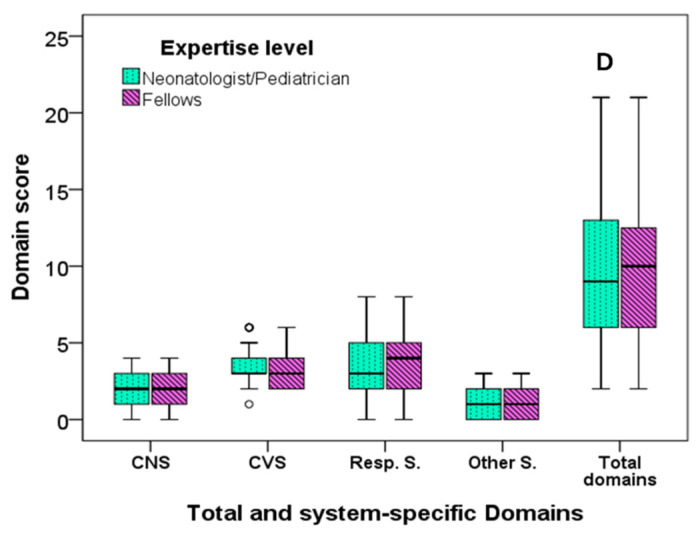
Pain in early life may seriously impact neonatal outcomes. This study aimed to evaluate whether the perceptions of physicians working in neonatal intensive care units (NICUs) of the short-term adverse outcomes associated with neonatal pain have changed over a 20-year period. Self-administered questionnaires were distributed to 117 and 145 neonatologists, pediatricians, and fellows working in level III NICUs in 2000 (T1) and 2019 (T2), respectively. The questionnaire consisted of four domains, including the central nervous, cardiovascular, and respiratory systems, as well as "other systems" (metabolic/endocrine system, growth, and general condition), with 21 total items overall. Although the proportion of positive (correct) responses to the total and system-specific domain scores was significantly higher at T2 than T1, the knowledge of certain short-term adverse outcomes was suboptimal even at T2. Adjustment for cofactors confirmed the independent association of the survey time-point with the total and system-specific domain scores. Moreover, NICU type was an independent significant factor associated with the adjusted total and central nervous system scores, while young doctors had a better knowledge of adverse cardiovascular effects. Conclusions: The perceptions of NICU physicians concerning the short-term outcomes associated with neonatal pain have significantly improved over the past 20 years, although remaining knowledge gaps mandate ongoing efforts to achieve an improvement in neonatal care.
Keywords: adverse effects; analgesics; cardiovascular; central nervous system; neonatology; outcome; pain consequences; preterm infants; respiratory system; sedatives.
Conflict of interest statement
The authors declare no conflict of interest. The funders had no role in the study design, the data collection and analysis, the decision to publish, or the preparation of the manuscript.
Figures
References
-
- Allinson L.G., Denehy L., Doyle L.W., Eeles A.L., Dawson J.A., Lee K.J., Spittle A.J. Physiological Stress Responses in Infants at 29-32 Weeks’ Postmenstrual Age during Clustered Nursing Cares and Standardised Neurobehavioural Assessments. BMJ Paediatr. Open. 2017;1:e000025. doi: 10.1136/bmjpo-2017-000025. - DOI - PMC - PubMed
LinkOut - more resources
Full Text Sources
Miscellaneous
