


Efficacy of Low-Dose Isotretinoin in the Treatment of Rosacea: A Systematic Review and Meta-Analysis
- PMID: 38681262
- PMCID: PMC11052926
- DOI: 10.7759/cureus.57085
Efficacy of Low-Dose Isotretinoin in the Treatment of Rosacea: A Systematic Review and Meta-Analysis
Abstract
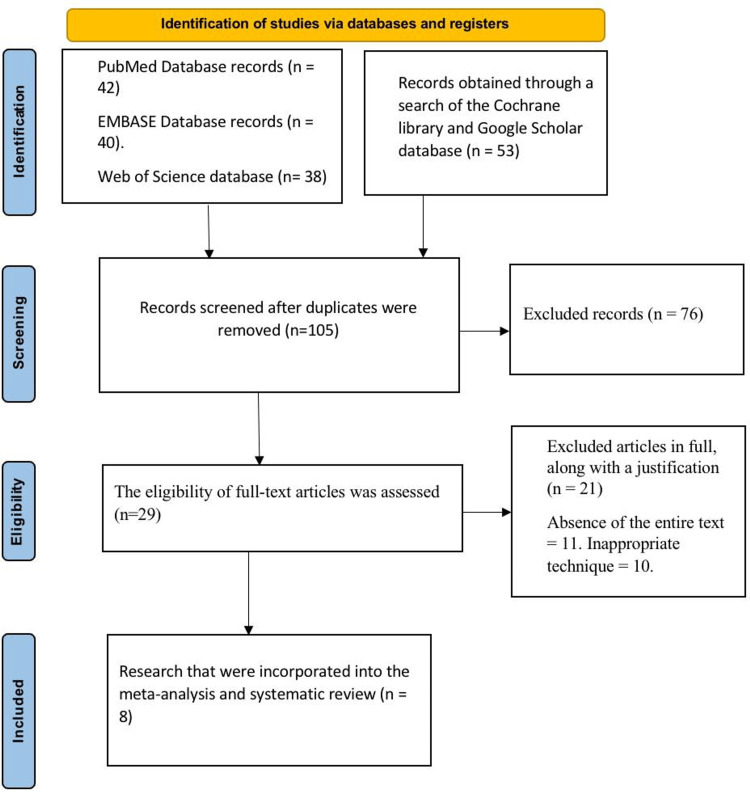
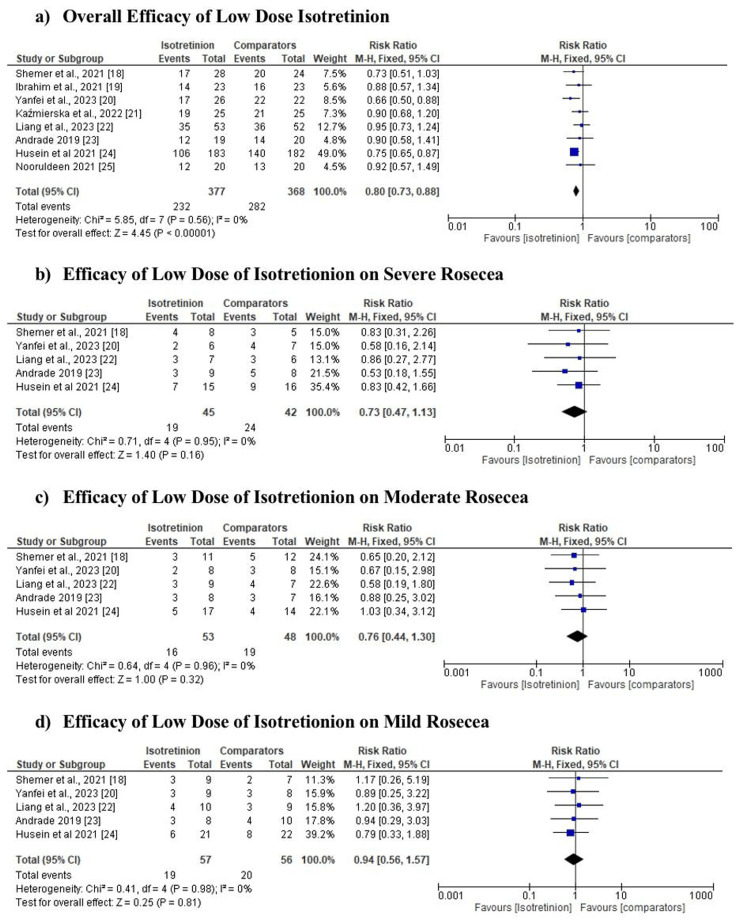
Rosacea is a common cutaneous condition caused by persistent, recurring lesions in facial skin vessels. It is a chronic skin condition with a variety of clinical symptoms and an unknown cause. Rosacea begins with the widening of capillaries and a flushed appearance. Following that, telangiectasia appears, and reddened patches persist, particularly on the cheeks and nose. Erythema persists due to repeated vasodilation and telangiectasia. In addition, skin inflammation manifests as papules, pustules, lymphedema, and fibrosis. Despite recent advances in treatment, rosacea, a chronic inflammatory relapsing central facial dermatosis, can be extremely difficult to manage. The purpose of this meta-analysis and systematic review was to evaluate the effectiveness of low-dose isotretinoin in the treatment of rosacea. Following the guidelines set forth by the Preferred Reporting Items for Systematic Review and Meta-Analysis (PRISMA), the researcher employed the following search terms in the EMBASE, Web of Science, PubMed, Cochrane Library, and Google Scholar databases to provide a therapeutic update relevant to clinical practice: "low dose isotretinoin," "isotretinoin and rosacea," "isotretinoin treatment of rosacea," and "effectiveness of isotretinoin in treating rosacea". The search was carried out by the researcher for articles published from February 2019 to February 2024. The articles included were all published in the English language. The overall frequency of patients with adverse events differed significantly between the groups treated with low-dose isotretinoin and the comparators (minocycline, pulsed dye laser, evening primrose oil, Lactobacillus plantarum, doxycycline, combined dose or placebo) (0.80, 95% CI 0.73 to 0.88, p = 0.0001). Sub-group analysis indicated that there was a difference between the interventions used in the treatments all in favor of low-dose isotretinoin treatment. The results showed that the moderate group had RR: 0.76, 95% CI: 0.44-1.30, I2 = 0%; the mild group had RR: 0.94, 95% CI: 0.56-1.57, I2 = 0%; and the group with severe rosacea had RR: 0.73, 95% CI: 0.47-1.13, I2 = 0%. According to this study, rosacea can be treated effectively with low-dose isotretinoin even in patients at severe stages of the disease by using the recommended dose once a week. Further, the intervention has also been shown to have fewer side effects on the patients. Therefore, this study recommends randomized controlled trials to be done to fully investigate the best combination options for isotretinoin on mild to severe rosacea based on the fact that some of the treatments combined have shown to be effective on treatment.
Keywords: effectiveness of isotretinoin in treating rosacea; isotretinoin and rosacea; isotretinoin treatment of rosacea; low dose isotretinoin; low dose isotretinoin and rosacea.
Copyright © 2024, Assiri et al.
Conflict of interest statement
The authors have declared that no competing interests exist.
Figures
References
-
- Epidermal proteases in the pathogenesis of rosacea. Meyer-Hoffert U, Schröder JM. J Investig Dermatol Symp Proc. 2011;15:16–23. - PubMed
-
- Rosacea: A common, yet commonly overlooked, condition. Blount BW, Pelletier AL. https://pubmed.ncbi.nlm.nih.gov/12182520/ Am Fam Physician. 2002;66:435–440. - PubMed
-
- Risk factors associated with rosacea. Abram K, Silm H, Maaroos HI, Oona M. J Eur Acad Dermatol Venereol. 2010;24:565–571. - PubMed
-
- Current topical and systemic approaches to treatment of rosacea. Korting HC, Schöllmann C. J Eur Acad Dermatol Venereol. 2009;23:876–882. - PubMed
Publication types
LinkOut - more resources
Full Text Sources