


A Chinese adaptation of the Patient Health Questionnaire for Adolescents (PHQ-A): factor structure and psychometric properties
- PMID: 38689265
- PMCID: PMC11061901
- DOI: 10.1186/s12888-024-05783-3
A Chinese adaptation of the Patient Health Questionnaire for Adolescents (PHQ-A): factor structure and psychometric properties
Abstract
Background: To examine the factor structure and psychometric properties of the Patient Health Questionnaire for Adolescents (PHQ-A) in Chinese children and adolescents with major depressive disorder (MDD).
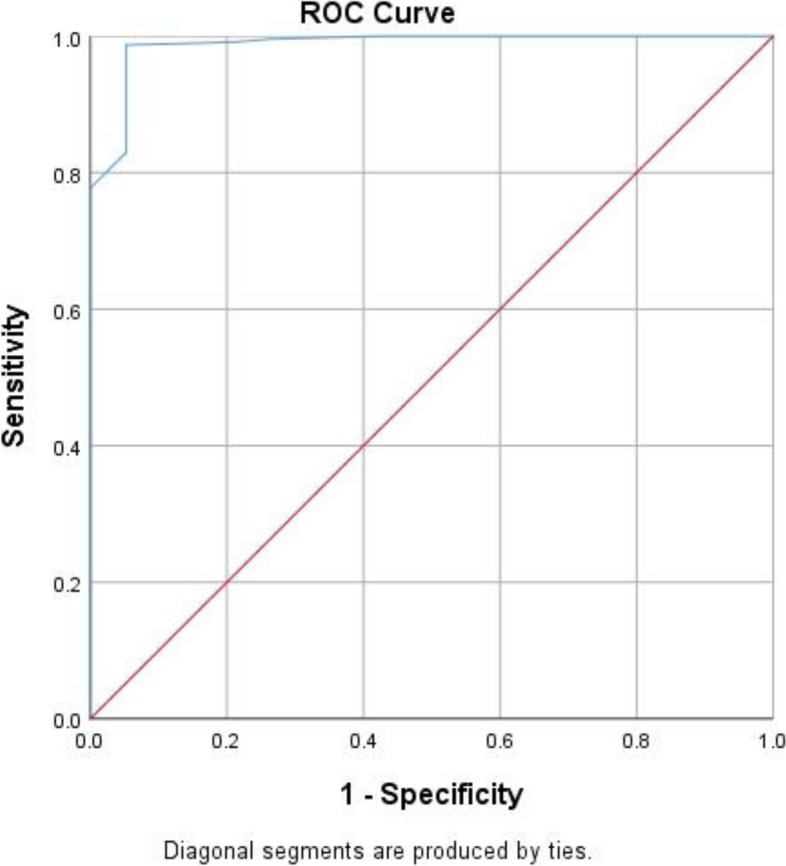
Methods: A total of 248 MDD patients aged between 12 and 18 years were recruited and evaluated by the Patient Health Questionnaire for Adolescents (PHQ-A), the Center for Epidemiological Survey Depression Scale (CES-D), the Mood and Feelings Questionnaire (MFQ), and the improved Clinical Global Impression Scale, Severity item (iCGI-S). Thirty-one patients were selected randomly to complete the PHQ-A again one week later. Confirmatory factor analysis (CFA) was used to test the construct validity of the scale. Reliability was evaluated by Macdonald Omega coefficient. Pearson correlation coefficient was used to assess the item-total correlation and the correlation of PHQ-A with CES-D and MFQ respectively. Spearman correlation coefficient was used to assess test-retest reliability. The optimal cut-off value, sensitivity, and specificity of the PHQ-A were achieved by estimating the Receiver Operating Characteristics (ROC) curve.
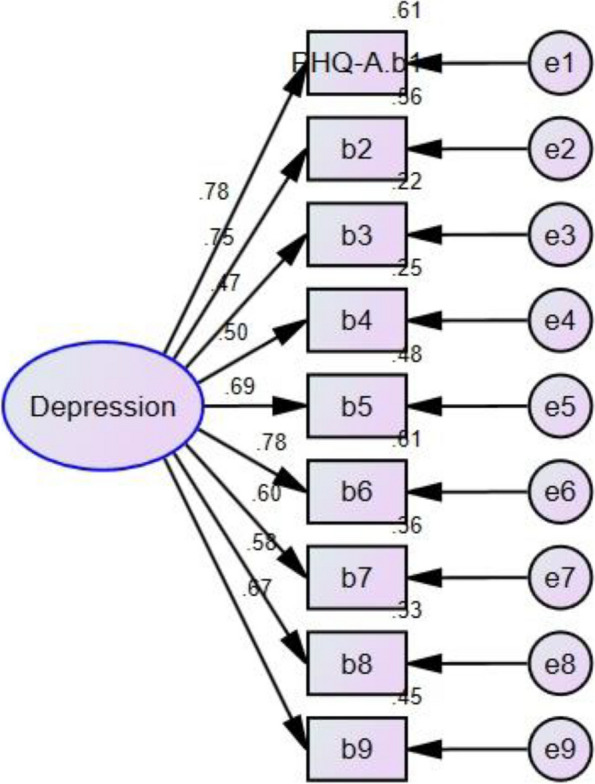
Results: CFA reported adequate loadings for all items, except for item 3. Macdonald Omega coefficient of the PHQ-A was 0.87. The Spearman correlation coefficient of the test-retest reliability was 0.70. The Pearson correlation coefficients of the PHQ-A with CES-D and MFQ were 0.87 and 0.85, respectively (p < 0.01). By taking the iCGI-S as the remission criteria for MDD, the optimal cut-off value, sensitivity and specificity of the PHQ-A were 7, 98.7%, 94.7% respectively.
Conclusion: The PHQ-A presented as a unidimensional construct and demonstrated satisfactory reliability and validity among the Chinese children and adolescents with MDD. A cut-off value of 7 was suggested for remission.
Keywords: Adolescents; Cut-off value; Depression; Factor structure; PHQ-A; Psychometric properties.
© 2024. The Author(s).
Conflict of interest statement
The authors declare no competing interests.
Figures
References
-
- Cho MJ, Seong SJ, Park JE, Chung IW, Lee YM, Bae A, Ahn JH, Lee DW, Bae JN, Cho SJ, et al. Prevalence and Correlates of DSM-IV Mental Disorders in South Korean Adults: The Korean Epidemiologic Catchment Area Study 2011. Psychiatry Investig. 2015;12(2):164–170. doi: 10.4306/pi.2015.12.2.164. - DOI - PMC - PubMed
Publication types
MeSH terms
Grants and funding
- 201904010326/Science and Technology Planning Project of Guangzhou
- 201904010326/Science and Technology Planning Project of Guangzhou
- 201904010326/Science and Technology Planning Project of Guangzhou
- 201904010326/Science and Technology Planning Project of Guangzhou
- 201904010326/Science and Technology Planning Project of Guangzhou
LinkOut - more resources
Full Text Sources
