


Performance of different nebulizers in clinical use for Pressurized Intraperitoneal Aerosol Chemotherapy (PIPAC)
- PMID: 38696384
- PMCID: PMC11065249
- DOI: 10.1371/journal.pone.0300241
Performance of different nebulizers in clinical use for Pressurized Intraperitoneal Aerosol Chemotherapy (PIPAC)
Abstract
Objective: Technical ex-vivo comparison of commercial nebulizer nozzles used for Pressurized Intraperitoneal Aerosol Chemotherapy (PIPAC).
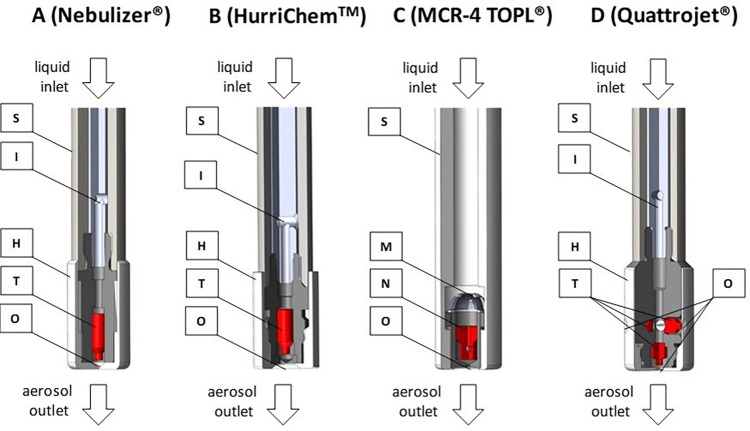
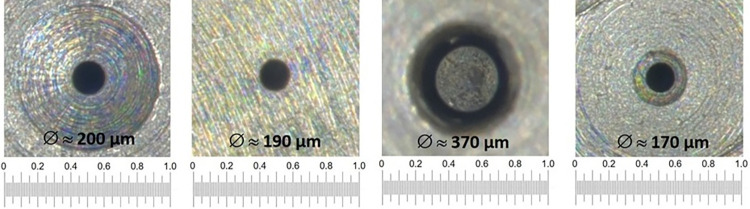
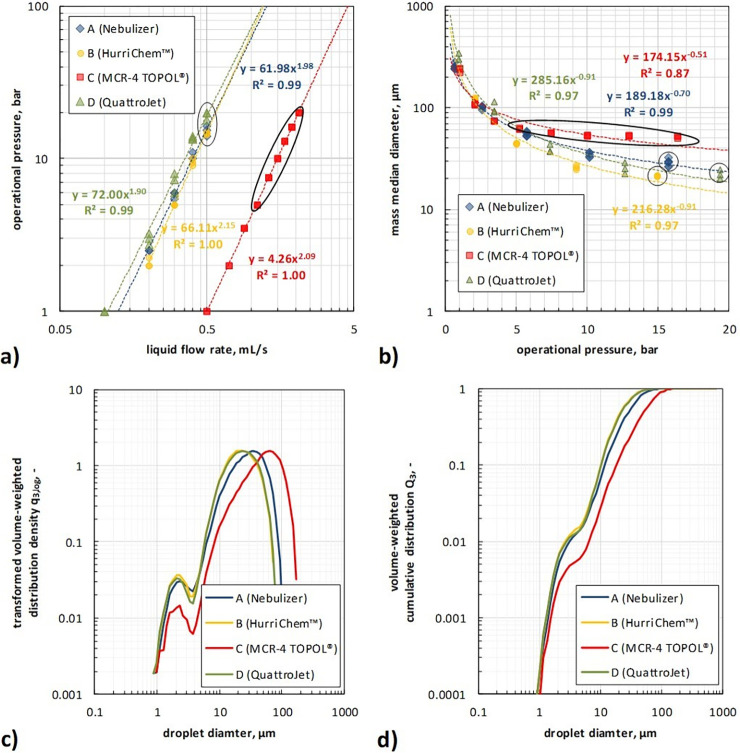
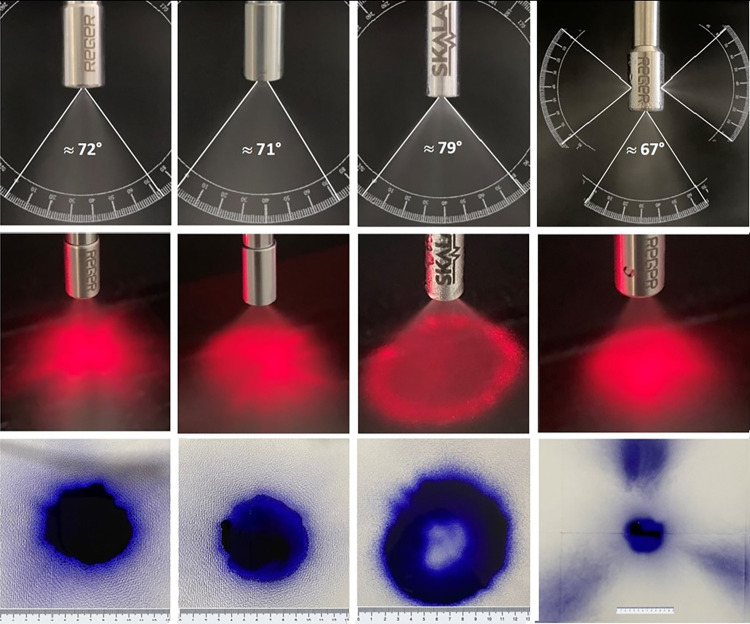
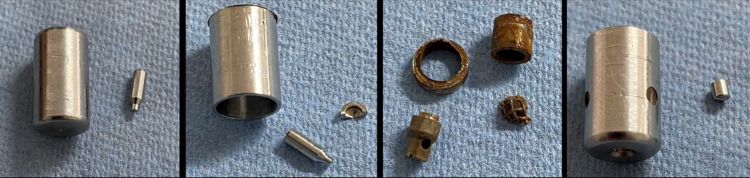
Methods: The performance of four different commercial nebulizer nozzles (Nebulizer; HurriChemTM; MCR-4 TOPOL®; QuattroJet) was analysed concerning: i) technical design and principle of operation, ii) operational pressure as function of the liquid flow rate, iii) droplet size distribution via laser diffraction spectrometry, iv) spray cone angle, spray cone form as well as horizontal drug deposition by image-metric analyses and v) chemical resistance via exposing to a cytostatic solution and chemical composition by means of spark optical emission spectral analysis.
Results: The Nebulizer shows quasi an identical technical design and thus also a similar performance (e.g., mass median droplet size of 29 μm) as the original PIPAC nozzles (MIP/ CapnoPen). All other nozzles show more or less a performance deviation to the original PIPAC nozzles. The HurriChemTM has a similar design and principle of operation as the Nebulizer, but provides a finer aerosol (22 μm). The principle of operation of MCR-4 TOPOL® and QuattroJet differ significantly from that of the original PIPAC nozzle technology. The MCR-4 TOPOL® offers a hollow spray cone with significantly larger droplets (50 μm) than the original PIPAC nozzles. The QuattroJet generates an aerosol (22 μm) similar to that of the HurriChemTM but with improved spatial drug distribution.
Conclusion: The availability of new PIPAC nozzles is encouraging but can also have a negative impact if their performance and efficacy is unknown. It is recommended that PIPAC nozzles that deviate from the current standard should be subject to bioequivalence testing and implementation in accordance with the IDEAL-D framework prior to routine clinical use.
Copyright: © 2024 Göhler et al. This is an open access article distributed under the terms of the Creative Commons Attribution License, which permits unrestricted use, distribution, and reproduction in any medium, provided the original author and source are credited.
Conflict of interest statement
The authors have declared that no competing interests exist.
Figures
References
-
- Solaß W, Kerb R, Mürdter T, Giger-Pabst U, Strumberg D, Tempfer C, et al.. Intraperitoneal chemotherapy of peritoneal carcinomatosis using pressurized aerosol as an alternative to liquid solution: first evidence for efficacy. Ann. Surg. Oncol. 2014; 21(2): 553–559. doi: 10.1245/s10434-013-3213-1 - DOI - PMC - PubMed
-
- Somashekhar SP, Ashwin KR, Rauthan A, Rohit KC. Pressurized IntraPeritoneal Aerosol Chemotherapy vs. intravenous chemotherapy for unresectable peritoneal metastases secondary to platinum resistant ovarian cancer–study protocol for a randomized control trial. Pleura and Peritoneum 2019; 4(1). doi: 10.1515/pp-2018-0111 - DOI - PMC - PubMed
-
- Casella F, Bencivenga M, Rosati R, Fumagalli UR, Marrelli D, Pacelli F, et al.. Pressurized intraperitoneal aerosol chemotherapy (PIPAC) in multimodal therapy for patients with oligometastatic peritoneal gastric cancer: a randomized multicenter phase III trial PIPAC VEROne. Pleura and Peritoneum 2022; 7(3): 135–141. doi: 10.1515/pp-2022-0111 - DOI - PMC - PubMed
Publication types
MeSH terms
Substances
LinkOut - more resources
Full Text Sources
