


Robust language-based mental health assessments in time and space through social media
- PMID: 38698174
- PMCID: PMC11065872
- DOI: 10.1038/s41746-024-01100-0
Robust language-based mental health assessments in time and space through social media
Abstract
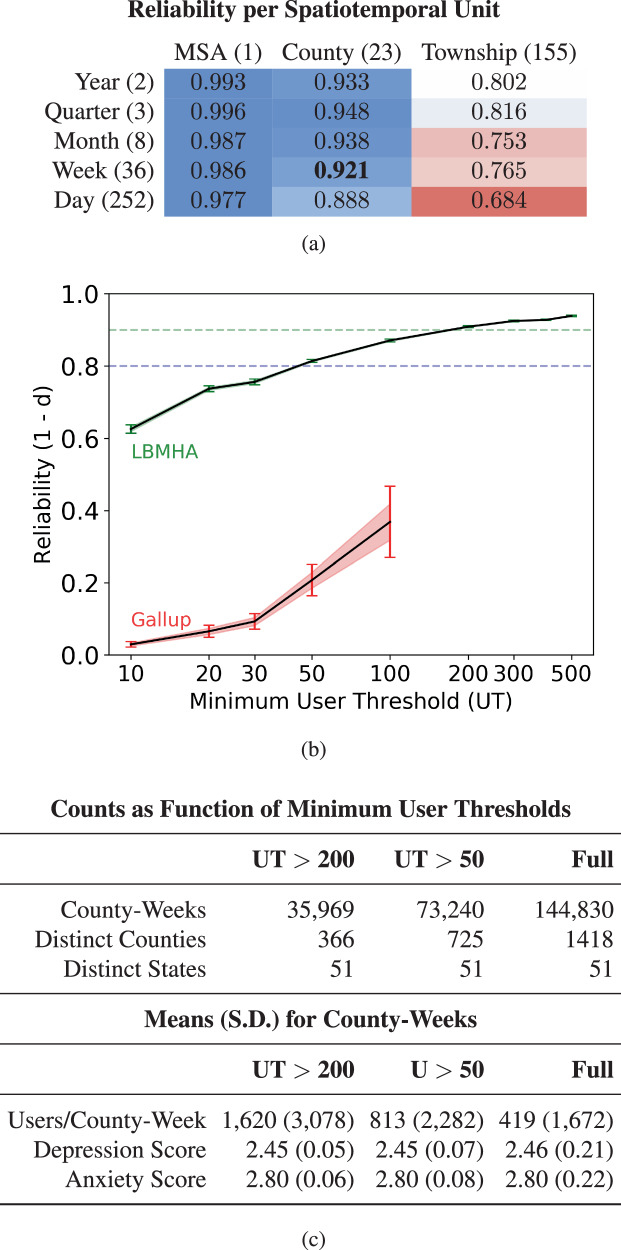
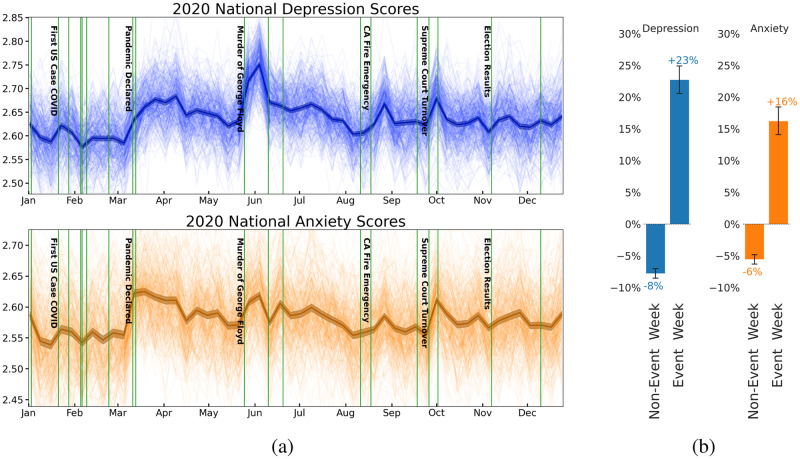
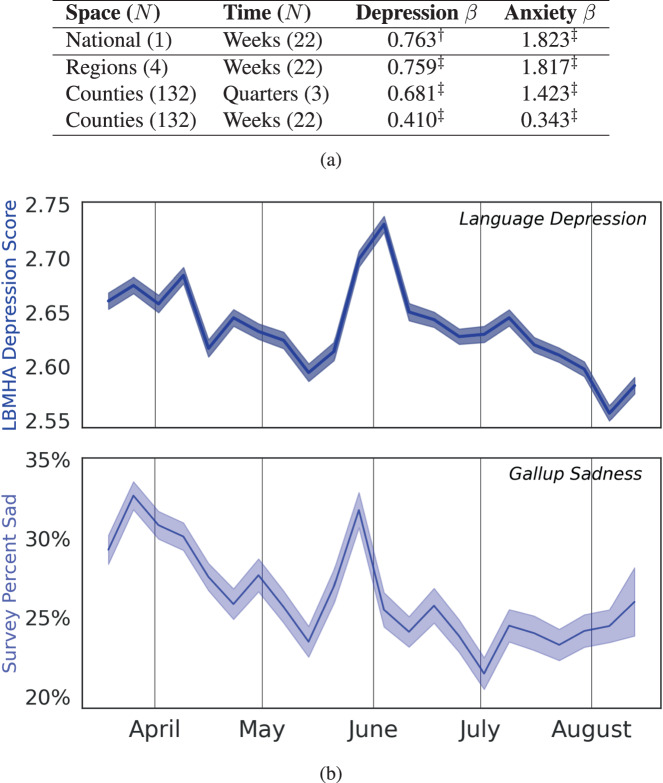
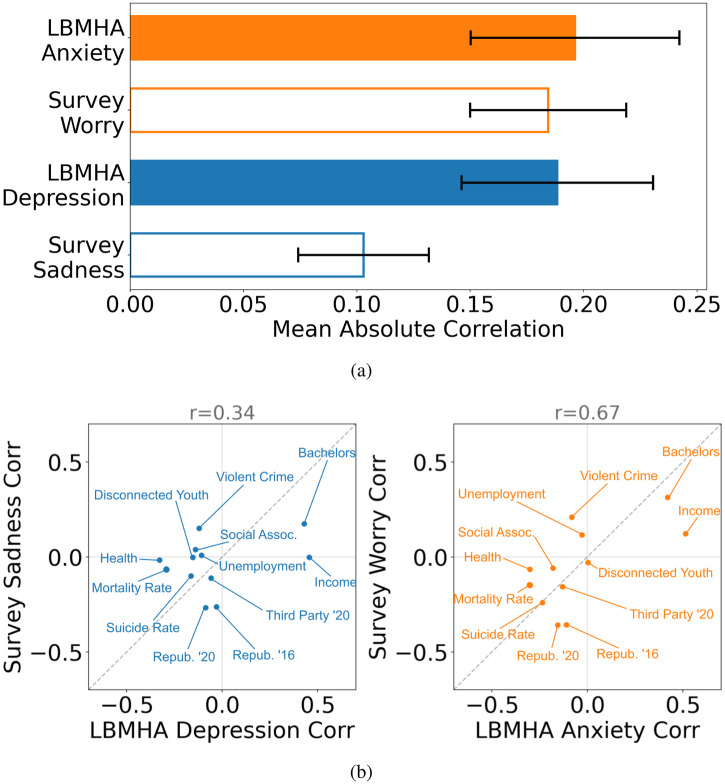
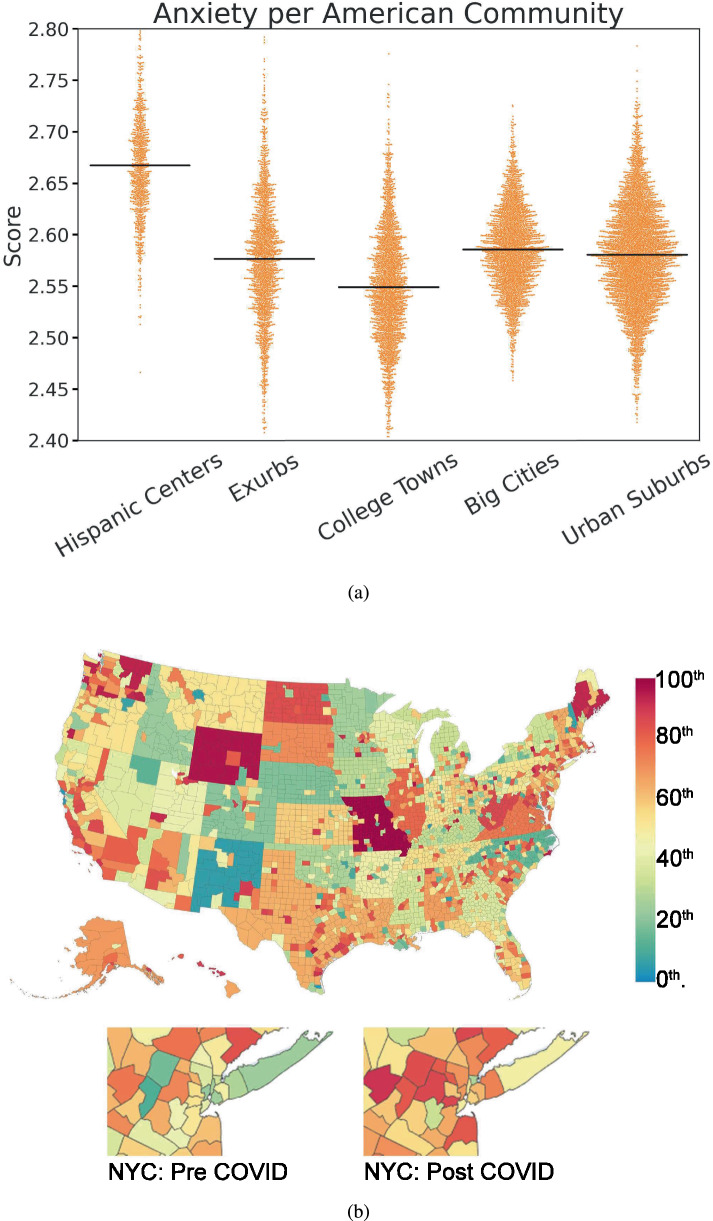
In the most comprehensive population surveys, mental health is only broadly captured through questionnaires asking about "mentally unhealthy days" or feelings of "sadness." Further, population mental health estimates are predominantly consolidated to yearly estimates at the state level, which is considerably coarser than the best estimates of physical health. Through the large-scale analysis of social media, robust estimation of population mental health is feasible at finer resolutions. In this study, we created a pipeline that used ~1 billion Tweets from 2 million geo-located users to estimate mental health levels and changes for depression and anxiety, the two leading mental health conditions. Language-based mental health assessments (LBMHAs) had substantially higher levels of reliability across space and time than available survey measures. This work presents reliable assessments of depression and anxiety down to the county-weeks level. Where surveys were available, we found moderate to strong associations between the LBMHAs and survey scores for multiple levels of granularity, from the national level down to weekly county measurements (fixed effects β = 0.34 to 1.82; p < 0.001). LBMHAs demonstrated temporal validity, showing clear absolute increases after a list of major societal events (+23% absolute change for depression assessments). LBMHAs showed improved external validity, evidenced by stronger correlations with measures of health and socioeconomic status than population surveys. This study shows that the careful aggregation of social media data yields spatiotemporal estimates of population mental health that exceed the granularity achievable by existing population surveys, and does so with generally greater reliability and validity.
© 2024. The Author(s).
Conflict of interest statement
The authors declare no competing interests.
Figures

References
-
- Substance Abuse and Mental Health Services Administration. Key substance use and mental health indicators in the United States: results from the 2019 national survey on drug use and health. HHS Publication no. 52, 17–5044 (2020).
-
- Case, A., Deaton, A., Deaths of Despair and the Future of Capitalism. (Princeton University Press, Princeton, New Jersey, 2020).
Grants and funding
LinkOut - more resources
Full Text Sources
