


The influence of gender and temephos exposure on community participation in dengue prevention: a compartmental mathematical model
- PMID: 38698345
- PMCID: PMC11067291
- DOI: 10.1186/s12879-024-09341-w
The influence of gender and temephos exposure on community participation in dengue prevention: a compartmental mathematical model
Abstract
Background: The use of temephos, the most common intervention for the chemical control of Aedes aegypti over the last half century, has disappointing results in control of the infection. The footprint of Aedes and the diseases it carries have spread relentlessly despite massive volumes of temephos. Recent advances in community participation show this might be more effective and sustainable for the control of the dengue vector.
Methods: Using data from the Camino Verde cluster randomized controlled trial, a compartmental mathematical model examines the dynamics of dengue infection with different levels of community participation, taking account of gender of respondent and exposure to temephos.
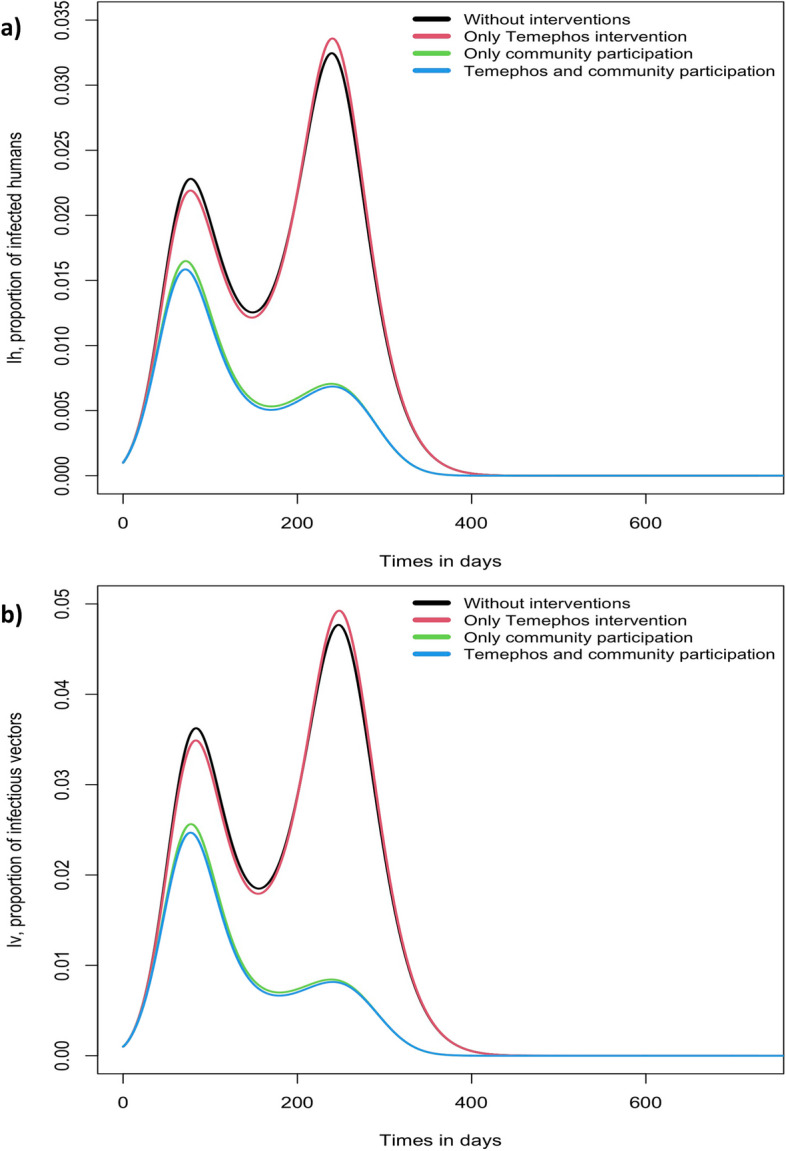
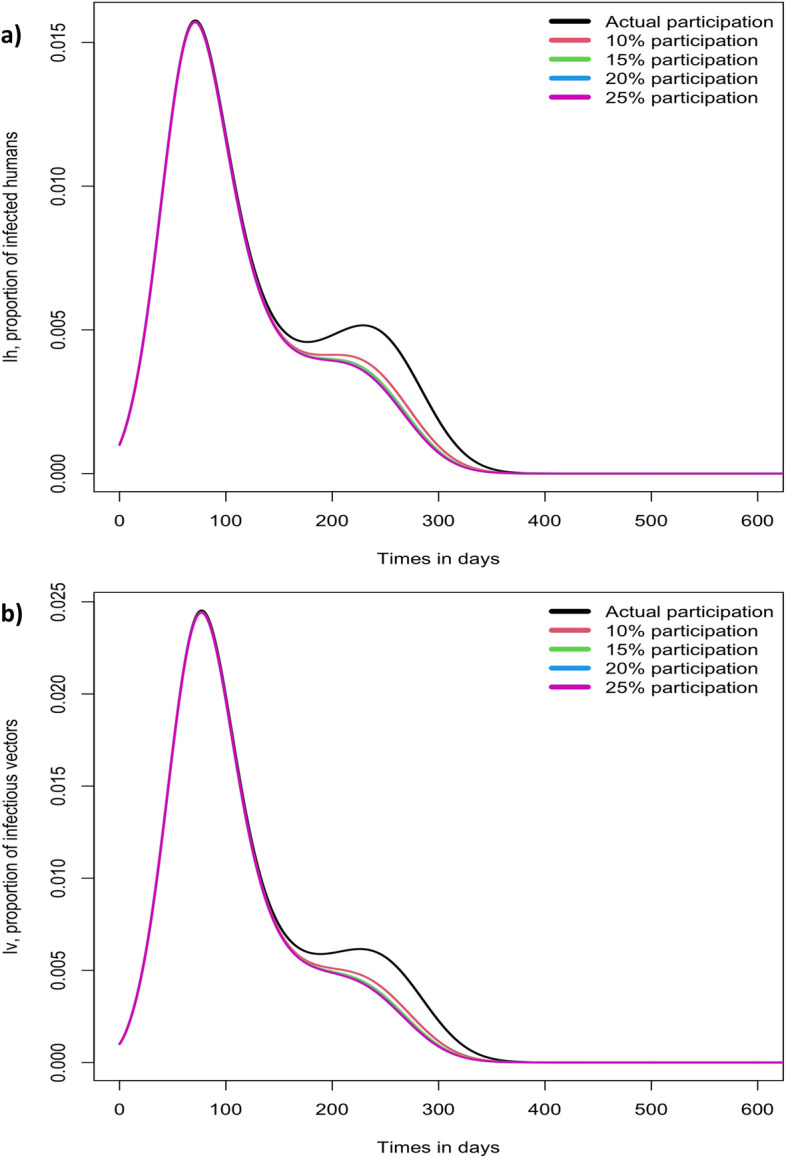
Results: Simulation of dengue endemicity showed community participation affected the basic reproductive number of infected people. The greatest short-term effect, in terms of people infected with the virus, was the combination of temephos intervention and community participation. There was no evidence of a protective effect of temephos 220 days after the onset of the spread of dengue.
Conclusions: Male responses about community participation did not significantly affect modelled numbers of infected people and infectious mosquitoes. Our model suggests that, in the long term, community participation alone may have the best results. Adding temephos to community participation does not improve the effect of community participation alone.
Keywords: Aedes aegypti; Community participation; Compartmental model; Dengue; Temephos.
© 2024. The Author(s).
Conflict of interest statement
The authors declare no competing interests.
Figures


References
-
- World Health Organization. Dengue and severe dengue. http://www.who.int/mediacentre/factsheets/fs117/en/. Accessed 15 June 2022.
-
- Pan American Health Organization, World Health Organization. Scientists studying intensified vector control measures to combat Zika, dengue and chikungunya in the Americas. http://www.paho.org/hq/index.php?option=com_content&view=article&id=11780. Accessed 15 June 2022.
Publication types
MeSH terms
Substances
Grants and funding
LinkOut - more resources
Full Text Sources
Medical
