


Self-initiated lifestyle changes during a fasting-mimicking diet programme in patients with type 2 diabetes: a mixed-methods study
- PMID: 38698355
- PMCID: PMC11067095
- DOI: 10.1186/s12875-024-02405-5
Self-initiated lifestyle changes during a fasting-mimicking diet programme in patients with type 2 diabetes: a mixed-methods study
Abstract
Background: Lifestyle changes, especially regarding diet quality and physical activity, are important in the management of type 2 diabetes (T2D). This mixed-methods study explores self-initiated lifestyle changes in patients with T2D who followed a periodic fasting-mimicking diet (FMD).
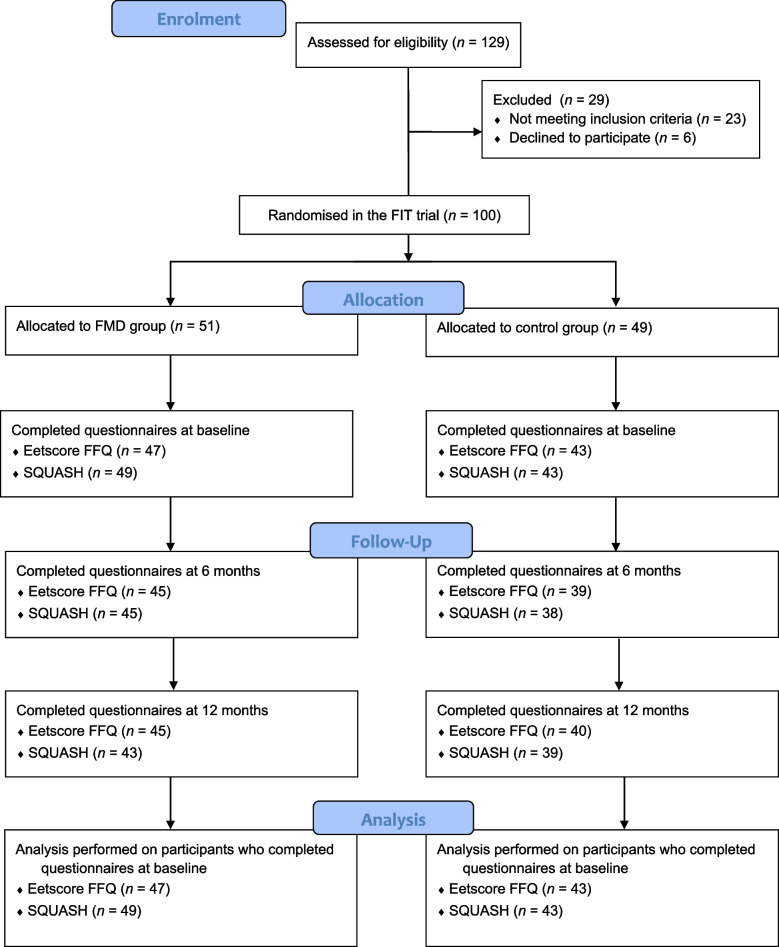
Methods: Quantitative data were obtained from the Fasting In diabetes Treatment trial (November 2018 to August 2021) in which 100 participants with T2D, using metformin only or no medication, were randomised to receive a monthly 5-day FMD for twelve months next to usual care, or usual care only. Diet quality and physical activity questionnaires were completed at baseline, six and twelve months. Changes over time were analysed using linear mixed models. Focus groups were organized with FMD participants to explore experiences regarding self-initiated lifestyle changes. The qualitative data was analysed using the Theoretical Domains Framework.
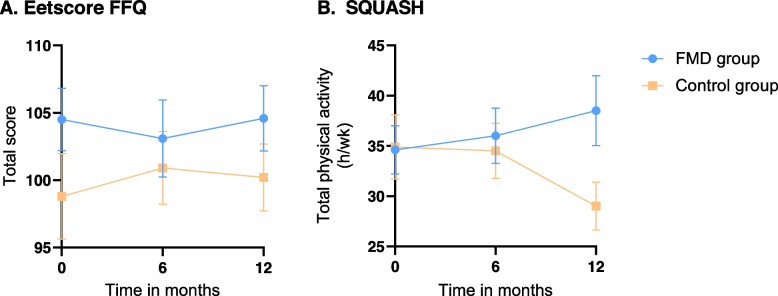
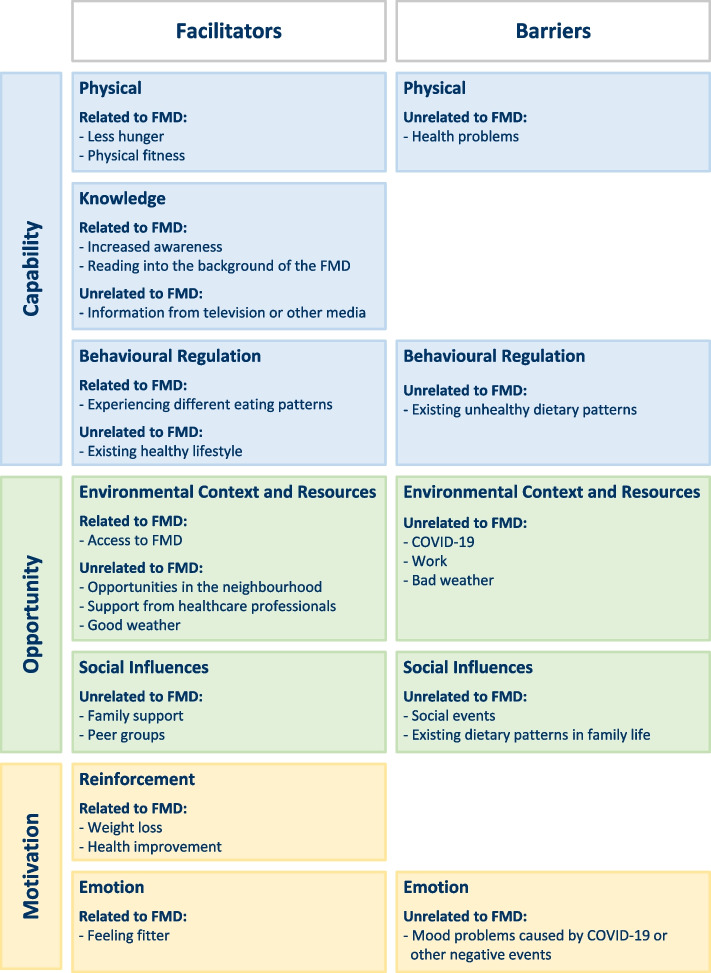
Results: Questionnaires were available from 49 FMD participants and 43 controls. No differences in diet quality were found. Total physical activity in the FMD participants changed from 34.6 to 38.5 h per week (h/wk) from baseline to twelve months, while in controls it changed from 34.9 to 29.0 h/wk (between group difference, p = 0.03). In six focus groups with FMD participants (n = 20), individual participants perceived the FMD as an encouragement for (minor) lifestyle changes. There were no barriers to behaviour change related to the FMD. Important facilitators of healthy behaviour were an increase in awareness of the impact of lifestyle on health (knowledge), better physical fitness (physical) and health improvement (reinforcement). Facilitators unrelated to the FMD included family support (social influences) and opportunities in the neighbourhood (environmental context and resources), while barriers unrelated to the FMD were experiencing health problems (physical) and social events (social influences).
Conclusions: Using an FMD for five consecutive days per month did not affect diet quality in between FMD periods in quantitative analysis, but increased the number of hours per week spent on physical activity. Qualitative analysis revealed self-initiated improvements in both diet quality and physical activity in individual participants using an FMD. Healthcare professionals could use an FMD programme as a 'teachable moment' to stimulate additional lifestyle changes.
Trial registration: ClinicalTrials.gov; NCT03811587. Registered 22 January 2019.
Keywords: Diet; Dietary behaviour; Fasting-mimicking diet; Intermittent energy restriction; Mixed-methods; Periodic fasting; Physical activity; Self-initiated behavioural change; Type 2 diabetes.
© 2024. The Author(s).
Conflict of interest statement
HL has received consulting fees from Royal Philips and was member of the board of trustees of the SCMR and UEMS section Radiology without payment. All authors declare that they have no other competing interests.
Figures
References
-
- Franz MJ, Boucher JL, Rutten-Ramos S, VanWormer JJ. Lifestyle weight-loss intervention outcomes in overweight and obese adults with type 2 diabetes: a systematic review and meta-analysis of randomized clinical trials. J Acad Nutr Diet. 2015;115(9):1447–1463. doi: 10.1016/j.jand.2015.02.031. - DOI - PubMed