


Virtual reality, face-to-face, and 2D video conferencing differently impact fatigue, creativity, flow, and decision-making in workplace dynamics
- PMID: 38704442
- PMCID: PMC11069516
- DOI: 10.1038/s41598-024-60942-6
Virtual reality, face-to-face, and 2D video conferencing differently impact fatigue, creativity, flow, and decision-making in workplace dynamics
Abstract
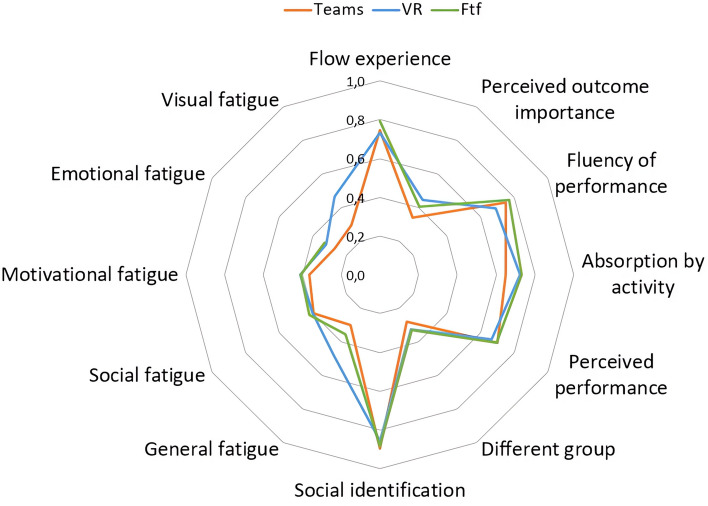
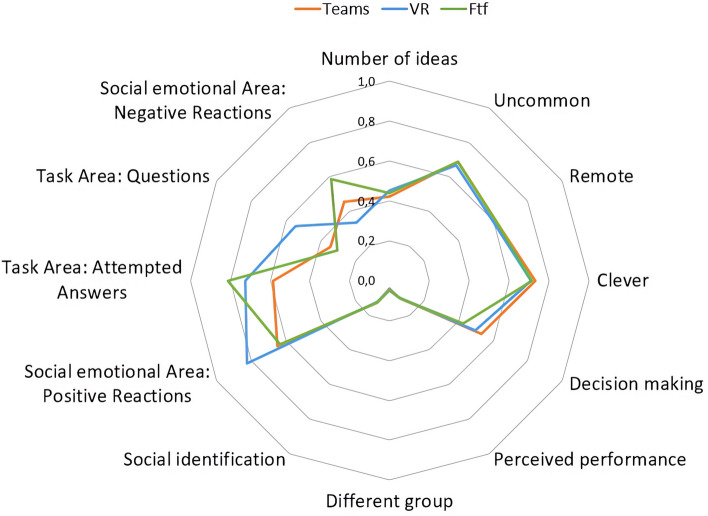
Digital communication technologies are rapidly evolving, and understanding their impact on group dynamics and cognitive performance in professional settings becomes central. This study investigates the psychological impact of different interaction settings-two-dimensional Video Conferencing (VC), Face-To-Face (FTF), and Virtual Reality (VR)-on group dynamics, cognitive performance, and aspects of well-being in a professional context. Utilizing a sample of 40 participants from a large Italian electricity transmission company, the study employs a within-subjects design to explore various metrics, including flow, creativity, fatigue and aspects of interaction. The results indicate that FTF interactions are optimal for idea generation and task absorption. VR, although initially more fatiguing for first-time users, fosters a more collaborative and peaceful environment, encouraging participants to engage more openly with each other. VC was found to be the least fatiguing, but also the least engaging in terms of task absorption and idea generation. Additionally, age-related differences were observed, particularly in the perception of motivational and emotional fatigue in the VR setting. The study provides empirical evidence supporting the integration of VR in professional settings for specific types of meetings, while also highlighting the limitations and areas for future research. These findings have implications for organizational well-being, cognitive ergonomics, and the evolving landscape of remote work technologies.
© 2024. The Author(s).
Conflict of interest statement
The authors declare no competing interests.
Figures
References
-
- Naranjo JE, et al. A scoping review on virtual reality-based industrial training. Appl. Sci. 2020;10:8224. doi: 10.3390/app10228224. - DOI
Publication types
MeSH terms
LinkOut - more resources
Full Text Sources
Medical
