


Exploiting the neonatal crystallizable fragment receptor to treat kidney disease
- PMID: 38707675
- PMCID: PMC11068363
- DOI: 10.1016/j.kint.2023.09.024
Exploiting the neonatal crystallizable fragment receptor to treat kidney disease
Abstract
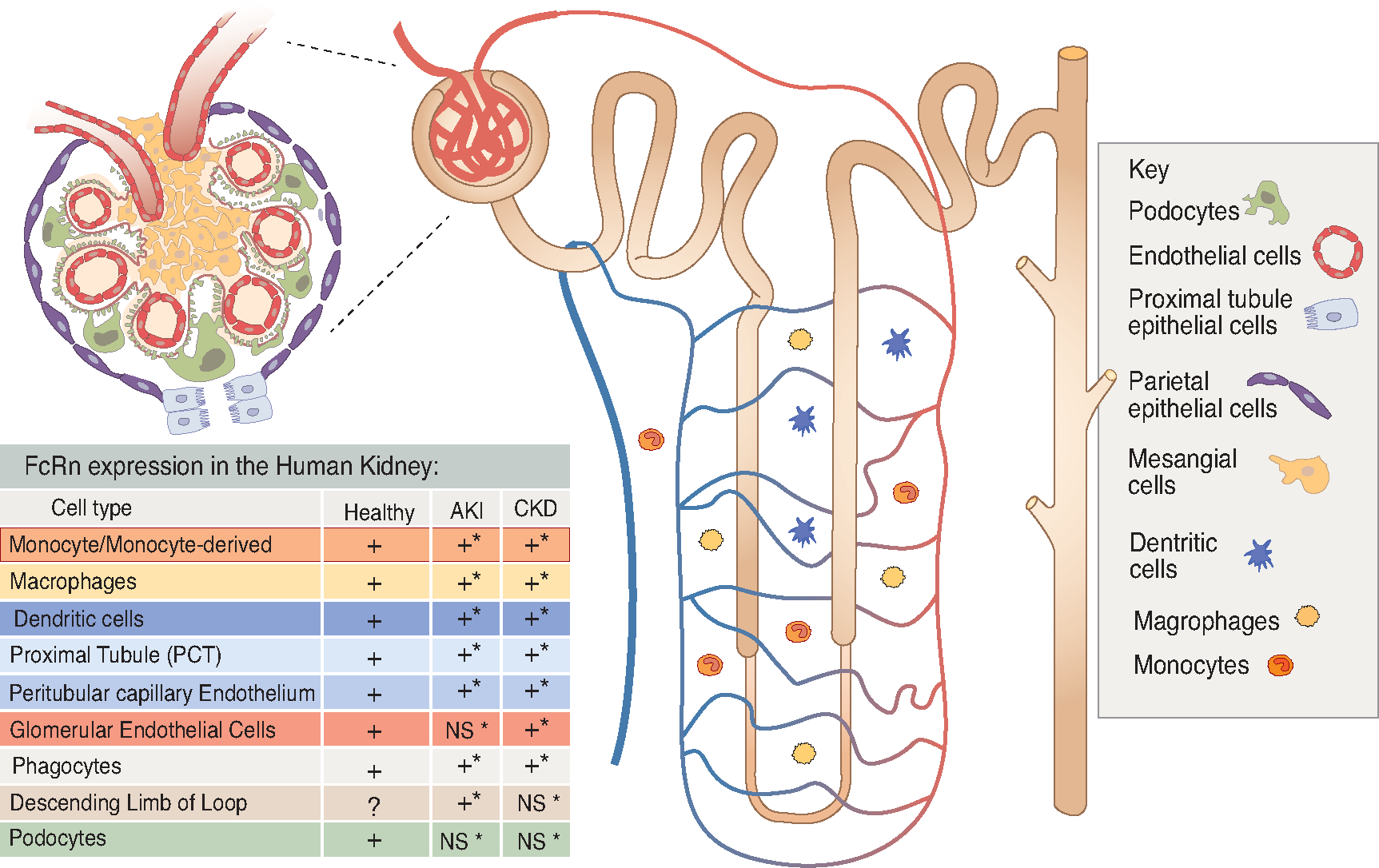
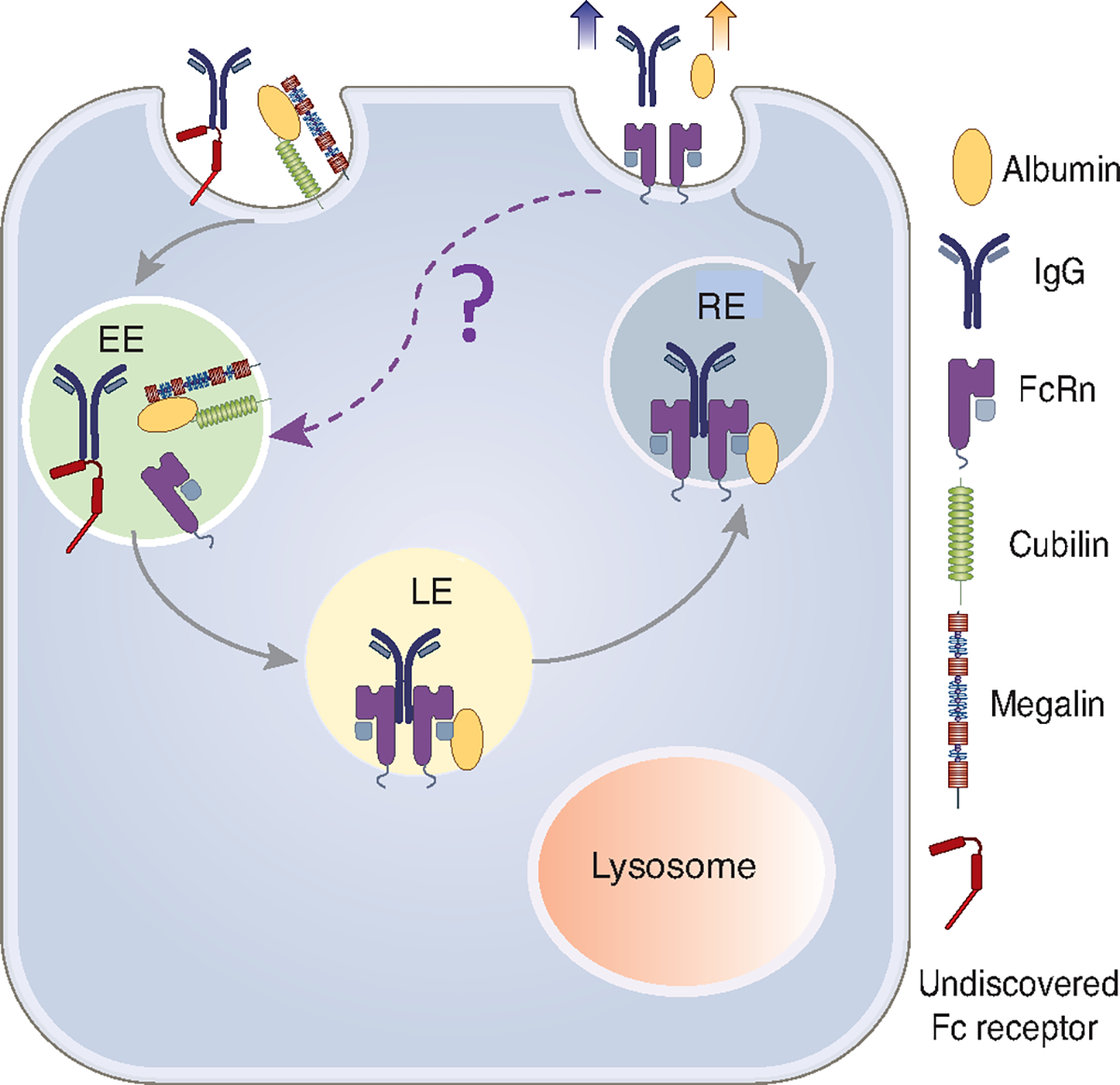
The neonatal Fc receptor (FcRn) was initially discovered as the receptor that allowed passive immunity in newborns by transporting maternal IgG through the placenta and enterocytes. Since its initial discovery, FcRn has been found to exist throughout all stages of life and in many different cell types. Beyond passive immunity, FcRn is necessary for intrinsic albumin and IgG recycling and is important for antigen processing and presentation. Given its multiple important roles, FcRn has been utilized in many disease treatments including a new class of agents that were developed to inhibit FcRn for treatment of a variety of autoimmune diseases. Certain cell populations within the kidney also express high levels of this receptor. Specifically, podocytes, proximal tubule epithelial cells, and vascular endothelial cells have been found to utilize FcRn. In this review, we summarize what is known about FcRn and its function within the kidney. We also discuss how FcRn has been used for therapeutic benefit, including how newer FcRn inhibiting agents are being used to treat autoimmune diseases. Lastly, we will discuss what renal diseases may respond to FcRn inhibitors and how further work studying FcRn within the kidney may lead to therapies for kidney diseases.
Keywords: Albumin; Immunoglobulin G (IgG); Podocytes; neonatal Fc receptor (FcRn).
Figures

References
-
- Brambell FW. The transmission of immunity from mother to young and the catabolism of immunoglobulins. Lancet 1966; 2: 1087–1093. - PubMed
-
- Simister NE, Mostov KE. An Fc receptor structurally related to MHC class I antigens. Nature 1989; 337: 184–187. - PubMed
-
- Mikulska JE, Pablo L, Canel J, et al. Cloning and analysis of the gene encoding the human neonatal Fc receptor. Eur J Immunogenet 2000; 27: 231–240. - PubMed
-
- Finishing the euchromatic sequence of the human genome. Nature 2004; 431: 931–945. - PubMed
-
- Burmeister WP, Gastinel LN, Simister NE, et al. Crystal structure at 2.2 A resolution of the MHC-related neonatal Fc receptor. Nature 1994; 372: 336–343. - PubMed
Publication types
MeSH terms
Substances
Grants and funding
LinkOut - more resources
Full Text Sources
Other Literature Sources
Medical