


Effects of 1-hour computer use on ulnar and median nerve conduction velocity and muscle activity in office workers
- PMID: 38710168
- PMCID: PMC11195575
- DOI: 10.1093/joccuh/uiae023
Effects of 1-hour computer use on ulnar and median nerve conduction velocity and muscle activity in office workers
Abstract
Objectives: To compare the effects of 1-hour computer use on ulnar and median nerve conduction velocity and muscle activity in office workers with symptomatic neck pain and asymptomatic office workers.
Methods: A total of 40 participants, both male and female office workers, with symptomatic neck pain (n = 20) and asymptomatic (n = 20), were recruited. Pain intensity, ulnar nerve conduction velocity, median nerve conduction velocity, and muscle activity were determined before and after 1 hour of computer use.
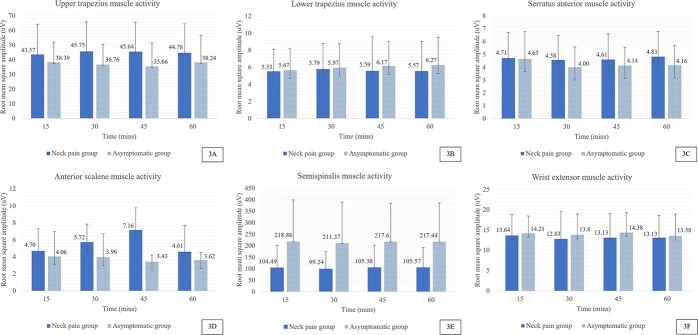
Results: There was a significant increase in pain intensity in the neck area in both groups (P < .001). The symptomatic neck pain group revealed a significant decrease in the sensory nerve conduction velocity of the ulnar nerve (P = .008), whereas there was no difference in the median nerve conduction velocity (P > .05). Comparing before and after computer use, the symptomatic neck pain group had less activity of the semispinalis muscles and higher activity of the anterior scalene muscle than the asymptomatic group (P < .05). The trapezius and wrist extensor muscles showed no significant differences in either group (P > .05).
Conclusions: This study found signs of neuromuscular deficit of the ulnar nerve, semispinalis muscle, and anterior scalene muscle after 1 hour of computer use among office workers with symptomatic neck pain, which may indicate the risk of neuromuscular impairment of the upper extremities. The recommendation of resting, and encouraging function and flexibility of the neuromuscular system after 1 hour of computer use should be considered.
Keywords: median nerve; muscle activity; neck pain; nerve conduction; office worker; ulnar nerve.
© The Author(s) [2024]. Published by Oxford University Press on behalf of Journal of Occupational Health.
Conflict of interest statement
This study has no conflicts of interest or financial disclosures, and all the contributors participated in the study.
Figures
References
-
- Mahmud N, Bahari SF, Zainudin NF. Psychosocial and ergonomics risk factors related to neck, shoulder and back complaints among Malaysia office workers. Int J Soc Sci Humanit. 2014;4(4):260-263. 10.7763/IJSSH.2014.V4.359 - DOI
MeSH terms
LinkOut - more resources
Full Text Sources
Medical
