. 2024 Apr 27;10(9):e30450.
doi: 10.1016/j.heliyon.2024.e30450. eCollection 2024 May 15.

Effects of subcutaneous vs. oral nanoparticle-mediated insulin delivery on hemostasis disorders in type 1 diabetes: A rat model study

Affiliations

Effects of subcutaneous vs. oral nanoparticle-mediated insulin delivery on hemostasis disorders in type 1 diabetes: A rat model study

Nawel Kaddour et al. Heliyon. .

Abstract

Complications associated with Type 1 diabetes (T1D) have complex origins that revolve around chronic hyperglycemia; these complications involve hemostasis disorders, coagulopathies, and vascular damage. Our study aims to develop innovative approaches to minimize these complications and to compare the outcomes of the new approach with those of traditional methods. To achieve our objective, we designed novel nanoparticles comprising covalent organic frameworks (nCOF) loaded with insulin, termed nCOF/Insulin, and compared it to subcutaneous insulin to elucidate the influence of insulin delivery methods on various parameters, including bleeding time, coagulation factors, platelet counts, cortisol plasma levels, lipid profiles, and oxidative stress parameters. Traditional subcutaneous insulin injections exacerbated hemostasis disorder and vascular injuries in streptozotocin (STZ)-induced diabetic rats through increasing plasma triglycerides and lipid peroxidation. Conversely, oral delivery of nCOF/Insulin ameliorated hemostatic disorders and restored the endothelial oxidant/antioxidant balance by reducing lipid peroxidation and enhancing the lipid profile. Our study pioneers the understanding of how STZ-induced diabetes disrupts bleeding time, induces a hypercoagulable state, and causes vascular damage through lipid peroxidation. Additionally, it provides the first evidence for the involvement of subcutaneous insulin treatment in exacerbating vascular and hemostasis disorders in type 1 diabetes (T1D). Introducing an innovative oral insulin delivery via the nCOF approach represents a potential paradigm shift in diabetes management and patient care and promises to improve treatment strategies for type 1 Diabetes.

Keywords: Covalent organic framework nanoparticles (nCOF); Diabetes complications; Hemostasis disorders; Insulin delivery; Type 1 diabetes.


Conflict of interest statement

The authors declare the following financial interests/personal relationships which may be considered as potential competing interests:Ali Trabolsi reports financial support was provided by New York University Abu Dhabi. If there are other authors, they declare that they have no known competing financial interests or personal relationships that could have appeared to influence the work reported in this paper.

Figures
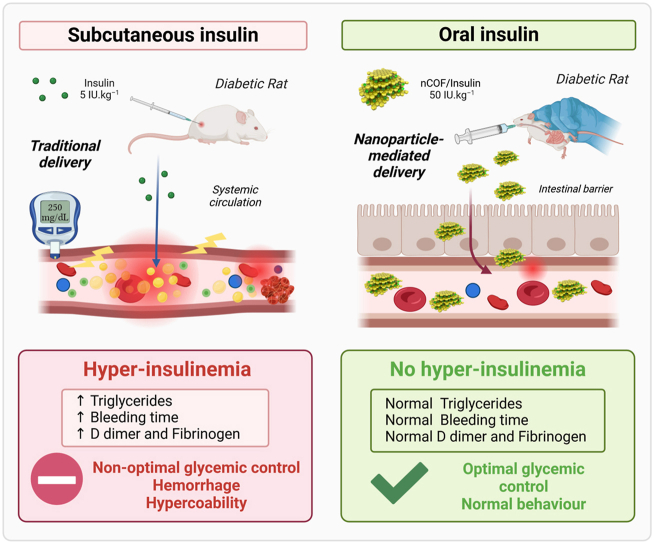
Image 1
Graphical abstract
Fig. 1
Fig. 1
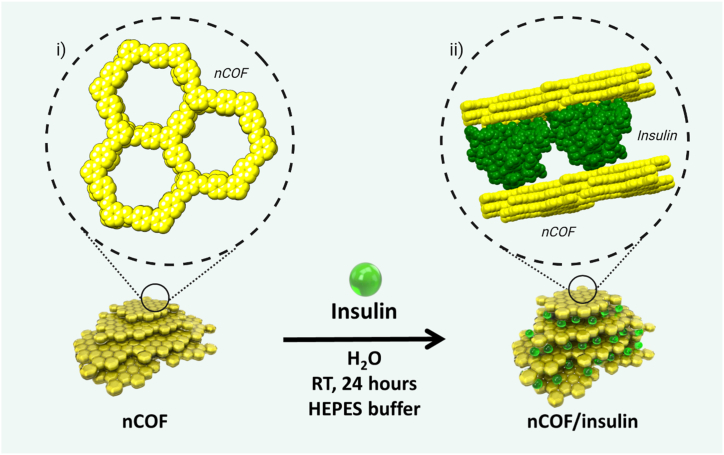
Schematic representation of the encapsulation of insulin between the layers of the nCOF. Cartoon representation (green spheres) represents the insulin. Inset i) chemical structure of the nCOF. Inset ii) van der Waals representation of the optimized location of insulin monomer molecule intercalated between nCOF layers.
Fig. 2
Fig. 2
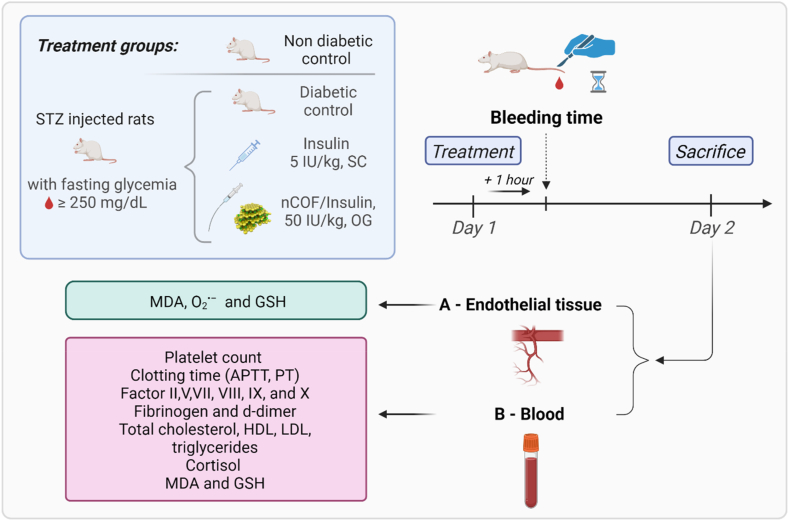
Schematic representation of T1D induction and subsequent study protocol in rats. This diagram illustrates the sequential methodology employed in our study. Starting with the induction of T1D using streptozotocin (STZ), we monitored and selected diabetic rats based on specific blood glucose levels (≥250 mg/dL). The study design categorizes rats into four distinct groups, each with varied insulin administration methods, as detailed in Table 1. We then measured bleeding times 1-h post-insulin treatment, employing a precise protocol based on prior research findings. Following overnight fasting and subsequent sacrifice of the rats, various samples were collected. Using these samples, an array of tests was conducted including coagulation profiles, endothelial lysate preparations, thrombocytes counting, cortisol levels, lipid profiling, and markers of oxidative stress. Statistical analyses were performed using SPSS.
Fig. 3
Fig. 3
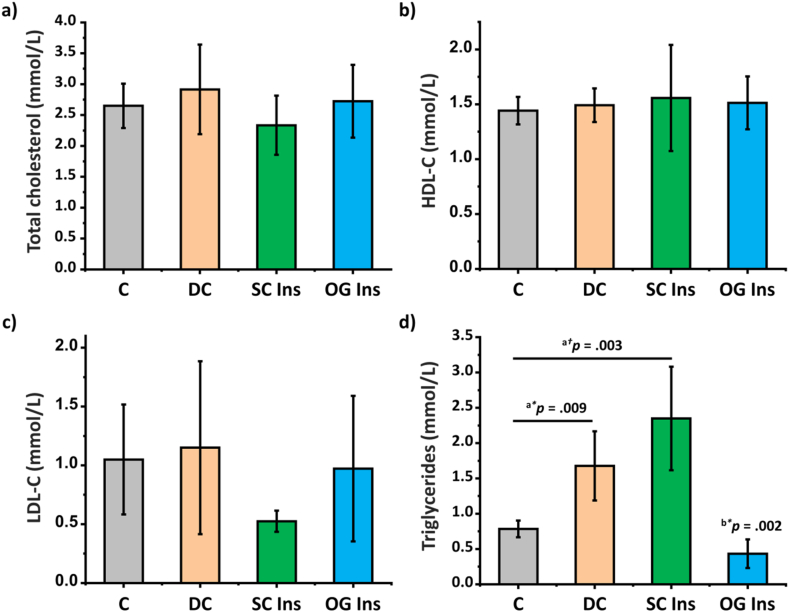
Effect of diabetes and insulin treatments on plasma biochemical parameters. a) Total cholesterol, b) High-Density Lipoprotein Cholesterol (HDL-C), c) Low-Density Lipoprotein Cholesterol (LDL-C) plasma and d) triglycerides levels of control rats (grey, C), diabetic rats (orange, DC), diabetic rats treated with subcutaneous-insulin (green, SC Ins) and diabetic rats treated with oral insulin loaded in nCOFs (blue, OG Ins). Results are expressed as mean ± SEM, aversus C, bversus DC (*p < 0.05); (†p < 0.001).
Fig. 4
Fig. 4
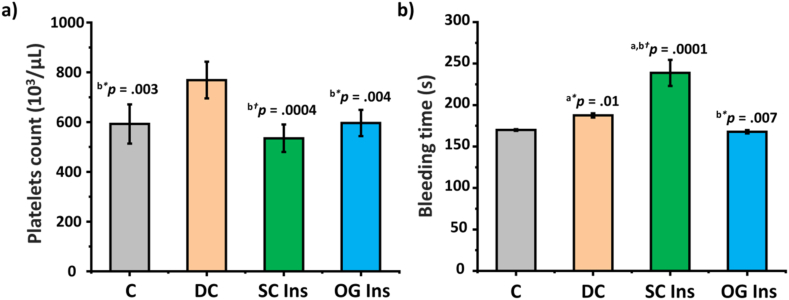
Effect of diabetes and insulin treatments on platelets activity. a) Platelets count and b) bleeding time of control rats (grey, C), diabetic rats (orange, DC), diabetic rats treated with subcutaneous insulin (green, SC Ins), and diabetic rats treated with oral insulin loaded in nCOFs (blue, OG Ins). Results are expressed as mean ± SEM, aversus C, bversus DC (*p < 0.05); (†p < 0.001).
Fig. 5
Fig. 5
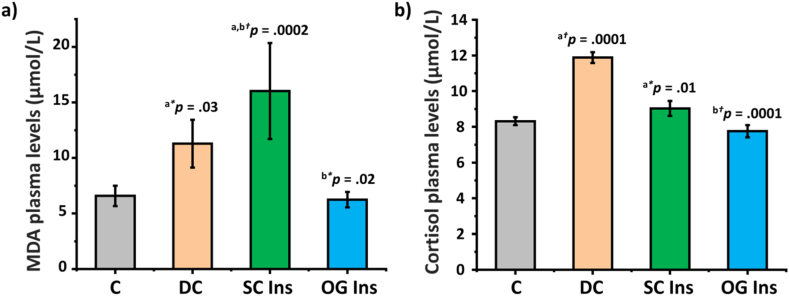
Effect of diabetes and insulin treatments on plasma lipid peroxidation and plasma cortisol levels. a) MDA and b) cortisol plasma levels of control rats (grey, C), diabetic rats (orange, DC), diabetic rats treated with subcutaneous insulin (green, SC Ins), and diabetic rats treated with oral insulin (blue, OG Ins). Results are expressed as mean ± SEM, aversus C, bversus DC (*p < 0.05); (†p < 0.001).
Fig. 6
Fig. 6
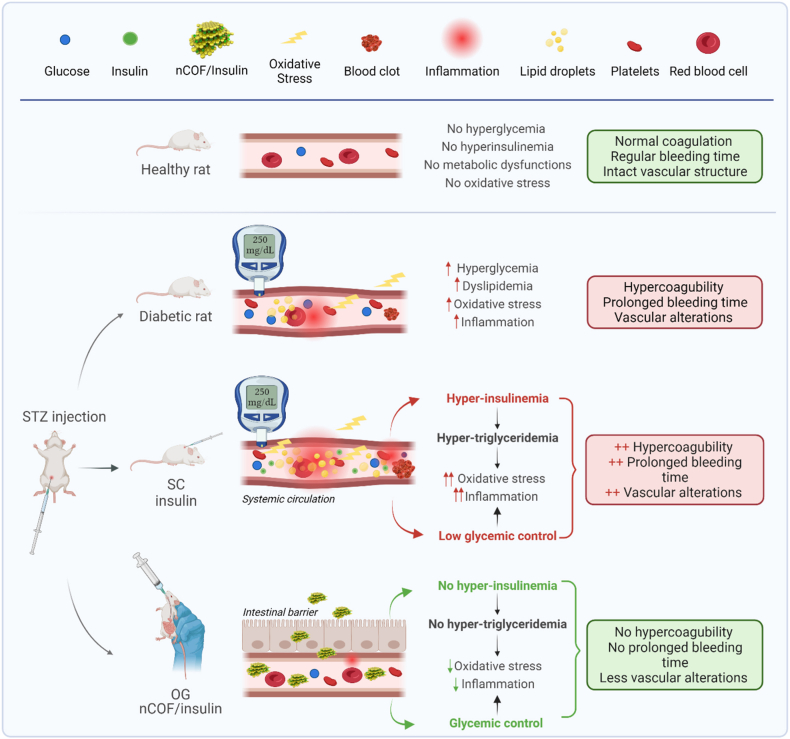
Overview of vascular changes and treatment effects in normal and STZ-induced diabetic rats. This figure summarizes the key findings of our study: STZ-induced diabetes disrupts the lipid profile, heightening lipid peroxidation and extending bleeding times, leading to a hypercoagulable state and amplified endothelial oxidative stress. Notably, while subcutaneous insulin aggravates these disturbances, oral insulin delivery via nCOF nanoparticles presents a potential solution. This approach mitigates vascular injuries, restores hemostatic balance, averts dyslipidemia, diminishes lipid peroxidation, shields against superoxide buildup in the aorta, and ameliorates the coagulation profile.

References

    1. Targher G., Chonchol M., Zoppini G., Franchini M. Hemostatic disorders in type 1 diabetes mellitus. Semin. Thromb. Hemost. 2011;37(1):58–65. doi: 10.1055/s-0030-1270072. - DOI - PubMed
    1. El Khawand C., Jamart J., Donckier J., Chatelain B., Lavenne E., Moriau M., et al. Hemostasis variables in type I diabetic patients without demonstrable vascular complications. Diabetes Care. 1993;16(8):1137–1145. doi: 10.1055/s-0030-1270072. - DOI - PubMed
    1. Soulimane-Mokhtari N.A., Guermouche B., Saker M., Merzouk S., Merzouk H., Hichami A., et al. Serum lipoprotein composition, lecithin cholesterol acyltransferase and tissue lipase activities in pregnant diabetic rats and their offspring receiving enriched n-3 PUFA diet. Gen. Physiol. Biophys. 2008;27(1):3–11. - PubMed
    1. Merzouk S.A., Saker M., Reguig K.B., Soulimane N., Merzouk H., Guermouche B., et al. N-3 polyunsaturated fatty acids modulate in-vitro T cell function in type I diabetic patients. Lipids. 2008;43(6):485–497. doi: 10.1007/s11745-008-3176-3. - DOI - PubMed
    1. Schofield J., Ho J., Soran H. Cardiovascular risk in type 1 diabetes mellitus. Diabetes Ther. 2019;10(3):773–789. doi: 10.1007/s13300-019-0612-8. - DOI - PMC - PubMed

LinkOut - more resources