


Computer-Assisted Navigation in Reverse Shoulder Arthroplasty: Surgical Experience and Clinical Outcomes
- PMID: 38731041
- PMCID: PMC11084768
- DOI: 10.3390/jcm13092512
Computer-Assisted Navigation in Reverse Shoulder Arthroplasty: Surgical Experience and Clinical Outcomes
Abstract
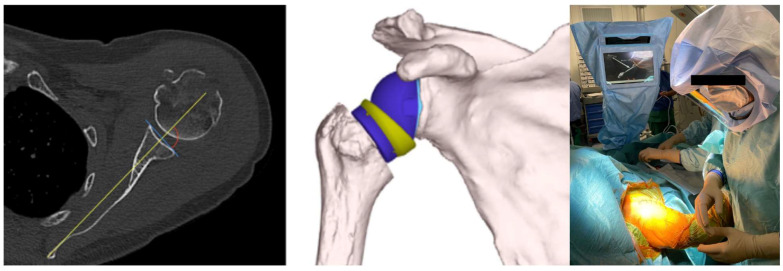
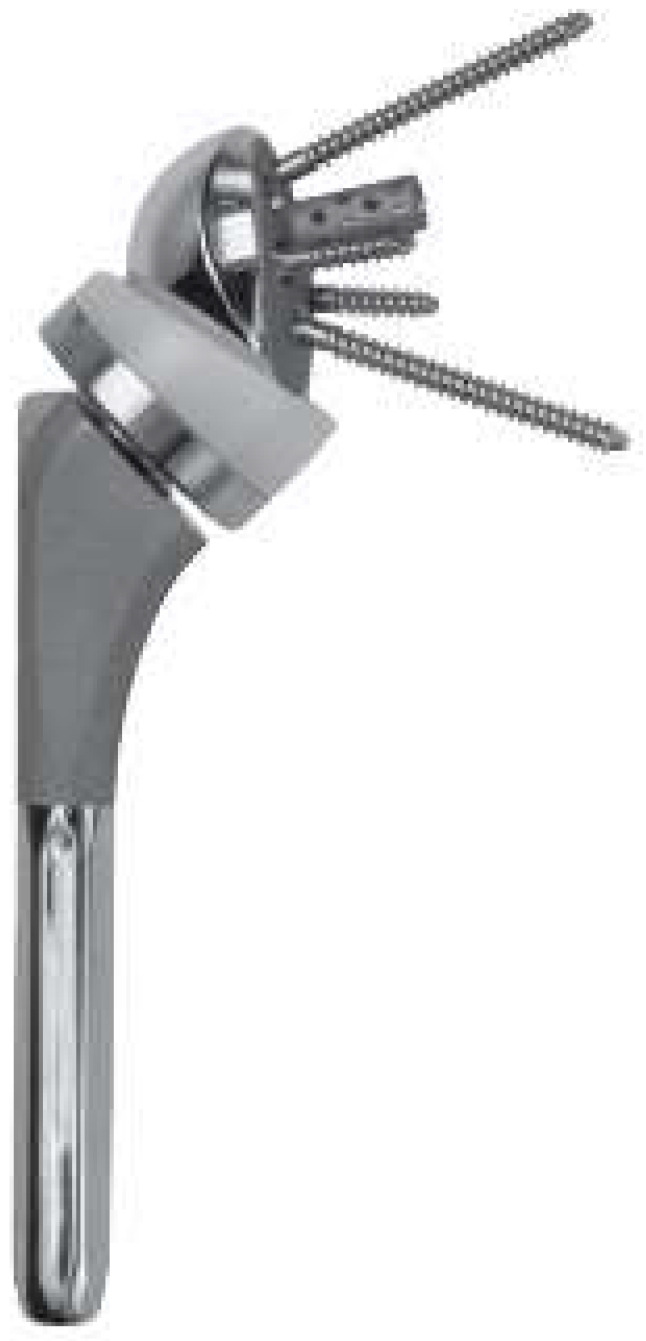
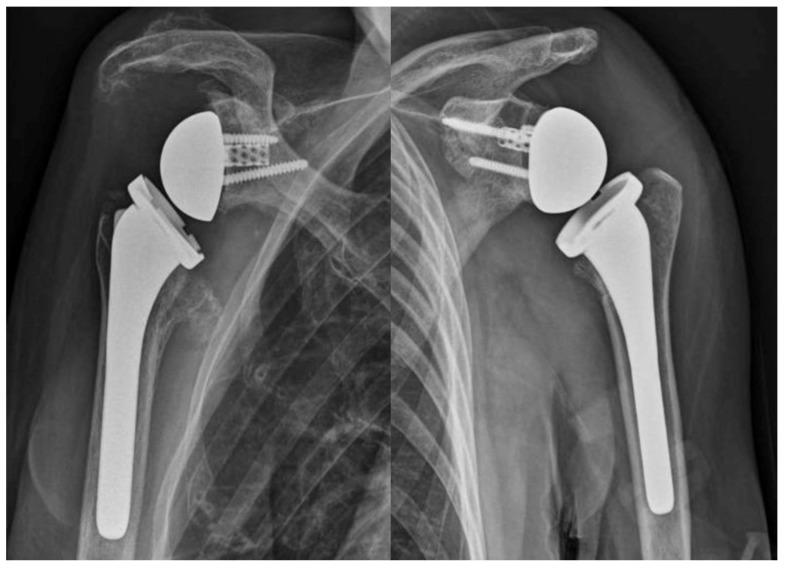
Background: The primary cause of medium- to long-term complications in reverse shoulder arthroplasty (RSA) is the failure of the glenoid component. The purpose of this study was to evaluate both the achievement of planning through computer-assisted navigation and the clinical outcomes at a minimum follow-up (FU) of 12 months. Methods: From December 2019 to December 2022, 57 Equinoxe RSAs with computer-assisted navigation were performed. The average age was 72.8 ± 6.6 years. Using the Orthoblue software, the version and inclination of the glenoid were evaluated from a preoperative CT scan, and planning was performed. Intraoperative navigation data were evaluated, and the clinical outcomes were assessed at a minimum follow-up of 12 months. Results: The average follow-up was 30.7 ± 13.5 months. The planning was reproduced in all implants. No errors in the computer-assisted navigation system were detected. No intraoperative or postoperative complications were recorded. At the final FU, the average active anterior elevation was 143° ± 36°, external rotation was 34° ± 5°, QuickDASH score was 19 ± 16 points, and constant score was 77 ± 18. Conclusions: Computer-assisted navigation is a reliable system for positioning prosthetic implants on challenging glenoids. A longer follow-up period is necessary to confirm the reduction in postoperative complications and the increase in survival compared to traditional RSA.
Keywords: GPS navigation; computer-assisted navigation; reverse shoulder arthroplasty; shoulder osteoarthritis; shoulder replacement.
Conflict of interest statement
The authors declare no conflicts of interest.
Figures
References
-
- Ernstbrunner L., Andronic O., Grubhofer F., Camenzind R.S., Wieser K., Gerber C. Long-Term Results of Reverse Total Shoulder Arthroplasty for Rotator Cuff Dysfunction: A Systematic Review of Longitudinal Outcomes. J. Shoulder Elb. Surg. 2019;28:774–781. doi: 10.1016/j.jse.2018.10.005. - DOI - PubMed
LinkOut - more resources
Full Text Sources
