


The Benzoylpiperidine Fragment as a Privileged Structure in Medicinal Chemistry: A Comprehensive Review
- PMID: 38731421
- PMCID: PMC11085656
- DOI: 10.3390/molecules29091930
The Benzoylpiperidine Fragment as a Privileged Structure in Medicinal Chemistry: A Comprehensive Review
Abstract
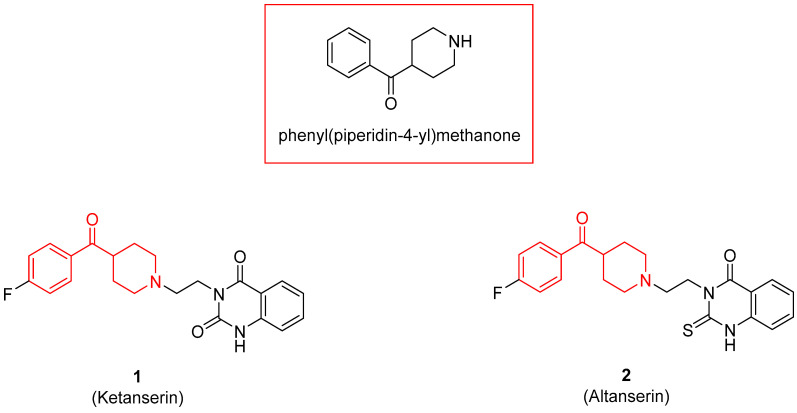
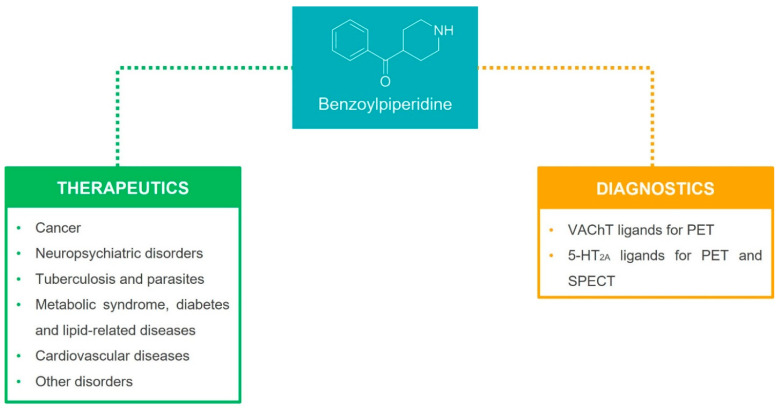
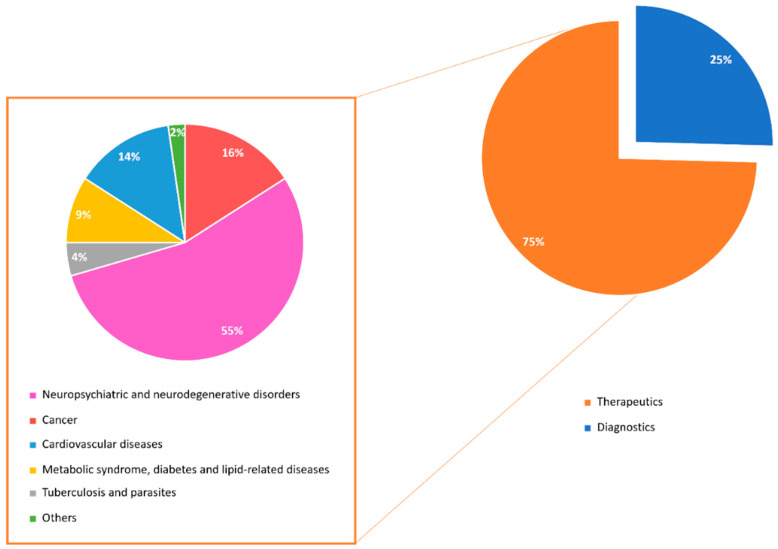
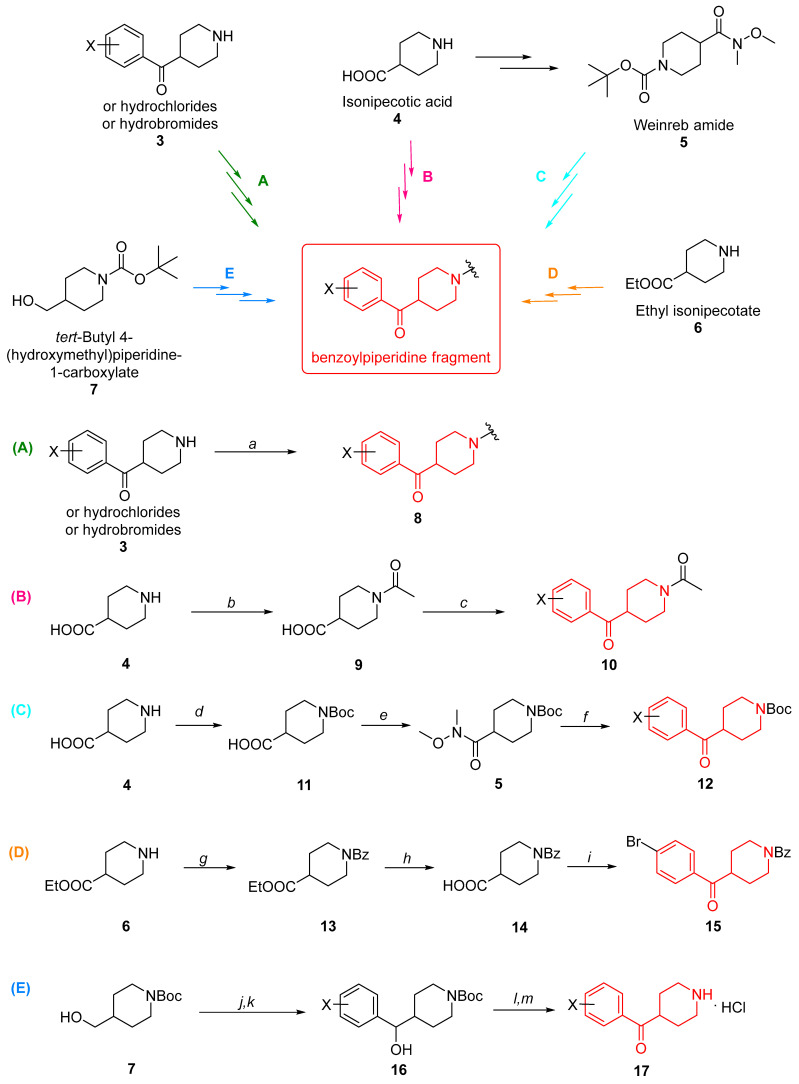
The phenyl(piperidin-4-yl)methanone fragment (here referred to as the benzoylpiperidine fragment) is a privileged structure in the development of new drugs considering its presence in many bioactive small molecules with both therapeutic (such as anti-cancer, anti-psychotic, anti-thrombotic, anti-arrhythmic, anti-tubercular, anti-parasitic, anti-diabetic, and neuroprotective agents) and diagnostic properties. The benzoylpiperidine fragment is metabolically stable, and it is also considered a potential bioisostere of the piperazine ring, thus making it a feasible and reliable chemical frame to be exploited in drug design. Herein, we discuss the main therapeutic and diagnostic agents presenting the benzoylpiperidine motif in their structure, covering articles reported in the literature since 2000. A specific section is focused on the synthetic strategies adopted to obtain this versatile chemical portion.
Keywords: benzoylpiperidine; benzoylpiperidine-based small molecules; bioisostere; diagnostic agents; drug design; medicinal chemistry; phenyl(piperidin-4-yl)methanone; privileged structure; therapeutic agents.
Conflict of interest statement
The authors declare no conflicts of interest.
Figures
References
-
- Liu Y., Guo L., Duan H., Zhang L., Jiang N., Zhen X., Shen J. Discovery of 4-Benzoylpiperidine and 3-(Piperidin-4-Yl)Benzo[d]Isoxazole Derivatives as Potential and Selective GlyT1 Inhibitors. RSC Adv. 2015;5:40964–40977. doi: 10.1039/C5RA04714E. - DOI
-
- Yadav V.D., Boshoff H.I., Trifonov L., Roma J.S.O., Ioerger T.R., Barry C.E., Oh S. Synthesis and Structure–Activity Relationships of a New Class of Oxadiazoles Targeting DprE1 as Antitubercular Agents. ACS Med. Chem. Lett. 2023;14:1275–1283. doi: 10.1021/acsmedchemlett.3c00295. - DOI - PMC - PubMed
-
- Karmacharya U., Chaudhary P., Lim D., Dahal S., Awasthi B.P., Park H.D., Kim J.-A., Jeong B.-S. Synthesis and Anticancer Evaluation of 6-Azacyclonol-2,4,6-Trimethylpyridin-3-Ol Derivatives: M3 Muscarinic Acetylcholine Receptor-Mediated Anticancer Activity of a Cyclohexyl Derivative in Androgen-Refractory Prostate Cancer. Bioorg. Chem. 2021;110:104805. doi: 10.1016/j.bioorg.2021.104805. - DOI - PubMed
-
- Jin J., Zhang K., Dou F., Hao C., Zhang Y., Cao X., Gao L., Xiong J., Liu X., Liu B.-F., et al. Isoquinolinone Derivatives as Potent CNS Multi-Receptor D2/5-HT1A/5-HT2A/5-HT6/5-HT7 Agents: Synthesis and Pharmacological Evaluation. Eur. J. Med. Chem. 2020;207:112709. doi: 10.1016/j.ejmech.2020.112709. - DOI - PubMed
Publication types
MeSH terms
Substances
Grants and funding
LinkOut - more resources
Full Text Sources
