


Synergistic Effects of Weight Loss and Catheter Ablation: Can microRNAs Serve as Predictive Biomarkers for the Prevention of Atrial Fibrillation Recurrence?
- PMID: 38731908
- PMCID: PMC11083177
- DOI: 10.3390/ijms25094689
Synergistic Effects of Weight Loss and Catheter Ablation: Can microRNAs Serve as Predictive Biomarkers for the Prevention of Atrial Fibrillation Recurrence?
Abstract
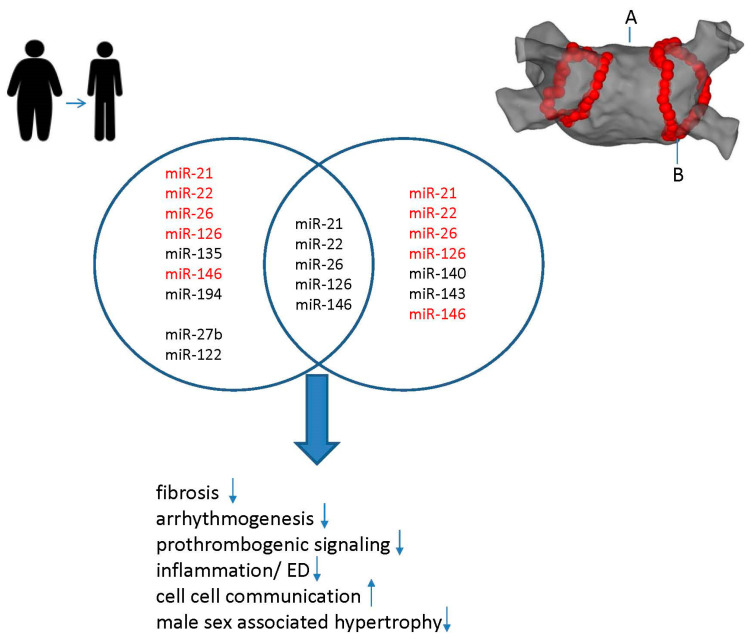
In atrial fibrillation (AF), multifactorial pathologic atrial alterations are manifested by structural and electrophysiological changes known as atrial remodeling. AF frequently develops in the context of underlying cardiac abnormalities. A critical mechanistic role played by atrial stretch is played by abnormal substrates in a number of conditions that predispose to AF, including obesity, heart failure, hypertension, and sleep apnea. The significant role of overweight and obesity in the development of AF is known; however, the differential effect of overweight, obesity, cardiovascular comorbidities, lifestyle, and other modifiable risk factors on the occurrence and recurrence of AF remains to be determined. Reverse remodeling of the atrial substrate and subsequent reduction in the AF burden by conversion into a typical sinus rhythm has been associated with weight loss through lifestyle changes or surgery. This makes it an essential pillar in the management of AF in obese patients. According to recently published research, microRNAs (miRs) may function as post-transcriptional regulators of genes involved in atrial remodeling, potentially contributing to the pathophysiology of AF. The focus of this review is on their modulation by both weight loss and catheter ablation interventions to counteract atrial remodeling in AF. Our analysis outlines the experimental and clinical evidence supporting the synergistic effects of weight loss and catheter ablation (CA) in reversing atrial electrical and structural remodeling in AF onset and in recurrent post-ablation AF by attenuating pro-thrombotic, pro-inflammatory, pro-fibrotic, arrhythmogenic, and male-sex-associated hypertrophic remodeling pathways. Furthermore, we discuss the promising role of miRs with prognostic potential as predictive biomarkers in guiding approaches to AF recurrence prevention.
Keywords: ROS; atrial fibrillation; catheter ablation; cytokine; fibrosis; hypertension; inflammaging; microRNA; obesity; recurrent atrial fibrillation; sex differences; weight loss.
Conflict of interest statement
The authors declare no conflicts of interest.
Figures
References
-
- Mahajan R., Lau D.H., Brooks A.G., Shipp N.J., Wood J.P.M., Manavis J., Samuel C.S., Patel K.P., Finnie J.W., Alasady M., et al. Atrial Fibrillation and Obesity: Reverse Remodeling of Atrial Substrate with Weight Reduction. JACC Clin. Electrophysiol. 2021;7:630–641. doi: 10.1016/j.jacep.2020.11.015. - DOI - PubMed
-
- Joglar J.A., Chung M.K., Armbruster A.L., Benjamin E.J., Chyou J.Y., Cronin E.M., Deswal A., Eckhardt L.L., Goldberger Z.D., Gopinathannair R., et al. 2023 ACC/AHA/ACCP/HRS Guideline for the Diagnosis and Management of Atrial Fibrillation: A Report of the American College of Cardiology/American Heart Association Joint Committee on Clinical Practice Guidelines. Circulation. 2024;149:e1–e156. doi: 10.1161/CIR.0000000000001193. - DOI - PMC - PubMed
Publication types
MeSH terms
Substances
Grants and funding
LinkOut - more resources
Full Text Sources
Medical
