


Paricalcitol Has a Potent Anti-Inflammatory Effect in Rat Endothelial Denudation-Induced Intimal Hyperplasia
- PMID: 38732029
- PMCID: PMC11084681
- DOI: 10.3390/ijms25094814
Paricalcitol Has a Potent Anti-Inflammatory Effect in Rat Endothelial Denudation-Induced Intimal Hyperplasia
Abstract
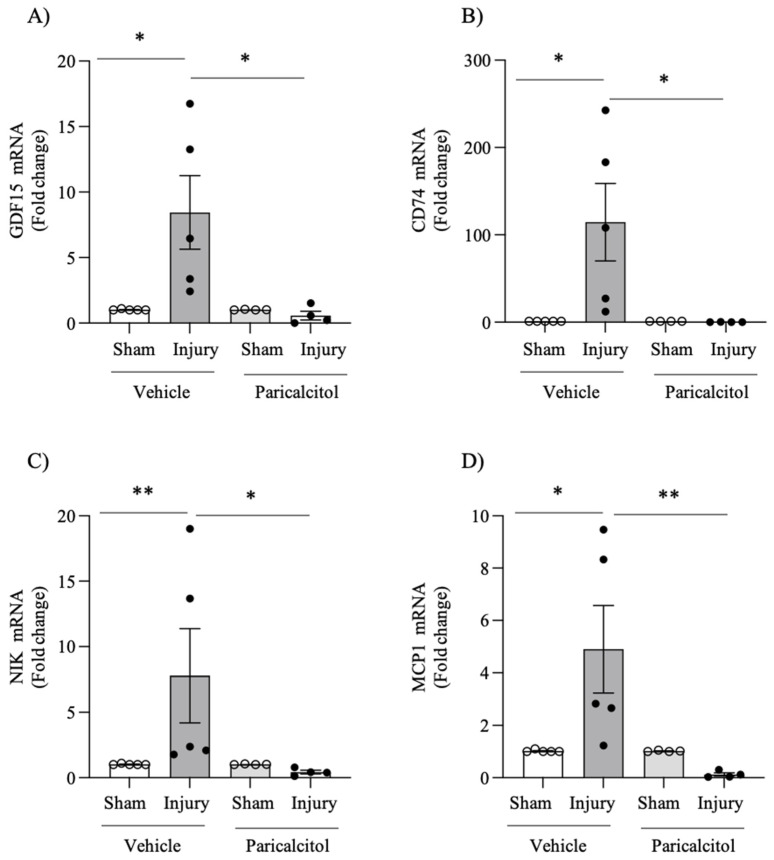
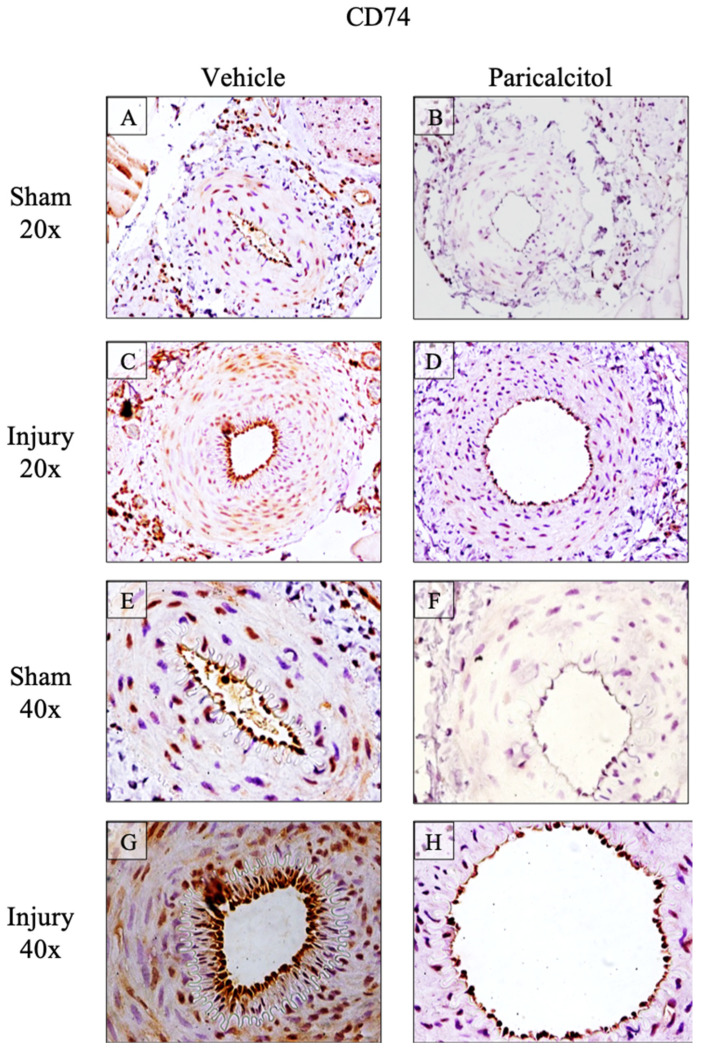
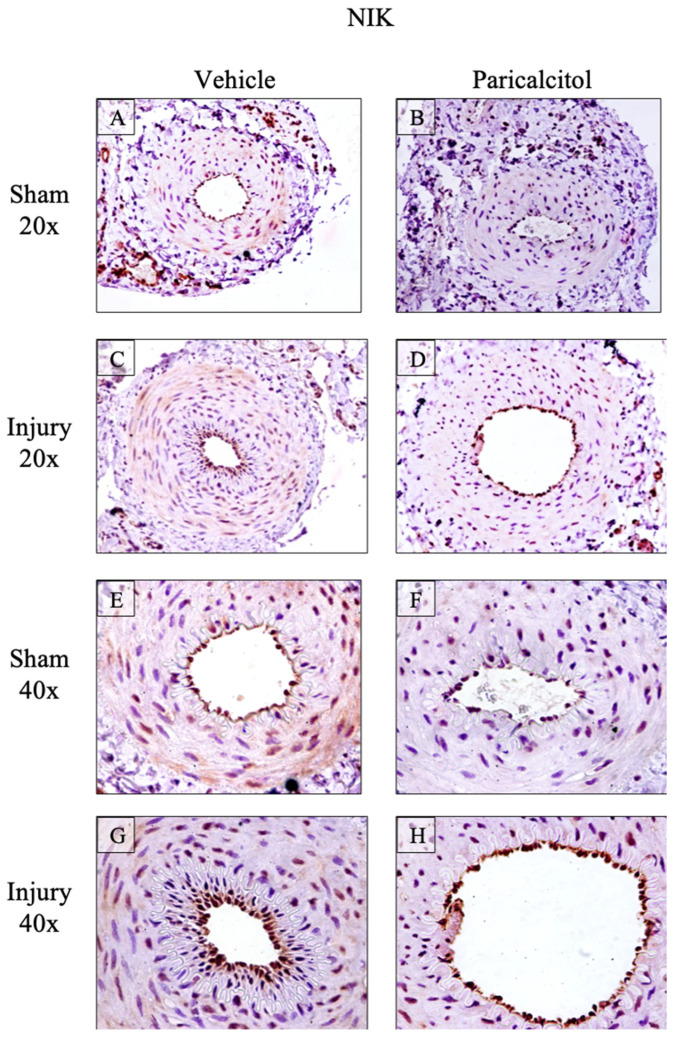
Neointimal hyperplasia is the main cause of vascular graft failure in the medium term. Vitamin D receptor activation modulates the biology of vascular smooth muscle cells and has been reported to protect from neointimal hyperplasia following endothelial injury. However, the molecular mechanisms are poorly understood. We have now explored the impact of the selective vitamin D receptor activator, paricalcitol, on neointimal hyperplasia, following guidewire-induced endothelial cell injury in rats, and we have assessed the impact of paricalcitol or vehicle on the expression of key cell stress factors. Guidewire-induced endothelial cell injury caused neointimal hyperplasia and luminal stenosis and upregulated the expression of the growth factor growth/differentiation factor-15 (GDF-15), the cytokine receptor CD74, NFκB-inducing kinase (NIK, an upstream regulator of the proinflammatory transcription factor NFκB) and the chemokine monocyte chemoattractant protein-1 (MCP-1/CCL2). Immunohistochemistry confirmed the increased expression of the cellular proteins CD74 and NIK. Paricalcitol (administered in doses of 750 ng/kg of body weight, every other day) had a non-significant impact on neointimal hyperplasia and luminal stenosis. However, it significantly decreased GDF-15, CD74, NIK and MCP-1/CCL2 mRNA expression, which in paricalcitol-injured arteries remained within the levels found in control vehicle sham arteries. In conclusion, paricalcitol had a dramatic effect, suppressing the stress response to guidewire-induced endothelial cell injury, despite a limited impact on neointimal hyperplasia and luminal stenosis. This observation identifies novel molecular targets of paricalcitol in the vascular system, whose differential expression cannot be justified as a consequence of improved tissue injury.
Keywords: inflammation; intimal hyperplasia; paricalcitol; peripheral vascular disease; vitamin D receptor.
Conflict of interest statement
A.O. has received grants from Sanofi and consultancy or speaker fees or travel support from Adviccene, Alexion, Astellas, Astrazeneca, Amicus, Amgen, Boehringer Ingelheim, Fresenius Medical Care, GSK, Bayer, Sanofi-Genzyme, Menarini, Mundipharma, Kyowa Kirin, Lilly, Freeline, Idorsia, Chiesi, Otsuka, Novo-Nordisk, Sysmex and Vifor Fresenius Medical Care Renal Pharma and Spafarma and is Director of the Catedra UAM-Astrazeneca of chronic kidney disease and electrolytes. He has stock in Telara Farma.
Figures



References
-
- Dosluoglu H.H., Lall P., Harris L.M., Dryjski M.L. Long-Term Limb Salvage and Survival after Endovascular and Open Revascularization for Critical Limb Ischemia after Adoption of Endovascular-First Approach by Vascular Surgeons. J. Vasc. Surg. 2012;56:361–371. doi: 10.1016/J.JVS.2012.01.054. - DOI - PubMed
MeSH terms
Substances
Grants and funding
LinkOut - more resources
Full Text Sources
Research Materials
Miscellaneous
