


Assessing Performance of Contemporary Plant-Based Diets against the UK Dietary Guidelines: Findings from the Feeding the Future (FEED) Study
- PMID: 38732583
- PMCID: PMC11085280
- DOI: 10.3390/nu16091336
Assessing Performance of Contemporary Plant-Based Diets against the UK Dietary Guidelines: Findings from the Feeding the Future (FEED) Study
Abstract
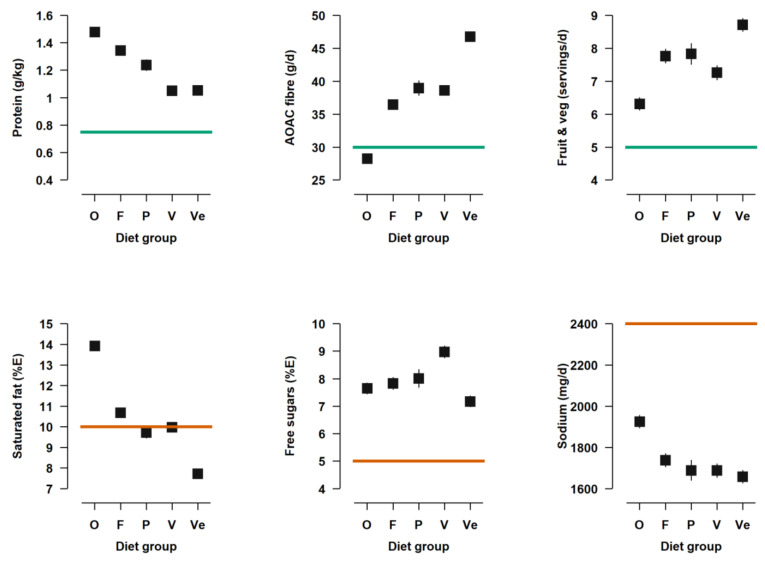
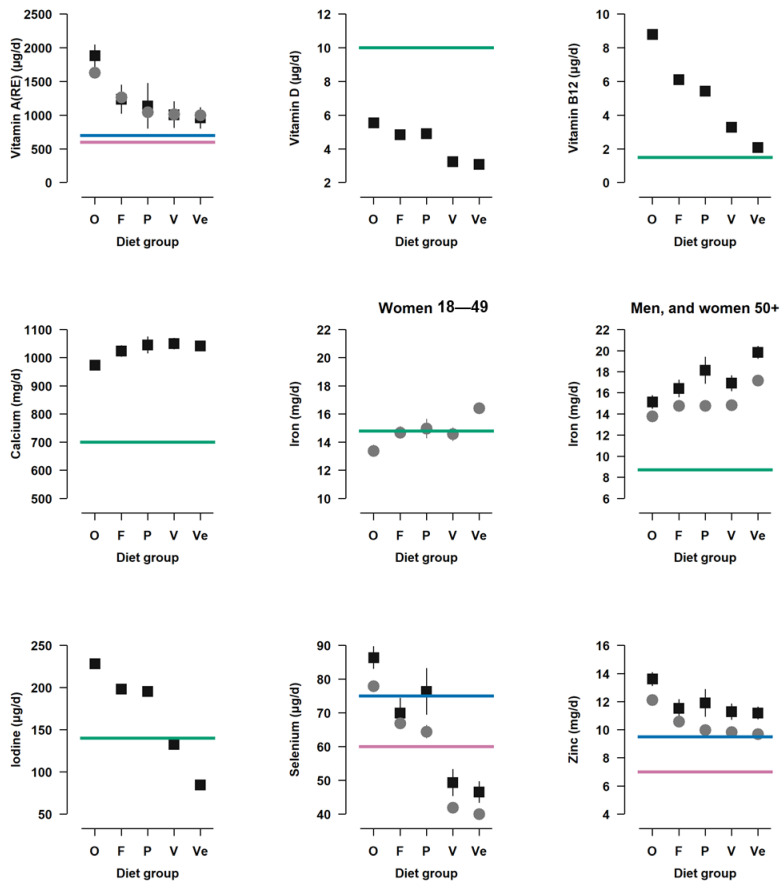
Uncertainty remains about the composition of contemporary plant-based diets and whether they provide recommended nutrient intakes. We established Feeding the Future (FEED), an up-to-date online cohort of UK adults following different plant-based diets and diets containing meat and fish. We recruited 6342 participants aged 18-99 [omnivores (1562), flexitarians (1349), pescatarians (568), vegetarians (1292), and vegans (1571)] between February 2022 and December 2023, and measured diet using a food frequency questionnaire and free text. We compared personal characteristics and dietary intakes between diet groups and assessed compliance with dietary guidelines. Most participants met UK dietary recommendations for fruit and vegetables, sodium, and protein, although protein intakes were lowest among vegetarians and vegans. Omnivores did not meet the fibre recommendation and only vegans met the saturated fat recommendation. All diet groups exceeded the free sugars recommendation. Higher proportions of vegetarians and vegans were below the estimated average requirements (EARs) for zinc, iodine, selenium, and, in vegans, vitamins A and B12, whereas calcium intakes were similar across the diet groups. People following plant-based diets showed good compliance with most dietary targets, and their risk for inadequate intakes of certain nutrients might be mitigated by improved dietary choices and/or food fortification.
Keywords: cohort; diet; dietary guidelines; flexitarians; nutrients; plant-based; vegans; vegetarians.
Conflict of interest statement
The authors declare no conflicts of interest.
Figures
References
-
- YouGov Dietary Choices of Brits (e.g., Vegeterian, Flexitarian, Meat-Eater etc.)? [(accessed on 25 March 2024)];2023 Available online: https://yougov.co.uk/topics/society/trackers/dietery-choices-of-brits-eg....
MeSH terms
Grants and funding
LinkOut - more resources
Full Text Sources
Medical
Miscellaneous
