


Base excess (BE): reloaded
- PMID: 38735983
- PMCID: PMC11089692
- DOI: 10.1186/s40001-024-01796-6
Base excess (BE): reloaded
Abstract
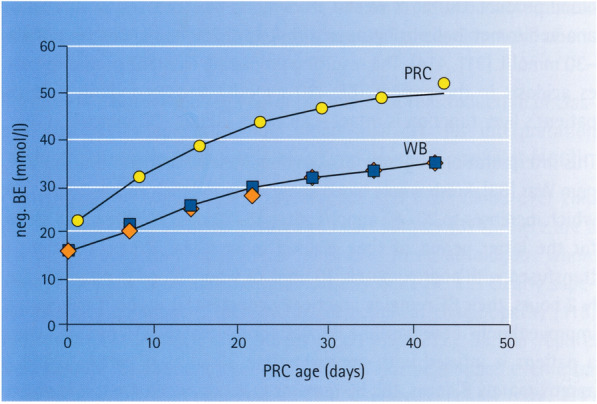
The base excess value (BE, mmol/L), not standard base excess (SBE), correctly calculated including pH, pCO2 (mmHg), sO2 (%) and cHb (g/dl) is a diagnostic tool for several in vivo events, e.g., mortality after multiple trauma or shock, acidosis, bleeding, clotting, artificial ventilation. In everyday clinical practice a few microlitres of blood (arterial, mixed venous or venous) are sufficient for optimal diagnostics of any metabolic acidosis or alkalosis.The same applies to a therapeutic tool-then referred to as potential base excess (BEpot)-for several in vitro assessments, e.g., solutions for infusion, sodium bicarbonate, blood products, packed red blood cells, plasma. Thus, BE or BEpot has been a parameter with exceptional clinical significance since 2007.
Keywords: Acidosis; Artificial ventilation; Base excess; Bleeding; Blood products; Infusion solutions; Intensive care diagnostic; Mortality; Potential base excess; Shock.
© 2024. The Author(s).
Conflict of interest statement
The authors declare no competing interests.
Figures

References
-
- Qualitest No. 8—2005. https://www.physioklin.de/fileadmin/user_upload/physioVARIA/qualitest/qu...
Publication types
MeSH terms
LinkOut - more resources
Full Text Sources
