


Simulation training on respectful emergency obstetric and neonatal care in north-western Madagascar: a mixed-methods evaluation of an innovative training program
- PMID: 38741188
- PMCID: PMC11092212
- DOI: 10.1186/s41077-024-00289-0
Simulation training on respectful emergency obstetric and neonatal care in north-western Madagascar: a mixed-methods evaluation of an innovative training program
Abstract
Background: The rates of maternal and neonatal deaths in Madagascar are among the highest in the world. In response to a request for additional training from obstetrical care providers at the Ambanja district hospital in north-eastern Madagascar, a partnership of institutions in Switzerland and Madagascar conducted innovative training on respectful emergency obstetric and newborn care using e-learning and simulation methodologies. The training focused on six topics: pre-eclampsia, physiological childbirth, obstetric maneuvers, postpartum hemorrhage, maternal sepsis, and newborn resuscitation. Cross-cutting themes were interprofessional communication and respectful patient care. Ten experienced trainers participated in an e-training-of-trainers course conducted by the Swiss partners. The newly-trained trainers and Swiss partners then jointly conducted the hybrid remote/in-person training for 11 obstetrical care providers in Ambanja.
Methods: A mixed methods evaluation was conducted of the impact of the training on participants' knowledge and practices. Trainees' knowledge was tested before, immediately after, and 6 months after the training. Focus group discussions were conducted to elicit participants' opinions about the training, including the content and pedagogical methods.
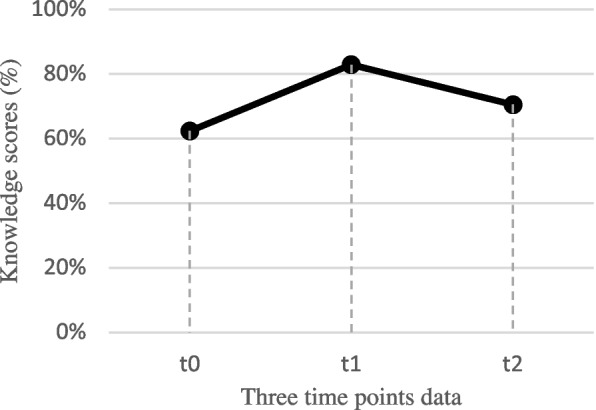
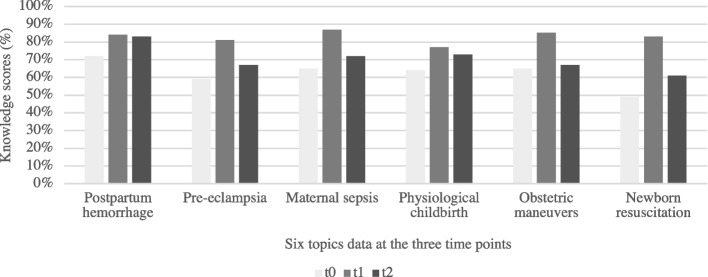
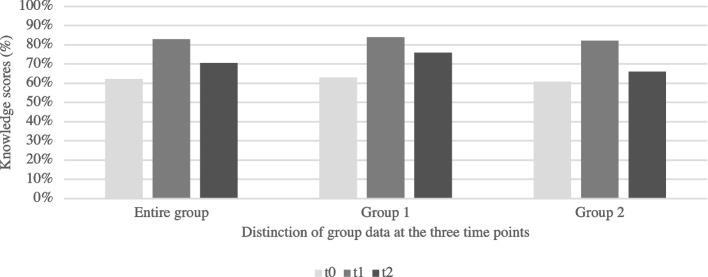
Results: Trainees' knowledge of the six topics was higher at 6 months (with an average of 71% correct answers) compared to before the training (62%), although it was even higher (83%) immediately after the training. During the focus group discussions, participants highlighted their positive impressions of the training, including its impact on their sense of professional effectiveness. They reported that their interprofessional relationships and focus on respectful care had improved. Simulation, which was a new methodology for the participants native to Madagascar, was appreciated for its engaging and active format, and they enjoyed the hybrid delivery of the training. Participants (including the trainers) expressed a desire for follow-up engagement, including additional training, and improved access to more equipment.
Conclusion: The evaluation showed improvements in trainees' knowledge and capacity to provide respectful emergency care to pregnant women and newborns across all training topics. The hybrid simulation-based training method elicited strong enthusiasm. Significant opportunity exists to expand the use of hybrid onsite/remote simulation-based training to improve obstetrical care and health outcomes for women and newborns in Madagascar and elsewhere.
Keywords: Emergency obstetric care; Interprofessional collaboration; Madagascar; Professional training; Respectful care; Simulation.
© 2024. The Author(s).
Conflict of interest statement
The authors declare that they have no competing interests.
Figures
Similar articles
-
Provider knowledge and perceptions following an integrated simulation training on emergency obstetric and neonatal care and respectful maternity care: A mixed-methods study in Ghana.Midwifery. 2020 Jun;85:102667. doi: 10.1016/j.midw.2020.102667. Epub 2020 Feb 19. Midwifery. 2020. PMID: 32114318
-
[Quality of care to prevent and treat postpartum hemorrhage and pre-eclampsia/eclampsia : an observational assessment in Madagascar's hospitals].Med Sante Trop. 2013 May 1;23(2):168-75. doi: 10.1684/mst.2013.0161. Med Sante Trop. 2013. PMID: 23694783 French.
-
Can an integrated obstetric emergency simulation training improve respectful maternity care? Results from a pilot study in Ghana.Birth. 2019 Sep;46(3):523-532. doi: 10.1111/birt.12418. Epub 2019 Jan 24. Birth. 2019. PMID: 30680785
-
Emergency obstetric simulation training: how do we know where we are going, if we don't know where we have been?Aust N Z J Obstet Gynaecol. 2013 Dec;53(6):509-16. doi: 10.1111/ajo.12120. Epub 2013 Sep 13. Aust N Z J Obstet Gynaecol. 2013. PMID: 24033002 Review.
-
The effects of interactive training of healthcare providers on the management of life-threatening emergencies in hospital.Cochrane Database Syst Rev. 2019 Sep 24;9(9):CD012177. doi: 10.1002/14651858.CD012177.pub2. Cochrane Database Syst Rev. 2019. PMID: 31549741 Free PMC article.
Cited by
-
Enhancing Pediatric Emergency Care in Low-Resource Settings Through Simulation-Based Training: A Narrative Review.Sage Open Pediatr. 2025 Mar 21;12:30502225251319883. doi: 10.1177/30502225251319883. eCollection 2025 Jan-Dec. Sage Open Pediatr. 2025. PMID: 40612209 Free PMC article. Review.
References
-
- Carmichael SL, Mehta K, Srikantiah S, Mahapatra T, Chaudhuri I, Balakrishnan R, Chaturvedi S, Raheel H, Borkum E, Trehan S, Weng Y, Kaimal R, Sivasankaran A, Sridharan S, Rotz D, Tarigopula UK, Bhattacharya D, Atmavilas Y, Pepper KT, Rangarajan A, Darmstadt GL. Use of mobile technology by frontline health workers to promote reproductive, maternal, newborn and child health and nutrition: a cluster randomized controlled Trial in Bihar. India J Glob Health. 2019 doi: 10.7189/jogh.09.020424. - DOI - PMC - PubMed
Grants and funding
LinkOut - more resources
Full Text Sources
