


Evolution of a novel adrenal cell type that promotes parental care
- PMID: 38750354
- PMCID: PMC11329292
- DOI: 10.1038/s41586-024-07423-y
Evolution of a novel adrenal cell type that promotes parental care
Abstract
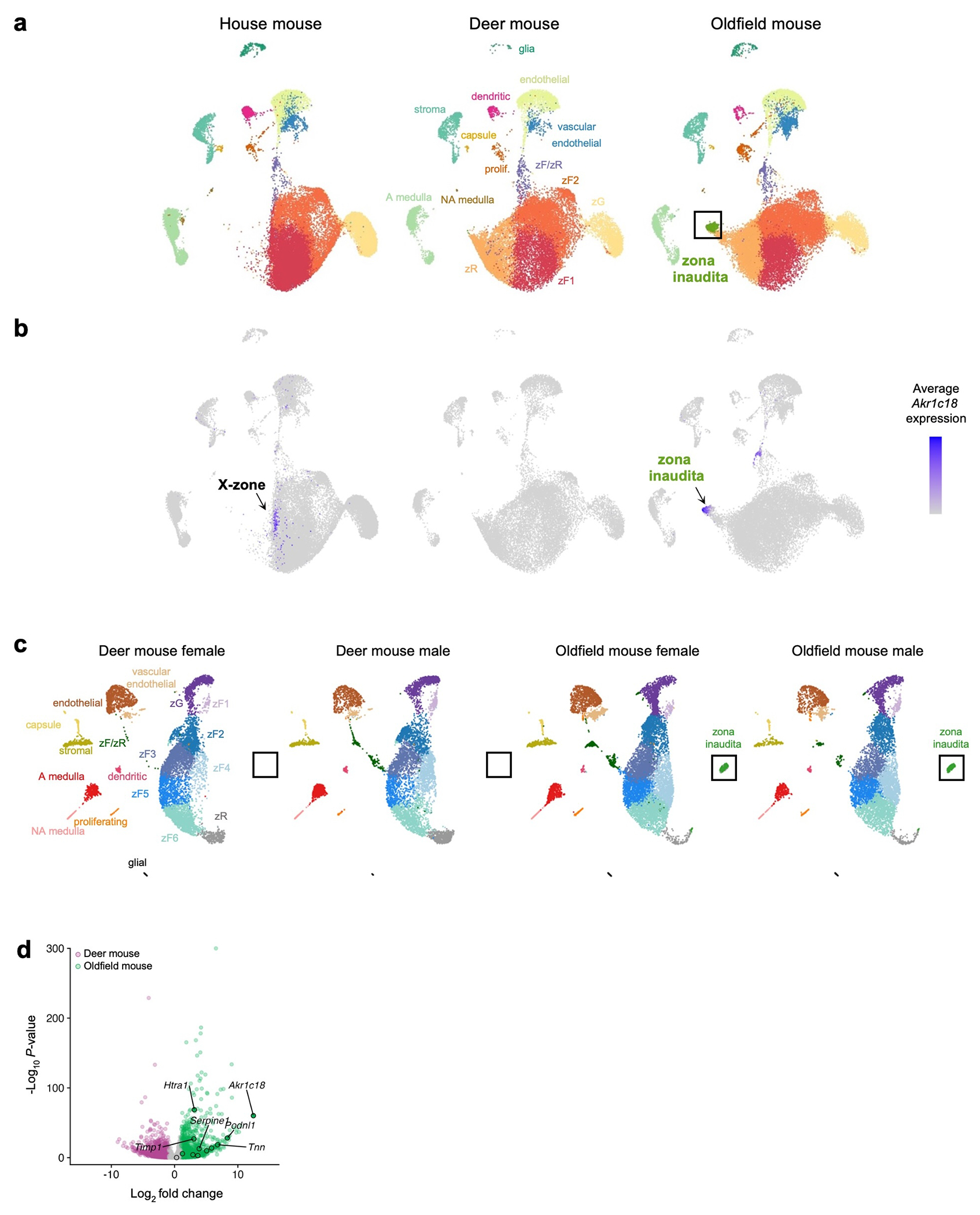
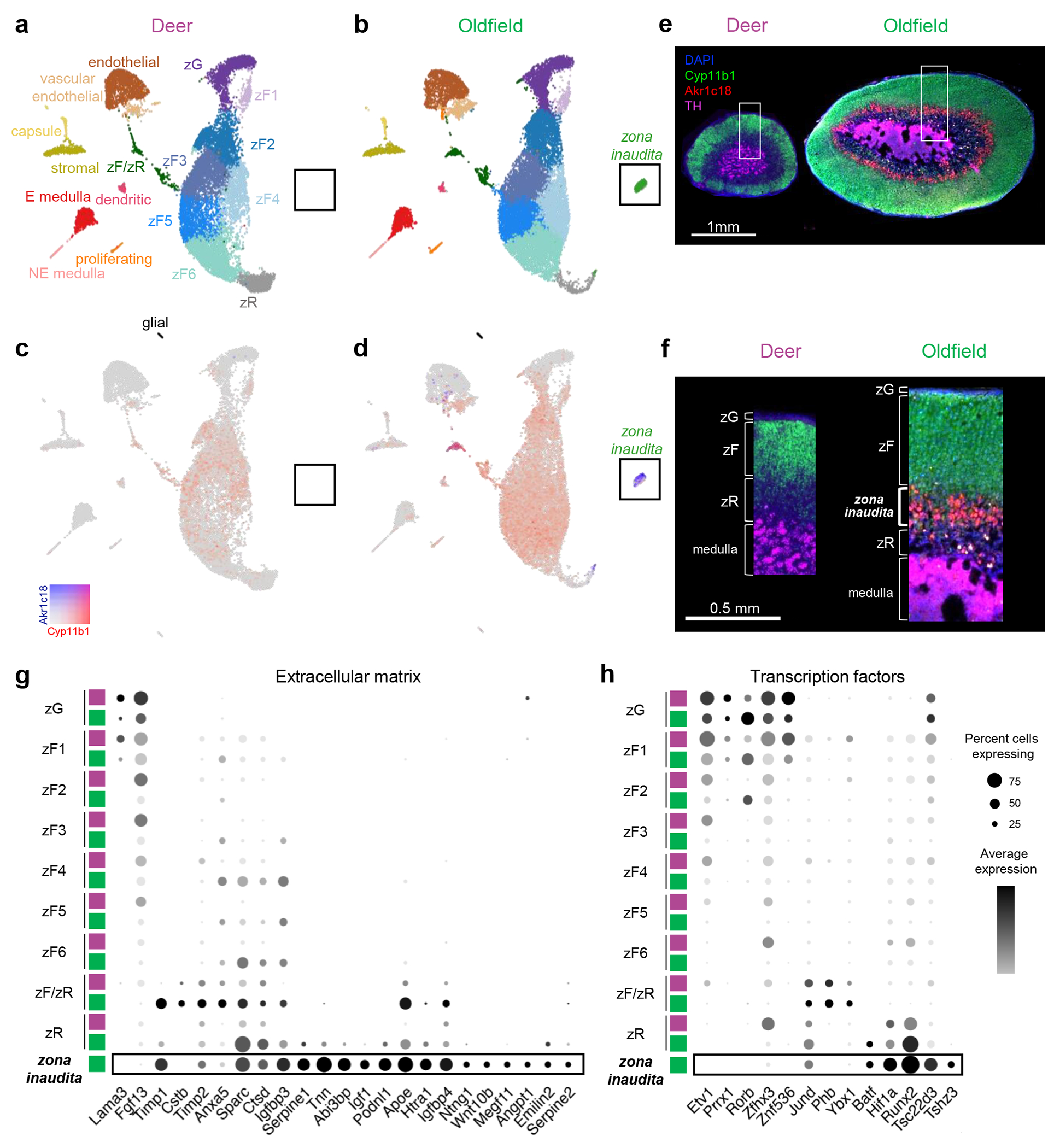
Cell types with specialized functions fundamentally regulate animal behaviour, and yet the genetic mechanisms that underlie the emergence of novel cell types and their consequences for behaviour are not well understood1. Here we show that the monogamous oldfield mouse (Peromyscus polionotus) has recently evolved a novel cell type in the adrenal gland that expresses the enzyme AKR1C18, which converts progesterone into 20α-hydroxyprogesterone. We then demonstrate that 20α-hydroxyprogesterone is more abundant in oldfield mice, where it induces monogamous-typical parental behaviours, than in the closely related promiscuous deer mice (Peromyscus maniculatus). Using quantitative trait locus mapping in a cross between these species, we ultimately find interspecific genetic variation that drives expression of the nuclear protein GADD45A and the glycoprotein tenascin N, which contribute to the emergence and function of this cell type in oldfield mice. Our results provide an example by which the recent evolution of a new cell type in a gland outside the brain contributes to the evolution of social behaviour.
© 2024. The Author(s), under exclusive licence to Springer Nature Limited.
Conflict of interest statement
Competing interests statement
The authors declare no competing interests.
Figures





References
-
- Arendt D et al. The origin and evolution of cell types. Nat. Rev. Genet 17, 744–757 (2016). - PubMed
-
- Tosches MA et al. Evolution of pallium, hippocampus, and cortical cell types revealed by single-cell transcriptomics in reptiles. Science 360, 881–888 (2018). - PubMed
-
- Hain D et al. Molecular diversity and evolution of neuron types in the amniote brain. Science 377, eabp8202 (2022). - PubMed
Methods references
-
- Renier N et al. iDISCO: A simple, rapid method to immunolabel large tissue samples for volume imaging. Cell 159, 896–910 (2014). - PubMed
-
- Bedford NL et al. Automated tracking reveals the social network of beach mice and their burrows. 2021.08.07.455531 Preprint at 10.1101/2021.08.07.455531 (2021). - DOI
MeSH terms
Substances
Grants and funding
LinkOut - more resources
Full Text Sources
Molecular Biology Databases
