


Updated understanding of the protein-DNA recognition code used by C2H2 zinc finger proteins
- PMID: 38754172
- PMCID: PMC12264921
- DOI: 10.1016/j.sbi.2024.102836
Updated understanding of the protein-DNA recognition code used by C2H2 zinc finger proteins
Abstract
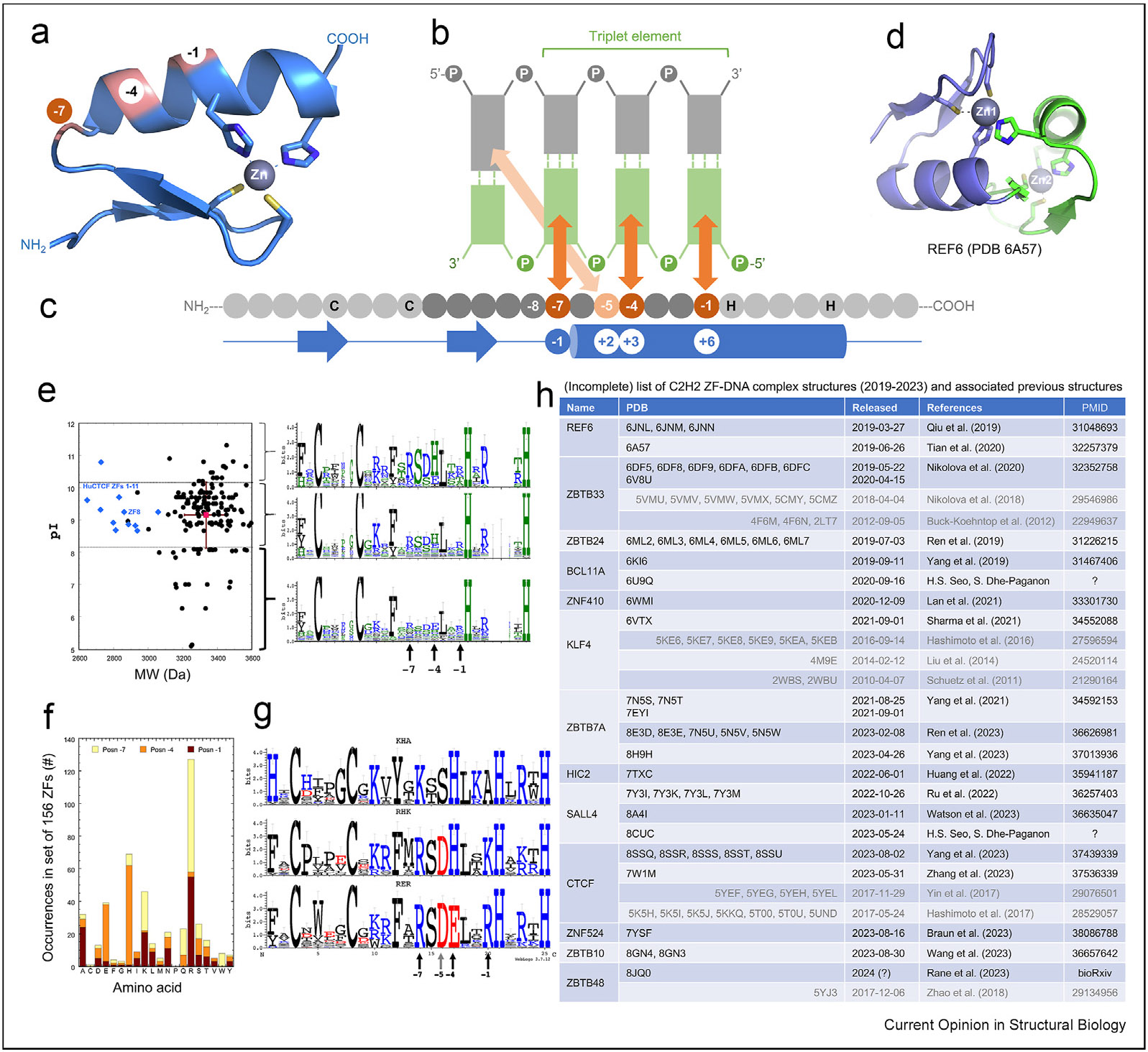
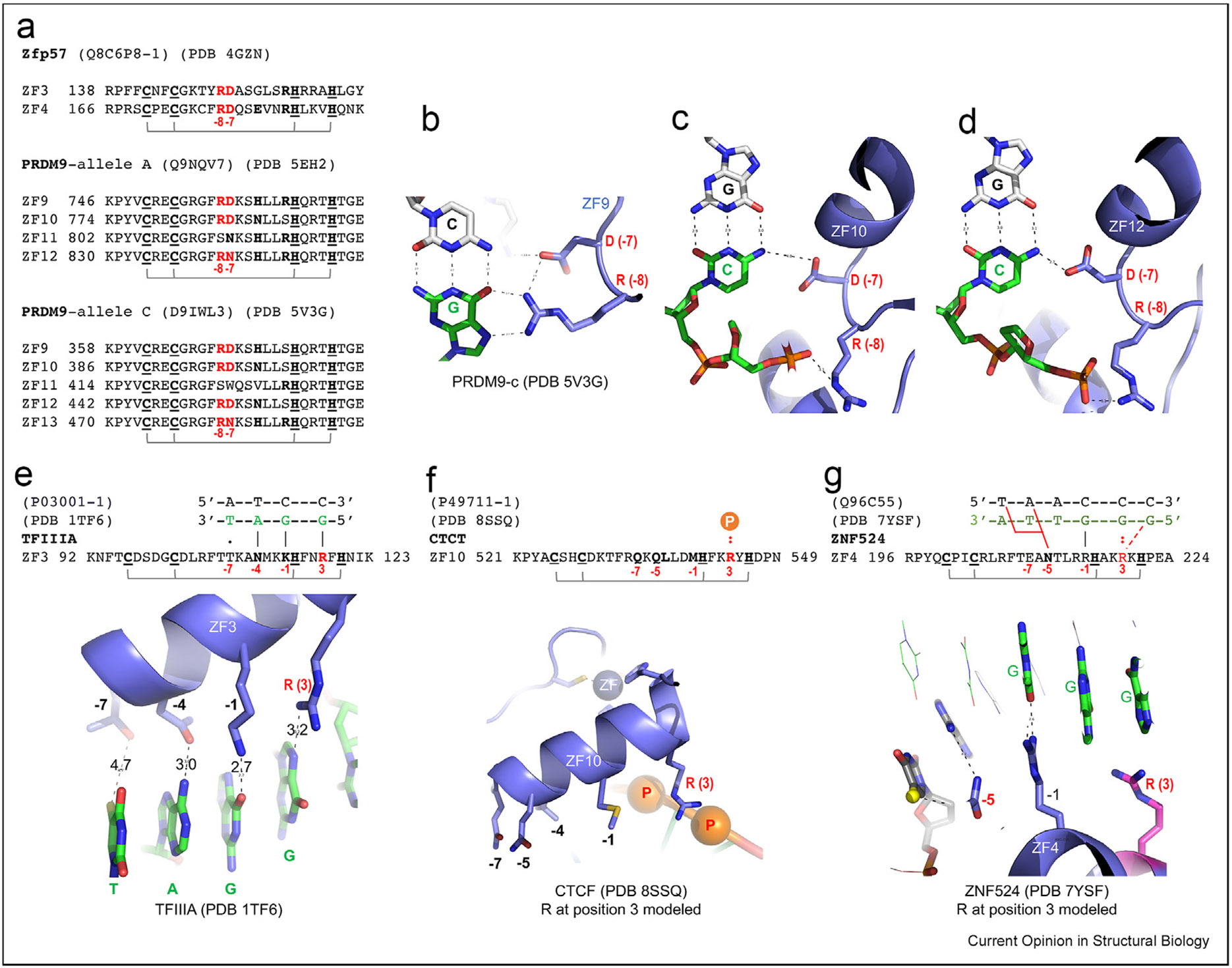
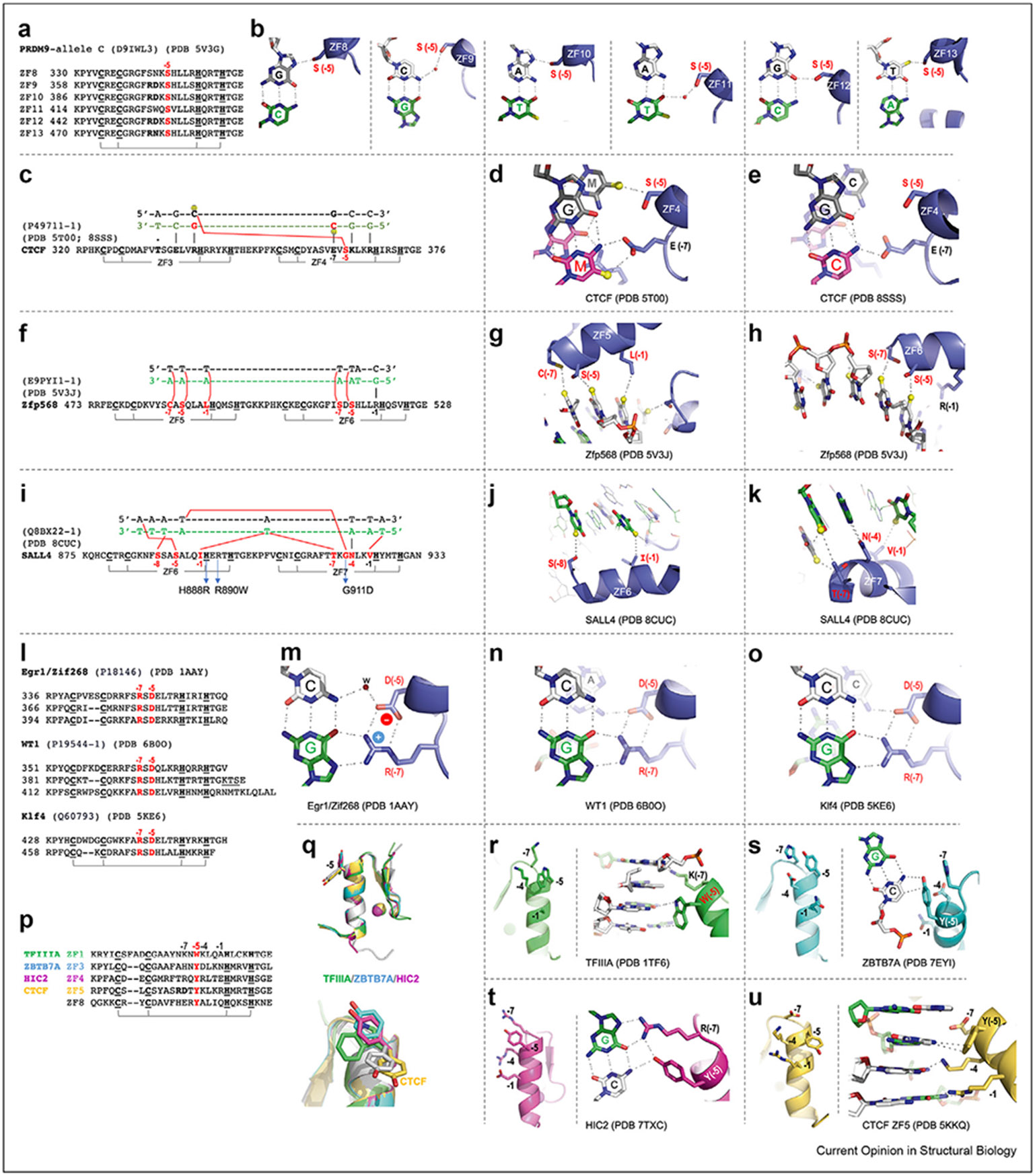
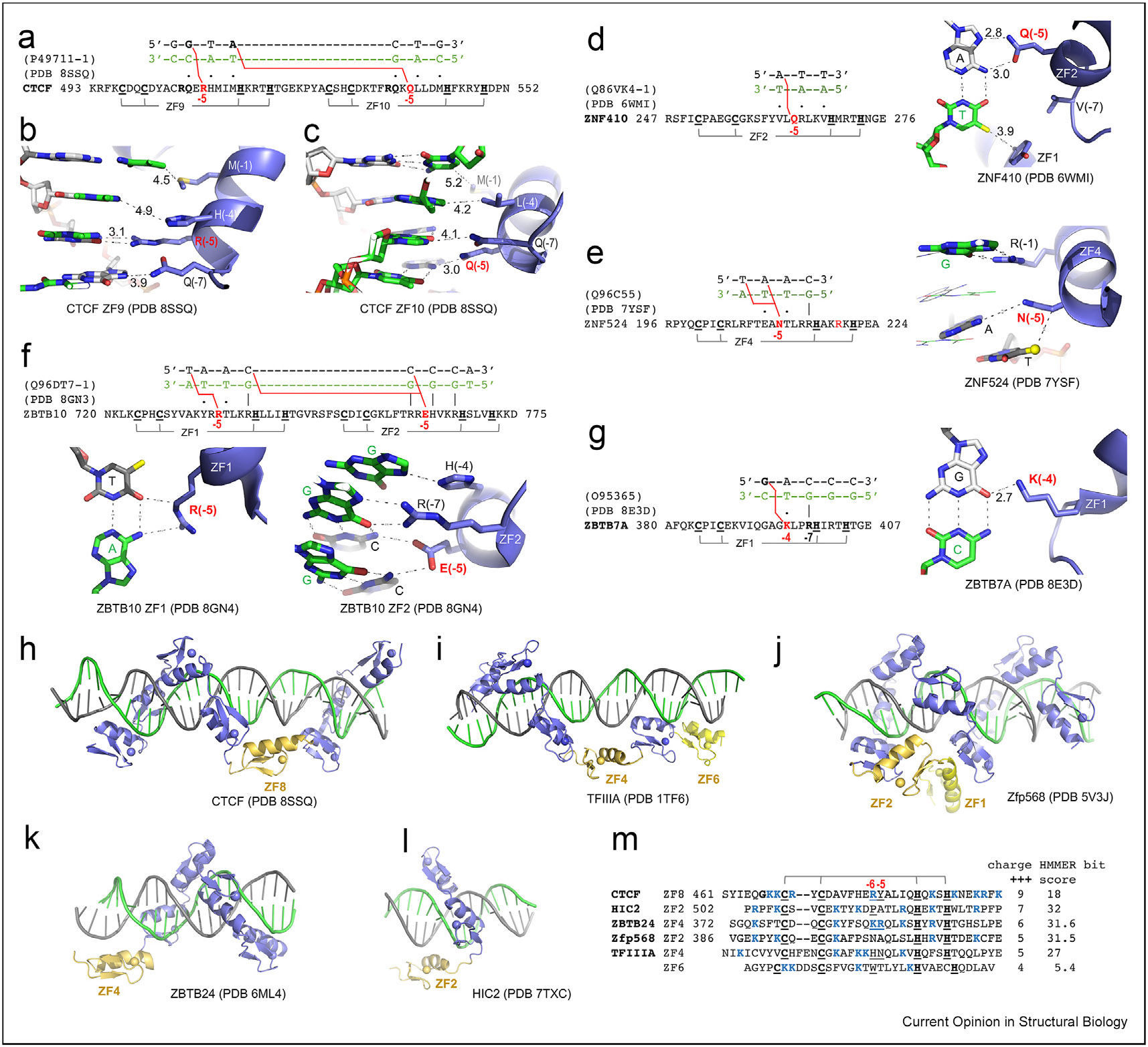
C2H2 zinc-finger (ZF) proteins form the largest family of DNA-binding transcription factors coded by mammalian genomes. In a typical DNA-binding ZF module, there are twelve residues (numbered from -1 to -12) between the last zinc-coordinating cysteine and the first zinc-coordinating histidine. The established C2H2-ZF "recognition code" suggests that residues at positions -1, -4, and -7 recognize the 5', central, and 3' bases of a DNA base-pair triplet, respectively. Structural studies have highlighted that additional residues at positions -5 and -8 also play roles in specific DNA recognition. The presence of bulky and either charged or polar residues at these five positions determines specificity for given DNA bases: guanine is recognized by arginine, lysine, or histidine; adenine by asparagine or glutamine; thymine or 5-methylcytosine by glutamate; and unmodified cytosine by aspartate. This review discusses recent structural characterizations of C2H2-ZFs that add to our understanding of the principles underlying the C2H2-ZF recognition code.
Keywords: C2H2 zinc fingers; DNA sequence-specific recognition; protein-DNA interactions; transcription factors.
Copyright © 2024 The Author(s). Published by Elsevier Ltd.. All rights reserved.
Conflict of interest statement
Declaration of competing interest The authors declare that they have no known competing financial interests or personal relationships that could have appeared to influence the work reported in this paper.
Figures
References
-
- Boumpas P, Merabet S, Carnesecchi J: Integrating transcription and splicing into cell fate: transcription factors on the block. Wiley Interdiscip Rev RNA 2023, 14, e1752. - PubMed
-
- Hecker M, Wagner AH: Transcription factor decoy technology: a therapeutic update. Biochem Pharmacol 2017, 144:29–34. - PubMed
-
- Radaeva M, Ton AT, Hsing M, Ban F, Cherkasov A: Drugging the ‘undruggable’. Therapeutic targeting of protein-DNA interactions with the use of computer-aided drug discovery methods. Drug Discov Today 2021, 26:2660–2679. - PubMed
Publication types
MeSH terms
Substances
Grants and funding
LinkOut - more resources
Full Text Sources
