


Blister formation in acute compartment syndrome: Unraveling the underlying predictors
- PMID: 38758865
- PMCID: PMC11098220
- DOI: 10.1097/MD.0000000000038191
Blister formation in acute compartment syndrome: Unraveling the underlying predictors
Abstract
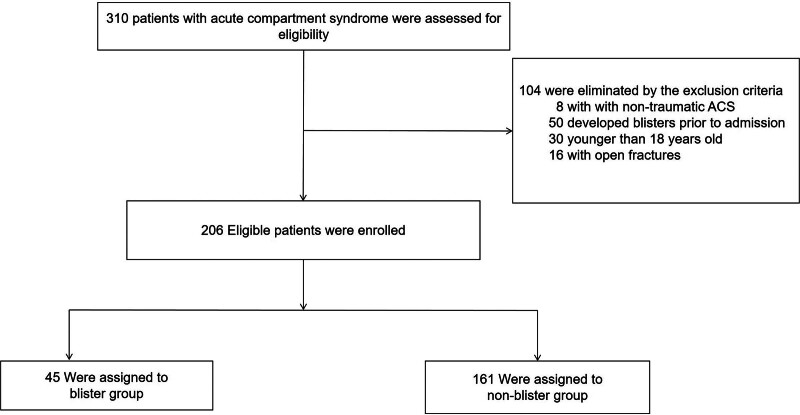
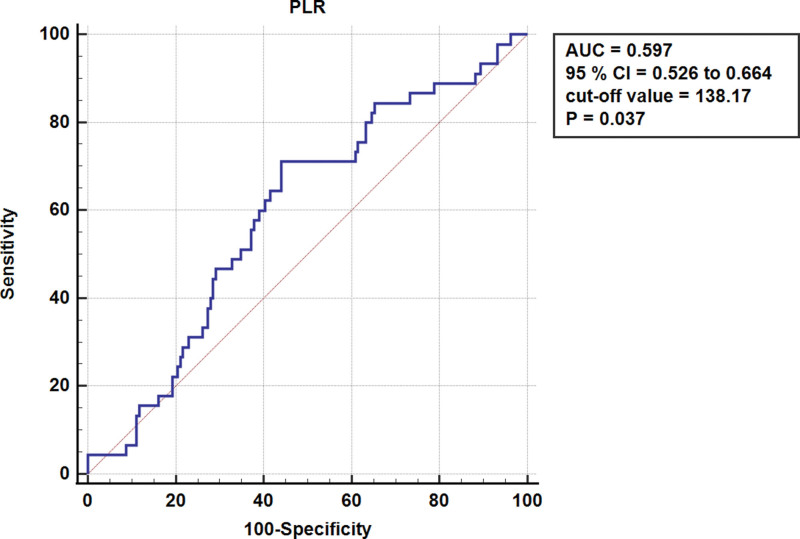
Blisters are a common complication of orthopedic trauma and can cause surgery delay and increase the risk of infection. This study aims to identify risk factors for blisters in patients with acute compartment syndrome (ACS). Our study collected data from 206 ACS patients admitted to 2 hospitals between November 2013 and January 2021. Patients were divided into 2 groups: the blister group (BG) and the control group (CG), based on the presence or absence of blisters. We conducted univariate analysis, logistic regression analysis, and receiver operating characteristic (ROC) curve analysis to identify any significant differences in demographics, comorbidities, and admission laboratory test results between the 2 groups. Our study found that the incidence of blisters in ACS patients was 21.8% (45 out of 206). Univariate analysis identified several factors that were significantly associated with blister formation. Logistic regression analysis showed that patients who developed ACS in the winter or spring (P = .007, OR = 2.690, 95% CI [1.308-5.534]), patients who received a referral (the process whereby patients are transferred between medical facilities for further evaluation and treatment attempts prior to admission to our hospital) (P = .009, OR = 4.235, 95% CI [1.432-12.527]), and patients with higher PLR (P = .036, OR = 1.005, 95% CI [1.000-1.009]) were independent risk factors for blisters. Additionally, a history of drinking (P = .039, OR = 0.027, 95% CI [0.046-0.927]) was found to be a protective factor for blister formation in these patients. Moreover, ROC curve analysis showed that a PLR value of 138 was the cutoff point for predicting the development of blisters in ACS patients. Our study identified seasonal factors (refer to these months like winter or spring), referral, and patients with higher PLR as independent risk factors, and a history of drinking as a protective factor for blister formation in ACS patients. These findings allow clinicians to individualize the evaluation of blister risk and perform early targeted therapies.
Copyright © 2024 the Author(s). Published by Wolters Kluwer Health, Inc.
Conflict of interest statement
The authors have no conflicts of interest to disclose.
Figures
References
-
- Duckworth AD, McQueen MM. The diagnosis of acute compartment syndrome: a critical analysis review. JBJS Rev. 2017;5:e1. - PubMed
-
- Shadgan B, Menon M, O’Brien PJ, Reid WD. Diagnostic techniques in acute compartment syndrome of the leg. J Orthop Trauma. 2008;22:581–7. - PubMed
-
- McQueen MM, Gaston P, Court-Brown CM. Acute compartment syndrome. Who is at risk? J Bone Joint Surg Br. 2000;82:200–3. - PubMed
-
- Kalyani BS, Fisher BE, Roberts CS, Giannoudis PV. Compartment syndrome of the forearm: a systematic review. J Hand Surg Am. 2011;36:535–43. - PubMed
Publication types
MeSH terms
LinkOut - more resources
Full Text Sources
Medical
