


Bacteriological analysis and antibiotic resistance in patients with diabetic foot ulcers in Dhaka
- PMID: 38758936
- PMCID: PMC11101115
- DOI: 10.1371/journal.pone.0301767
Bacteriological analysis and antibiotic resistance in patients with diabetic foot ulcers in Dhaka
Abstract
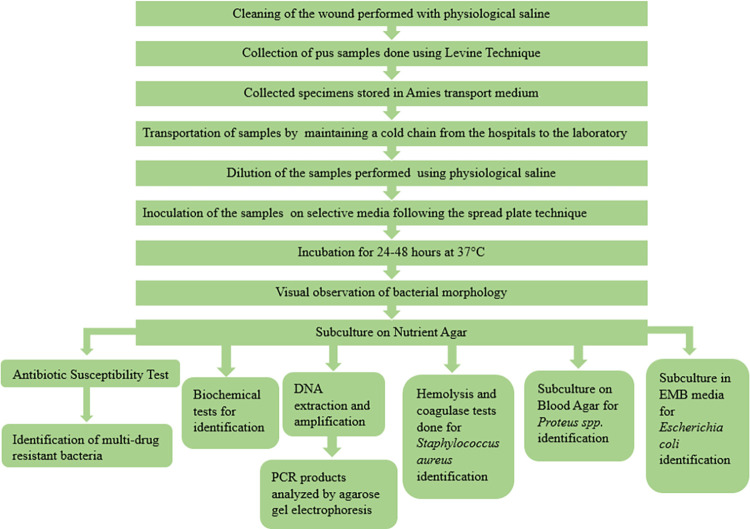
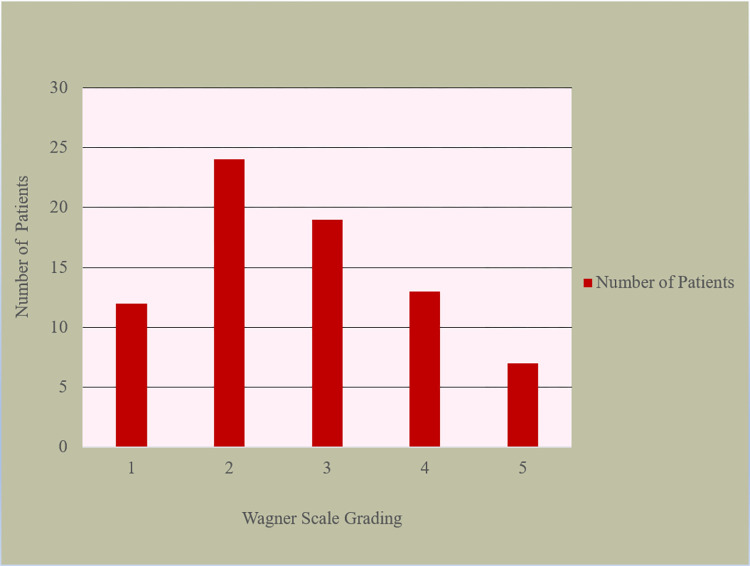
The primary objective of this study was to isolate bacteria from diabetic foot ulcers and subsequently assess their antibiotic resistance capabilities. Seventy-five patients diagnosed with diabetic foot ulcers were investigated. A number of these patients (97.33%) had type 2 diabetes, with a significant proportion of them having been diagnosed for 1-5 years (29.33%). Notably, a substantial number of these individuals were on insulin usage (78.66%). Among the patients under examination, 49.33% reported having no use of tobacco products, alcohol, or betel leaf. The ulcers analyzed in this study were classified into grades 1-5 according to the Wagner scale. Wagner grade 2 diabetic foot ulcers had the highest number of culture-positive patients, at 33.33%. Pus samples collected from patients were cultured on selective media, and bacterial identity was confirmed by biochemical tests and polymerase chain reaction. A total of 141 isolates were isolated. Among the isolates, 82.97% gram-negative bacteria and 17.02% gram-positive bacteria were detected. Klebsiella pneumoniae was the most common isolate. Proteus spp., Escherichia coli, Pseudomonas aeruginosa, and Staphylococcus aureus were also detected. Approximately 61.33% of the ulcers exhibited were polybacterial. In this study, it was observed that all bacterial isolates, except for Proteus spp., were primarily detected in patients classified under Wagner's grade 2. Moreover, antibiotic susceptibility was also tested on these 141 isolates. Among them, Escherichia coli showed the highest multidrug resistance, 81.81%. Most of the gram-negative bacteria were resistant to ampicillin. All of the gram-negative isolates exhibited high levels of susceptibility to piperacillin-tazobactam, and these levels were Klebsiella pneumoniae (97.56%), Pseudomonas aeruginosa (95.24%), Escherichia coli (81.82%), and Proteus spp. (80%). On the other hand, gram-positive Staphylococcus aureus mostly showed sensitivity towards vancomycin and norfloxacin (79.17%).
Copyright: © 2024 Baral et al. This is an open access article distributed under the terms of the Creative Commons Attribution License, which permits unrestricted use, distribution, and reproduction in any medium, provided the original author and source are credited.
Conflict of interest statement
The authors have declared that no competing interests exist.
Figures
References
-
- Singh N, Armstrong DG, Lipsky BA. Preventing foot ulcers. Nurs Resid Care. 2013;15(4):187–187.
-
- Deribe B. Prevalence and Factors Influencing Diabetic Foot Ulcer among Diabetic Patients Attending Arbaminch Hospital, South Ethiopia. J Diabetes Metab. 2014;05(01):1–6.
-
- Mariam TG, Alemayehu A, Tesfaye E, Mequannt W, Temesgen K, Yetwale F, et al. Prevalence of Diabetic Foot Ulcer and Associated Factors among Adult Diabetic Patients Who Attend the Diabetic Follow-Up Clinic at the University of Gondar Referral Hospital, North West Ethiopia, 2016: Institutional-Based Cross-Sectional Study. J Diabetes Res. 2017;2017. doi: 10.1155/2017/2879249 - DOI - PMC - PubMed
MeSH terms
LinkOut - more resources
Full Text Sources
Medical
Miscellaneous
