


Factors influencing maternal death in Cambodia, Laos, Myanmar, and Vietnam countries: A systematic review
- PMID: 38758946
- PMCID: PMC11101123
- DOI: 10.1371/journal.pone.0293197
Factors influencing maternal death in Cambodia, Laos, Myanmar, and Vietnam countries: A systematic review
Abstract
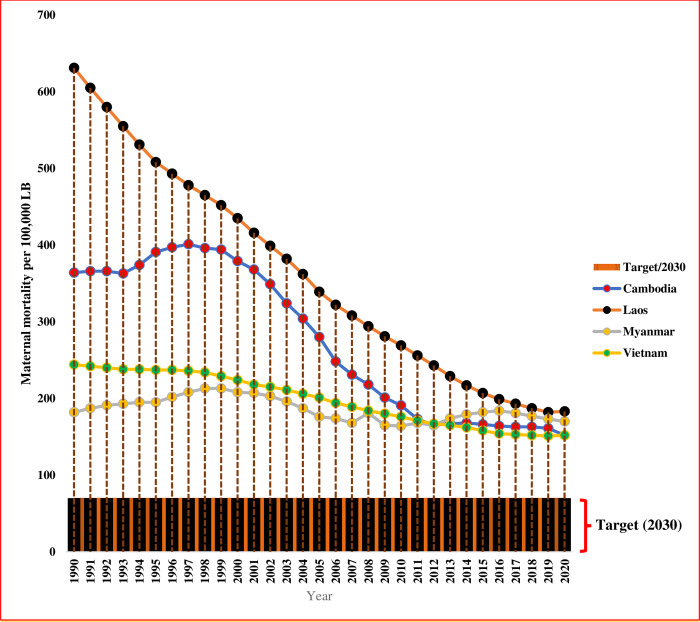
Background: A maternal mortality ratio is a sensitive indicator when comparing the overall maternal health between countries and its very high figure indicates the failure of maternal healthcare efforts. Cambodia, Laos, Myanmar, and Vietnam-CLMV countries are the low-income countries of the South-East Asia region where their maternal mortality ratios are disproportionately high. This systematic review aimed to summarize all possible factors influencing maternal mortality in CLMV countries.
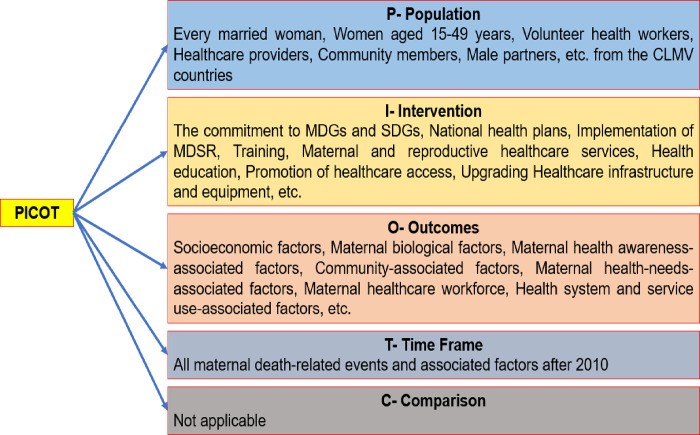
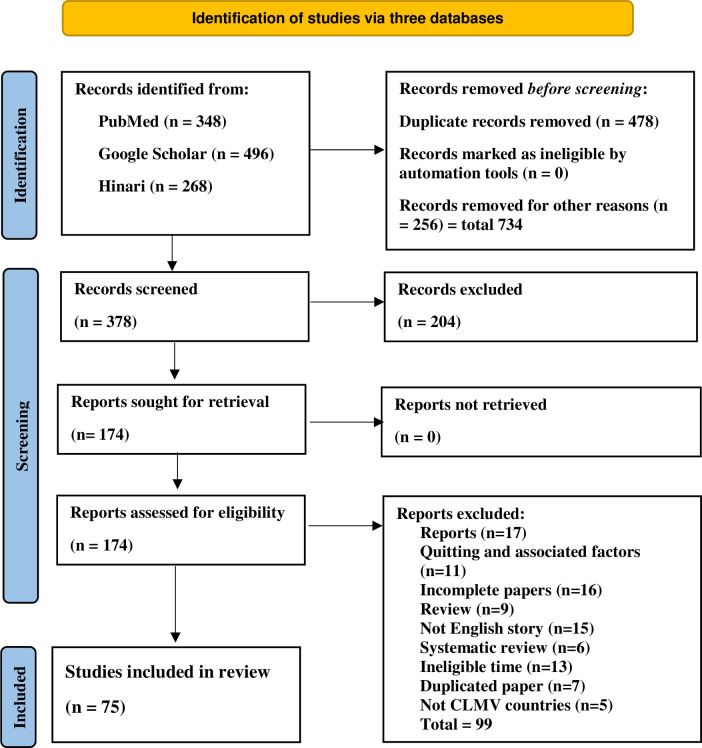
Methods: This systematic review applied "The Preferred Reporting Items for Systematic Reviews and Meta-Analyses (PRISMA) Checklist (2020)", Three key phrases: "Maternal Mortality and Health Outcome", "Maternal Healthcare Interventions" and "CLMV Countries" were used for the literature search. 75 full-text papers were systematically selected from three databases (PubMed, Google Scholar and Hinari). Two stages of data analysis were descriptive analysis of the general information of the included papers and qualitative analysis of key findings.
Results: Poor family income, illiteracy, low education levels, living in poor households, and agricultural and unskilled manual job types of mothers contributed to insufficient antenatal care. Maternal factors like non-marital status and sex-associated work were highly associated with induced abortions while being rural women, ethnic minorities, poor maternal knowledge and attitudes, certain social and cultural beliefs and husbands' influences directly contributed to the limitations of maternal healthcare services. Maternal factors that made more contributions to poor maternal healthcare outcomes included lower quintiles of wealth index, maternal smoking and drinking behaviours, early and elderly age at marriage, over 35 years pregnancies, unfavourable birth history, gender-based violence experiences, multigravida and higher parity. Higher unmet needs and lower demands for maternal healthcare services occurred among women living far from healthcare facilities. Regarding the maternal healthcare workforce, the quality and number of healthcare providers, the development of healthcare infrastructures and human resource management policy appeared to be arguable. Concerning maternal healthcare service use, the provisions of mobile and outreach maternal healthcare services were inconvenient and limited.
Conclusion: Low utilization rates were due to several supply-side constraints. The results will advance knowledge about maternal healthcare and mortality and provide a valuable summary to policymakers for developing policies and strategies promoting high-quality maternal healthcare.
Copyright: © 2024 Win et al. This is an open access article distributed under the terms of the Creative Commons Attribution License, which permits unrestricted use, distribution, and reproduction in any medium, provided the original author and source are credited.
Conflict of interest statement
The authors have declared that no competing interests exist.
Figures
References
-
- WHO, UNICEF, UNFPA, The World Bank and the United Nations Population Division ’Trends in Maternal Mortality 1990 to 2013’; 2014. September. 56 p.
-
- The Goalkeepers Report. Child Mortality Rate and Maternal Mortality Rate (2023). Available from: https://www.gatesfoundation.org/goalkeepers/report/2021-report/progress-... (Accessed: 2 October 2023)
-
- Yuan B, Målqvist M, Trygg N, Qian X, Ng N, Thomsen S. What interventions are effective on reducing inequalities in maternal and child health in low- and middle-income settings? A systematic review. BMC Public Health. 2014. Jun 21;14:634. doi: 10.1186/1471-2458-14-634 ; PMCID: PMC4083351. - DOI - PMC - PubMed
-
- MDG Monitor. Millennium Development Goals, 2017. Available at: https://www.mdgmonitor.org/millennium-development-goals/ (Accessed 23 August 2022).
Publication types
MeSH terms
LinkOut - more resources
Full Text Sources
