Combining inertial navigation with transacetabular ligament in total hip arthroplasty via direct anterior approach results in excellent accuracy compared to standard manual technique - A retrospective cohort study
- PMID: 38759152
- PMCID: PMC11101203
- DOI: 10.1051/sicotj/2024013
Combining inertial navigation with transacetabular ligament in total hip arthroplasty via direct anterior approach results in excellent accuracy compared to standard manual technique - A retrospective cohort study
Abstract
Background: Correct acetabular component placement plays a critical role in reducing early revisions after dislocations in total hip arthroplasty (THA). Although the transverse acetabular ligament (TAL) guides anteversion, inclination can only be accurately guided by navigation. In order to overcome the initial disadvantages with navigation, an imageless, easy-to-use inertial navigation system has been recently introduced. This study aims to analyze the accuracy of inclination with this navigation system compared to the standard manual technique.
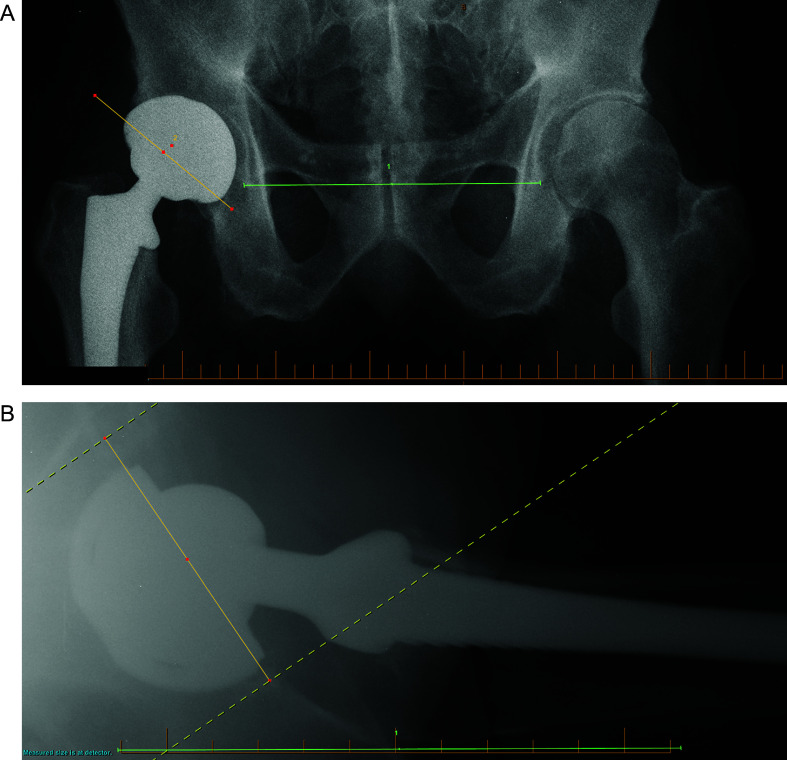
Methods: Two cohorts, manual technique (MT) and navigation (NAV) cohorts, consisted of 83 and 95 patients, respectively, after exclusion criteria were applied. Inclination target was 38° and anteversion was guided by TAL. Demographic data were collected, and anteroposterior (AP) pelvic and cross-table lateral radiographs were obtained 6 weeks post-operatively. Inclination and anteversion were determined on the AP pelvic and cross-table lateral radiograph, respectively.
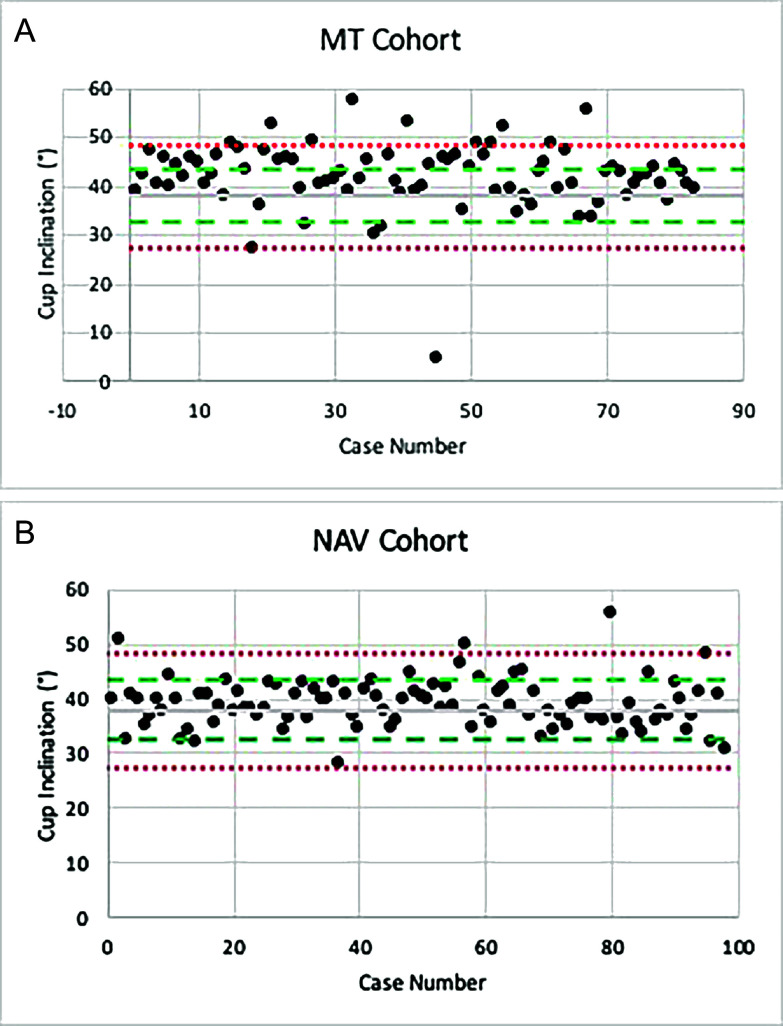
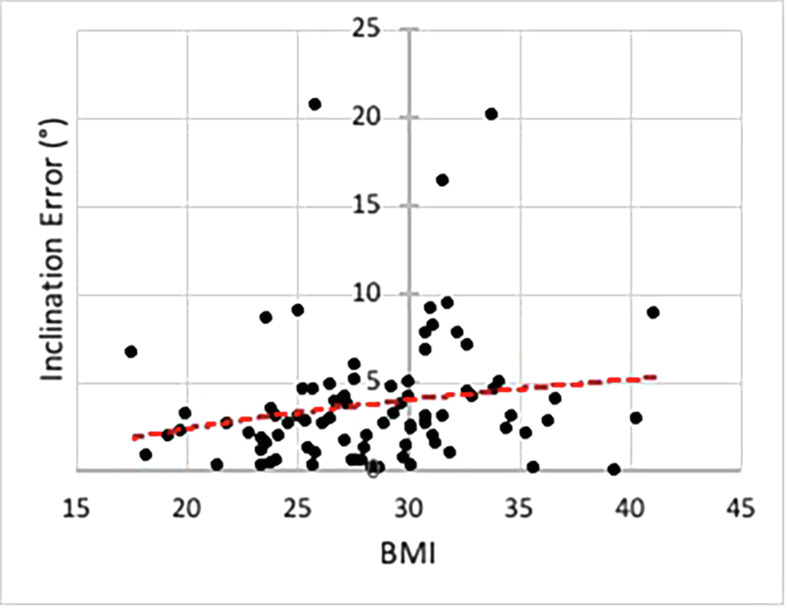
Results: A mean inclination of 41.8° (±6.8°) and 38.9° (±4.4°) was found in the MT and NAV cohorts, respectively. There was no statistical difference in gender, age, and BMI. If the inclination was set within 10° of the target (i.e., 38°), 88% of the MT cohort and 97% of the NAV cohort were within the target zone. Accuracy decreased to 53% and 83%, respectively, if the target zone range was narrowed down to ± 5°.
Conclusion: Combining inertial imageless navigation for inclination and TAL as a landmark for anteversion is significantly more accurate compared to the manual technique, without having the limitations and disadvantages of current standard navigational techniques.
Keywords: Navigation; Total hip arthroplasty; Transverse acetabular ligament.
© The Authors, published by EDP Sciences, 2024.
Conflict of interest statement
The authors declare that they have no relevant financial or non-financial interests to report.
Figures
References
-
- Australian Orthopaedic Association National Joint Replacement Registry (AOANJRR) (2022) Hip, knee & shoulder arthroplasty: 2022 annual report. AOA, Adelaide. Available at https://aoanjrr.sahmri.com/annual-reports-2022.
-
- Lewinnek GE, Lewis JL, Tarr R, Compere CL, Zimmerman JR (1978) Dislocations after total hip-replacement arthroplasties. J Bone Jt Surg Am 60, 217–220. - PubMed
-
- Wan Z, Boutary M, Dorr LD (2008) The influence of acetabular component position on wear in total hip arthroplasty. J Arthroplasty 23, 51–56. - PubMed
-
- Hevesi M, Wyles CC, Rouzrokh P, et al. (2022) Redefining the 3D topography of the acetabular safe zone. J Bone Jt Surg 104, 239–245. - PubMed
LinkOut - more resources
Full Text Sources
Miscellaneous