


International cross-cultural development and field testing of the primary care practice questionnaire for the PaRIS survey (PaRIS-PCPQ)
- PMID: 38760733
- PMCID: PMC11100105
- DOI: 10.1186/s12875-024-02375-8
International cross-cultural development and field testing of the primary care practice questionnaire for the PaRIS survey (PaRIS-PCPQ)
Abstract
Background: The PaRIS survey, an initiative of the Organisation for Economic Co-operation and Development (OECD), aims to assess health systems performance in delivering primary care by measuring the care experiences and outcomes of people over 45 who used primary care services in the past six months. In addition, linked data from primary care practices are collected to analyse how the organisation of primary care practices and their care processes impact care experiences and outcomes. This article describes the development and validation of the primary care practice questionnaire for the PaRIS survey, the PaRIS-PCPQ.
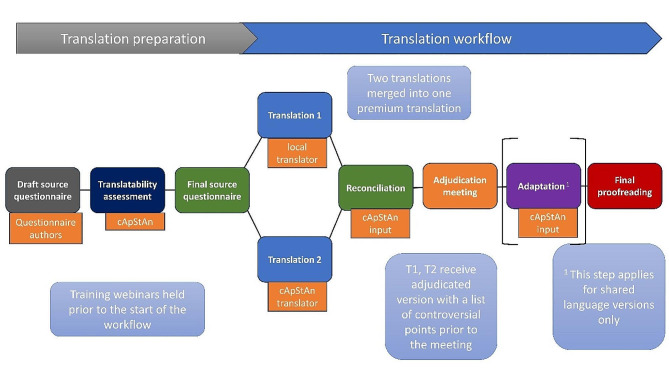
Method: The PaRIS-PCPQ was developed based on domains of primary care practice and professional characteristics included in the PaRIS conceptual framework. Questionnaire development was conducted in four phases: (1) a multi-step consensus-based development of the source questionnaire, (2) translation of the English source questionnaire into 17 languages, (3) cross-national cognitive testing with primary care professionals in participating countries, and (4) cross-national field-testing.
Results: 70 items were selected from 7 existing questionnaires on primary care characteristics, of which 49 were included in a first draft. Feedback from stakeholders resulted in a modified 34-item version (practice profile, care coordination, chronic care management, patient follow-up, and respondent characteristics) designed to be completed online by medical or non-medical staff working in a primary care practice. Cognitive testing led to changes in the source questionnaire as well as to country specific localisations. The resulting 32-item questionnaire was piloted in an online survey and field test. Data from 540 primary care practices from 17 countries were collected and analysed. Final revision resulted in a 34-item questionnaire.
Conclusions: The cross-national development of a primary care practice questionnaire is challenging due to the differences in care delivery systems. Rigorous translation and cognitive testing as well as stakeholder engagement helped to overcome most challenges. The PaRIS-PCPQ will be used to assess how key characteristics of primary care practices relate to the care experiences and outcomes of people living with chronic conditions. As such, policymakers and care providers will be informed about the performance of primary care from the patient's perspective.
Keywords: Chronic care; PaRIS survey; Patient-centred care; Patient-reported experience measures; Patient-reported outcome measures; People-centred healthcare system; Primary care.
© 2024. The Author(s).
Conflict of interest statement
The authors’ institutes received funding from OECD Member countries, other countries participating in the PaRIS survey and the European Commission to develop and implement the PaRIS survey. Authors AR, RW, OG and JB work for a private company.
Figures
References
MeSH terms
LinkOut - more resources
Full Text Sources
Research Materials
Miscellaneous