


Synchronous supraclavicular vascularized lymph node transfer and liposuction for gynecological cancer-related lower extremity lymphedema: A clinical comparative analysis of three different procedures
- PMID: 38761979
- PMCID: PMC11523359
- DOI: 10.1016/j.jvsv.2024.101905
Synchronous supraclavicular vascularized lymph node transfer and liposuction for gynecological cancer-related lower extremity lymphedema: A clinical comparative analysis of three different procedures
Abstract
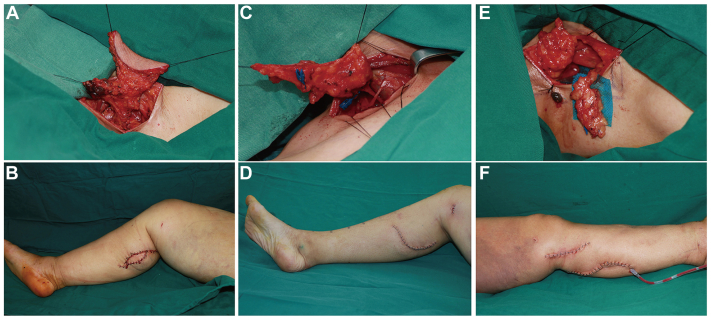
Objective: Gynecological cancer-related lower extremity lymphedema (GC-LEL), a chronic, progressive condition, lacks a standardized treatment. Currently, supraclavicular vascularized lymph node transfer (SC-VLNT) is a favored approach in the treatment of lymphedema, and there is a trend toward combination technology. This study conducts a comparative analysis of three techniques for treating GC-LEL with simultaneous SC-VLNT and liposuction.
Methods: A cohort of 35 patients with GC-LEL was examined, comprising 13 patients who underwent single lymph nodes flap with a skin paddle (SLNF+P), 12 who received single lymph nodes flap without a skin paddle (SLNF), and 10 who accepted dual lymph nodes flap without a skin paddle (DLNF). Patient demographics and outcomes were meticulously documented, covering intra- and postoperative variables.
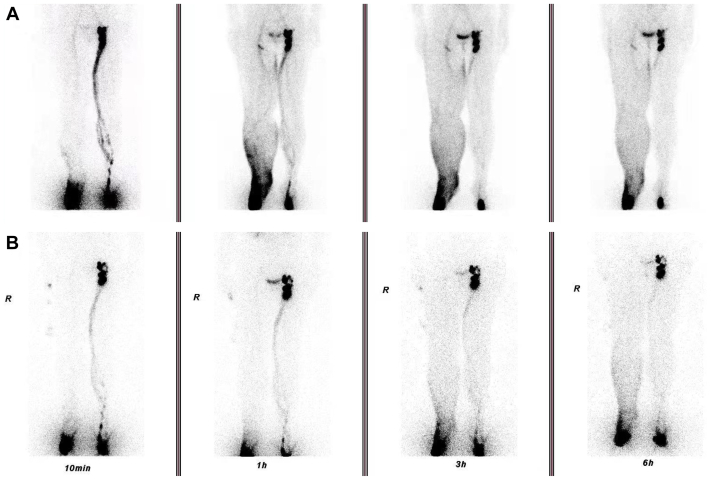
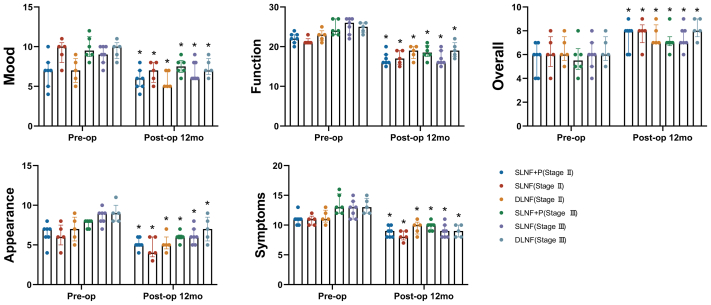
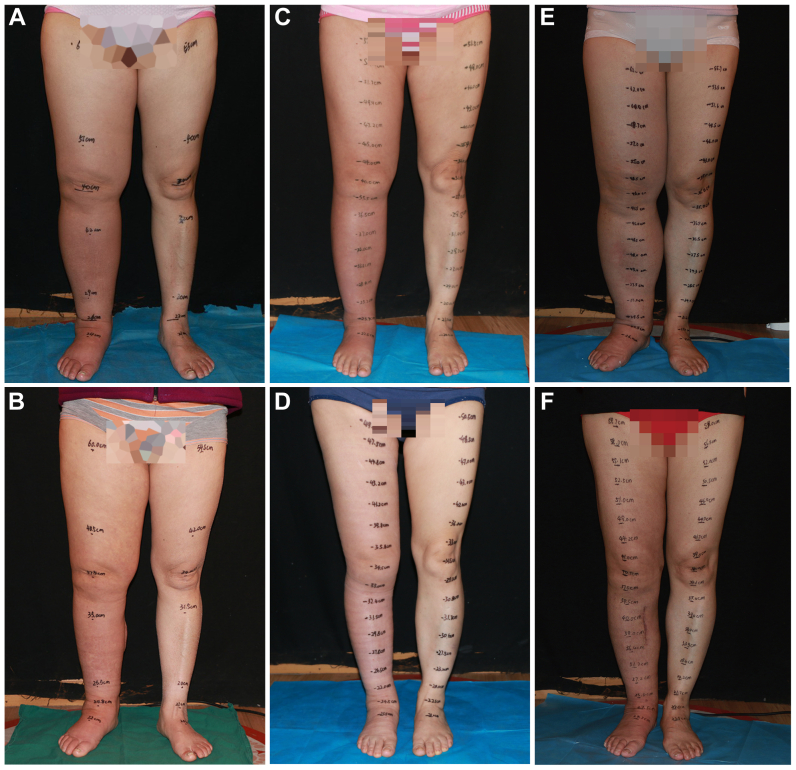
Results: The median limb volume reduction were 56.4% (SLNF+P), 60.8% (SLNF), and 50.5% (DLNF) in stage II, and 54.0% (SLNF+P), 59.8% (SLNF), and 54.4% (DLNF) in stage III. DLNF group procedures entailed longer flap harvesting and transplantation times. The SLNF+P group, on average, had an 8-day postoperative hospitalization, longer than others. All patients noted subjective improvements in Lymphedema Quality of Life scores, with lymphoscintigraphy revealing enhanced lymphatic flow in 29 of the 35 cases. A notable decrease in cellulitis incidence was observed. Additionally, the occurrence of cellulitis decreased significantly, except for DLNF (Stage Ⅱ). The median follow-up time was 16 months (range, 12-36 months), with no reported severe postoperative complications.
Conclusions: For advanced GC-LEL, SLNF combined with liposuction is a preferred treatment, offering fewer complications, shorter operative time, and hospitalization.
Keywords: Combination therapy; Liposuction; Lower extremity; Lymphedema; Vascularized lymph node.
Copyright © 2024 The Author(s). Published by Elsevier Inc. All rights reserved.
Conflict of interest statement
Disclosures None.
Figures

References
-
- Grada A.A., Phillips T.J. Lymphedema: pathophysiology and clinical manifestations. J Am Acad Dermatol. 2017;77:1009–1020. - PubMed
-
- Yoshihara M., Shimono R., Tsuru S., et al. Risk factors for late-onset lower limb lymphedema after gynecological cancer treatment: a multi-institutional retrospective study. Eur J Surg Oncol. 2020;46:1334–1338. - PubMed
-
- Dayan J.H., Ly C.L., Kataru R.P., Mehrara B.J. Lymphedema: pathogenesis and novel therapies. Annu Rev Med. 2018;69:263–276. - PubMed
Publication types
MeSH terms
LinkOut - more resources
Full Text Sources
Medical
Miscellaneous
