


Circulating total and H-specific GDF15 levels are elevated in subjects with MASLD but not in hyperlipidemic but otherwise metabolically healthy subjects with obesity
- PMID: 38762719
- PMCID: PMC11102634
- DOI: 10.1186/s12933-024-02264-5
Circulating total and H-specific GDF15 levels are elevated in subjects with MASLD but not in hyperlipidemic but otherwise metabolically healthy subjects with obesity
Abstract
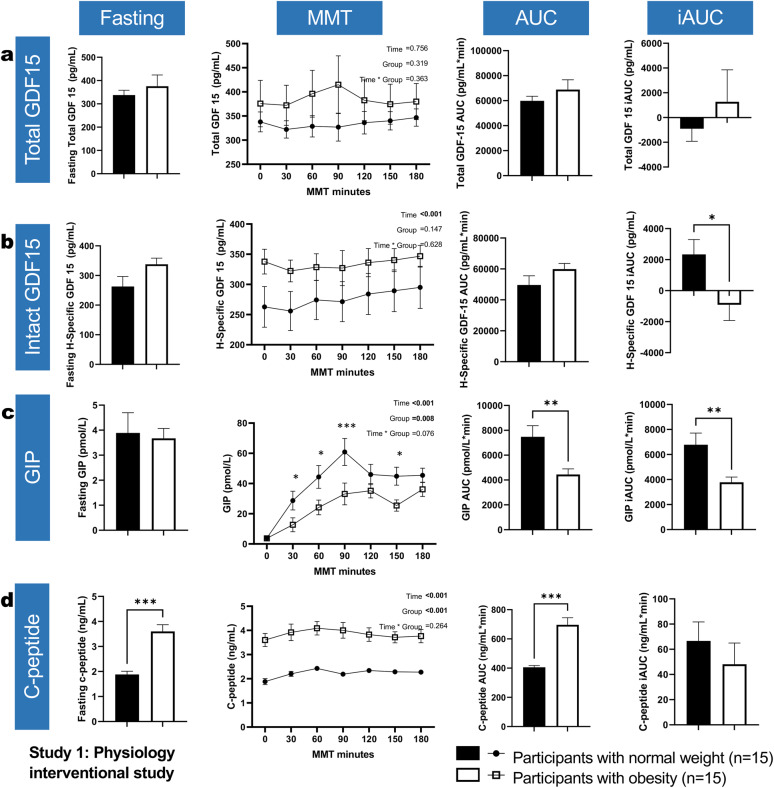
Background: Growth differentiation factor 15 (GDF15) is a mitokine, the role of which, total or H-specific, in modulating energy metabolism and homeostasis in obesity-related diseases, such as metabolic dysfunction associated steatotic liver disease (MASLD), has not been fully elucidated in adult humans. We aimed to investigate the fasting and stimulated levels of GDF15, total and H-specific, glucose-dependent insulinotropic polypeptide (GIP) and C-peptide, in two physiology interventional studies: one focusing on obesity, and the other on MASLD.
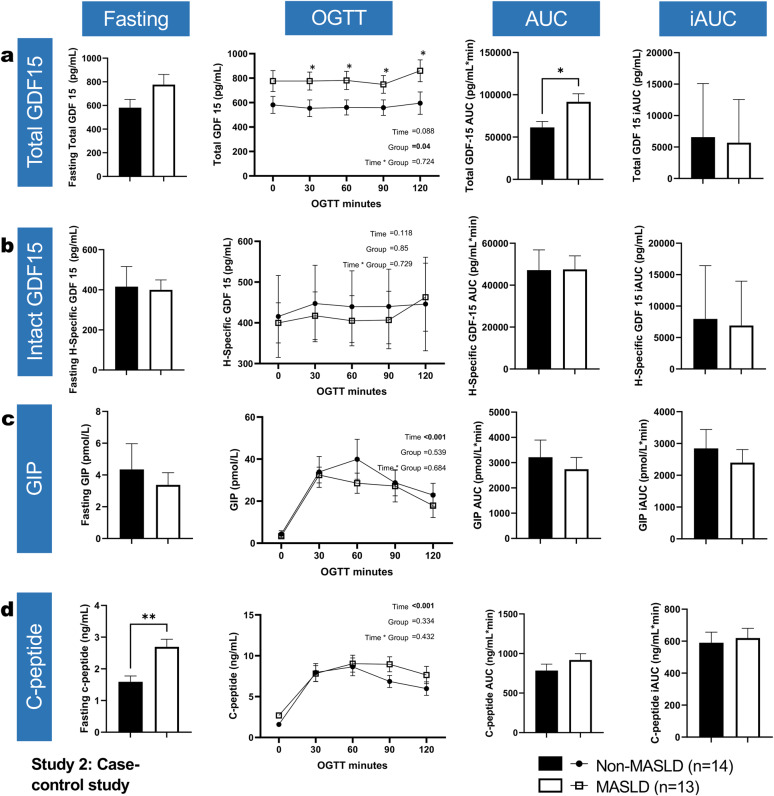
Methods: Study 1 investigated individuals with normal weight or with obesity, undergoing a 3-h mixed meal test (MMT); and study 2, examined adults with MASLD and controls undergoing a 120-min oral glucose tolerance test (OGTT). Exploratory correlations of total and H-specific GDF15 with clinical, hormonal and metabolomic/lipidomic parameters were also performed.
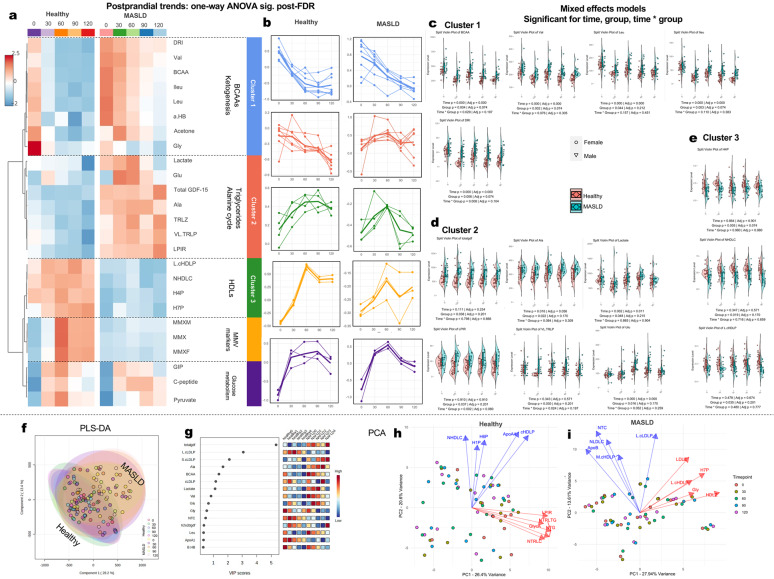
Results: In study 1, 15 individuals were included per weight group. Fasting and postprandial total and H-specific GDF15 were similar between groups, whereas GIP was markedly higher in leaner individuals and was upregulated following a MMT. Baseline and postprandial C-peptide were markedly elevated in people with obesity compared with lean subjects. GIP was higher in leaner individuals and was upregulated after a MMT, while C-peptide and its overall AUC after a MMT was markedly elevated in people with obesity compared with lean subjects. In study 2, 27 individuals were evaluated. Fasting total GDF15 was similar, but postprandial total GDF15 levels were significantly higher in MASLD patients compared to controls. GIP and C-peptide remained unaffected. The postprandial course of GDF15 was clustered among those of triglycerides and molecules of the alanine cycle, was robustly elevated under MASLD, and constituted the most notable differentiating molecule between healthy and MASLD status. We also present robust positive correlations of the incremental area under the curve of total and H-specific GDF15 with a plethora of lipid subspecies, which remained significant after adjusting for confounders.
Conclusion: Serum GDF15 levels do not differ in relation to weight status in hyperlipidemic but otherwise metabolically healthy individuals. In contrast, GDF15 levels are significantly increased in MASLD patients at baseline and they remain significantly higher compared to healthy participants during OGTT, pointing to a role for GDF15 as a mitokine with important roles in the pathophysiology and possibly therapeutics of MASLD. Trial registration ClinicalTrials.gov NCT03986684, NCT04430946.
Keywords: C-peptide; GIP; Growth differentiation factor 15; Mixed meal test; Non-alcoholic fatty liver disease; Obesity; Oral glucose tolerance test.
© 2024. This is a U.S. Government work and not under copyright protection in the US; foreign copyright protection may apply.
Conflict of interest statement
CB, KS, VG, LV-V, SS and IAA have nothing to declare. MAC is an employee of and holds stock in Labcorp. AK has received grants through his institution and consulting fees from Novo Nordisk, Pharmaserve Lilly, Elpen pharmaceuticals, as well as consulting fees from Astra Zeneca, MSD, Sanofi, Bausch Health, Ethicon, Galenica Pharma, and Epsilon Health. None is related to the work presented herein. CSM reports grants through his institution from Merck and Boehringer Ingellheim, grants through his institution and personal consulting fees from Coherus Inc., AltrixBio, and reports personal consulting fees and support with research reagents from Ansh Inc., reports personal consulting fees from Genfit, Lumos, Amgen, Corcept, Intercept, 89Bio, AstraZeneca and Regeneron, reports travel support and fees from TMIOA, Elsevier, College Internationale Research Servier and the Cardio Metabolic Health Conference. None is related to the work presented herein.
Figures
References
-
- Tritos NA, Mantzoros CS. Clinical review 97 syndromes of severe insulin resistance. 1998 [cited 2023 Jul 27]. Accessed from https://academic.oup.com/jcem/article/83/9/3025/2865106. - PubMed
Publication types
MeSH terms
Substances
Associated data
LinkOut - more resources
Full Text Sources
Medical
