. 2024 Jun;45(6):428-441.
doi: 10.1016/j.it.2024.04.010. Epub 2024 May 18.

A model of dysregulated crosstalk between dendritic, natural killer, and regulatory T cells in chronic obstructive pulmonary disease

Affiliations

A model of dysregulated crosstalk between dendritic, natural killer, and regulatory T cells in chronic obstructive pulmonary disease

Dawit T Mengistu et al. Trends Immunol. 2024 Jun.

Abstract

Chronic obstructive pulmonary disease (COPD) is characterized by infiltration of the airways and lung parenchyma by inflammatory cells. Lung pathology results from the cumulative effect of complex and aberrant interactions between multiple cell types. However, three cell types, natural killer cells (NK), dendritic cells (DCs), and regulatory T cells (Tregs), are understudied and underappreciated. We propose that their mutual interactions significantly contribute to the development of COPD. Here, we highlight recent advances in NK, DC, and Treg biology with relevance to COPD, discuss their pairwise bidirectional interactions, and identify knowledge gaps that must be bridged to develop novel therapies. Understanding their interactions will be crucial for therapeutic use of autologous Treg, an approach proving effective in other diseases with immune components.


Conflict of interest statement

Declaration of interests The authors declare no competing interests.

Figures
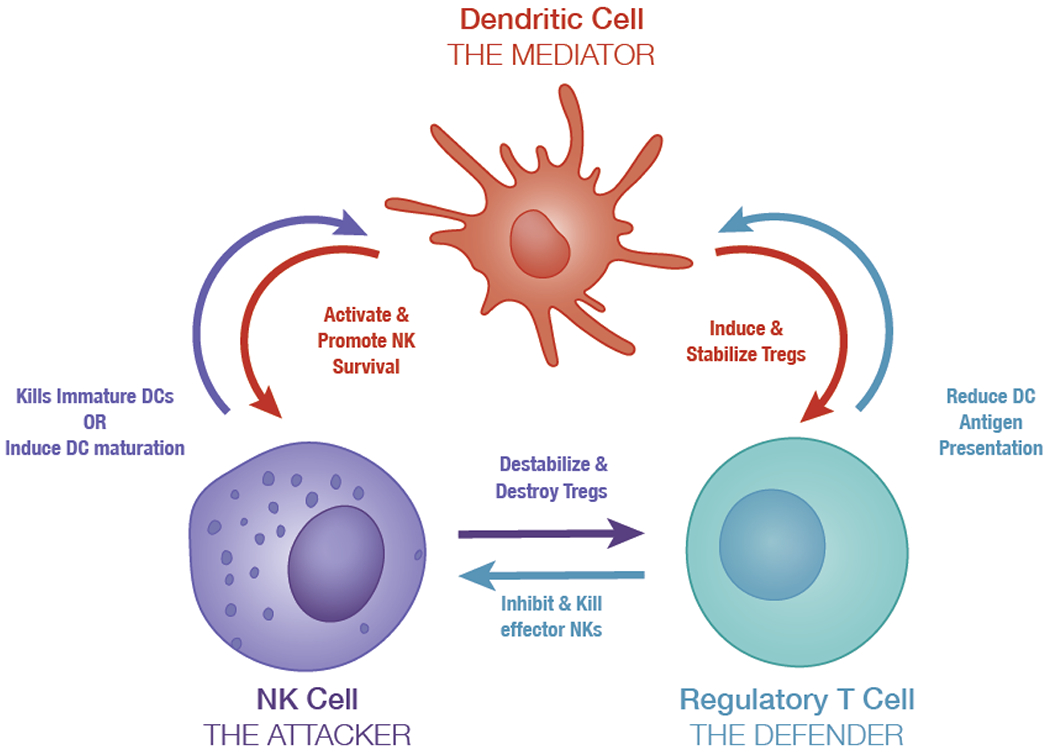
Key Figure, Figure 1.
Key Figure, Figure 1.. A model of NK, DC, and Treg cell crosstalk and putative contributions to emphysema pathogenesis.
Interactions between cDC, NK, and Treg are reciprocal and could become dysregulated, leading to progression of COPD. DC (red arrows) have both pro-inflammatory (activating NKs [24, 30], promoting their survival [69, 70]) and tolerogenic functions (inducing Treg polarization [–78]), depending on their microenvironment. NKs (purple arrows) have predominantly cytotoxic functions and can kill both immature DCs [71] and Tregs [91]. NKs may also induce DC maturation [71, 72]. Treg are responsible for dampening immune responses. They can act on NKs by either inhibiting NK cytotoxicity[57, 58] or killing activated NKs[88] but they can impact downstream DC functions by impairing DC antigen presentation [–56]. Illustration by Patricia Ferrer Beals.
Figure 2.
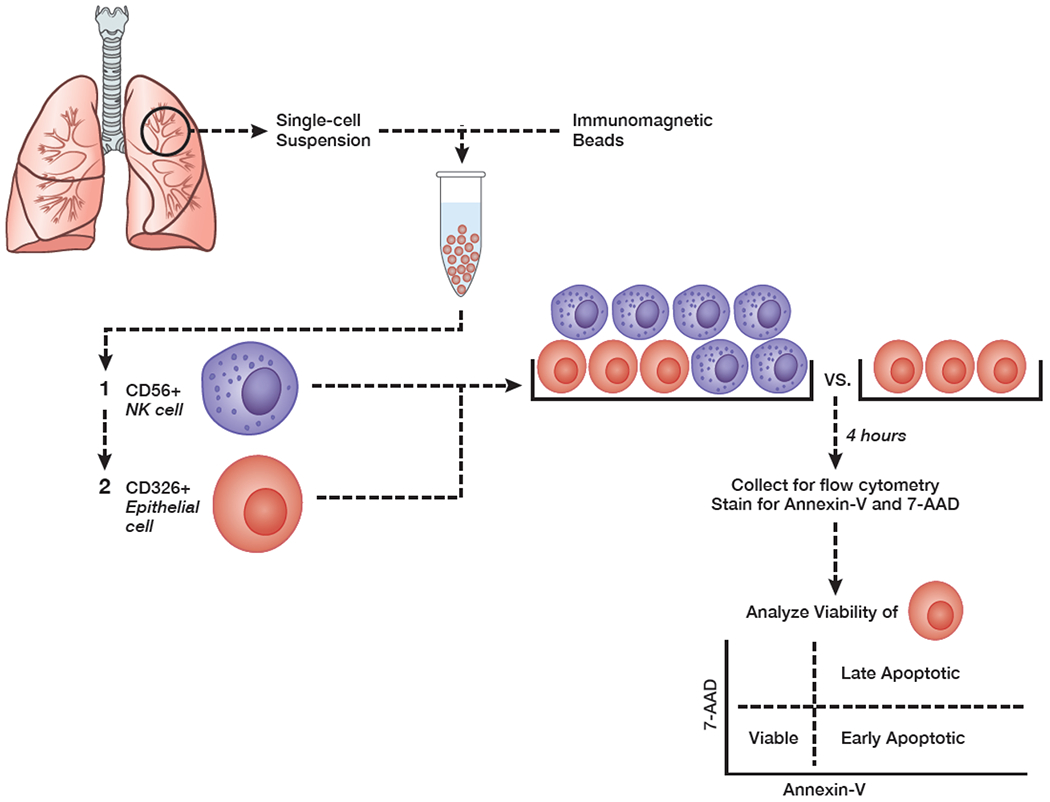
Figure 2.. Assay of NK cytotoxic function in vitro.
Lung tissue is disaggregated; then, antibody-labeled magnetic beads are added to the single cell suspension to sequentially isolate NK (CD56+) cells and then epithelial (CD326+) cells. Isolated cells are co-cultured at a ratio of 10 NK cells to 1 epithelial cell for 4 hours. Epithelial cells are cultured alone to control for spontaneous cell death. Cells are collected and stained for Annexin-V and 7-AAD. Epithelial cell viability is assessed by flow cytometry [24, 25, 30]. Illustration by Patricia Ferrer Beals.
Figure 3.
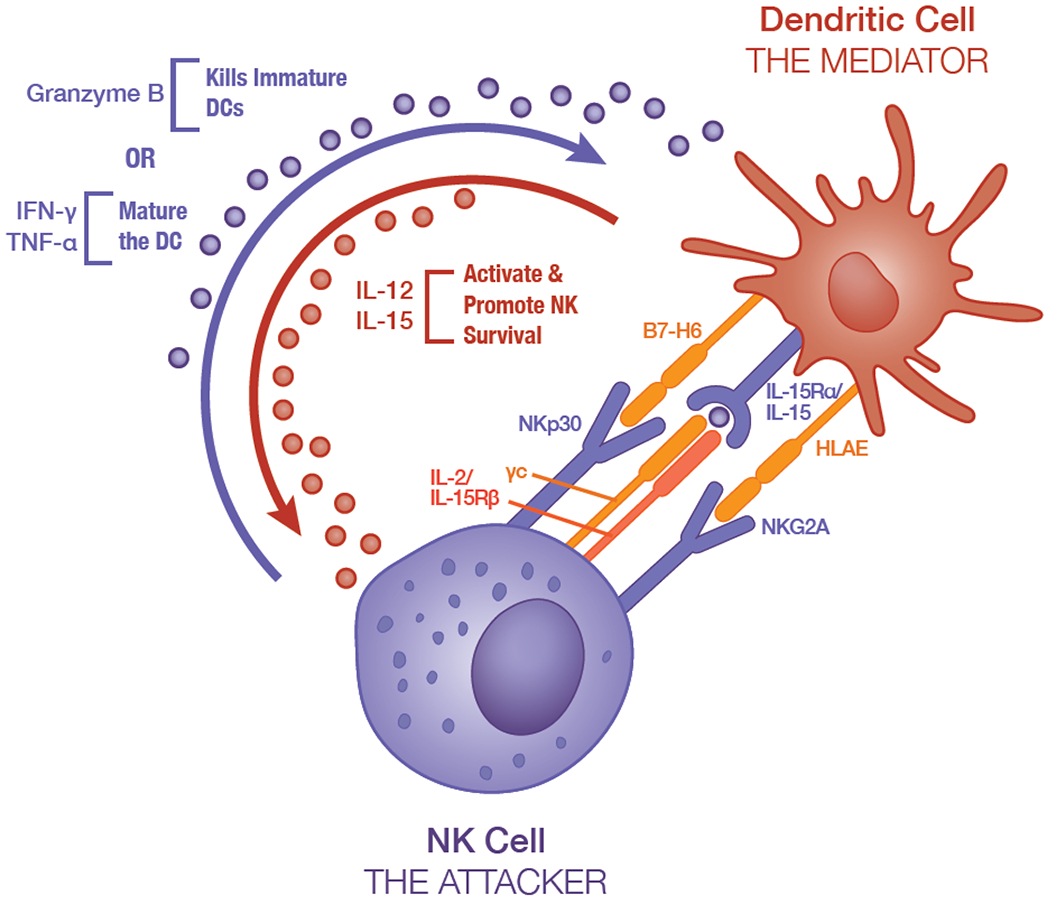
Figure 3.. DC-NK cell interactions.
DC activities (red arrows) include activation/priming of NK and promoting their survival either indirectly through cytokine release (IL-12 or IL-15 [69, 70]), or directly by IL-15Rα trans-presentation[30]. These activities could occur either in regional lymph nodes or within the lung [20, 47], a point that requires definition using experimental models and human tissue samples. NK (purple arrows) can drive DC maturation via the production of IFN-γ and TNF-α, which can be enhanced by NKp30 signaling via the DCexpressed ligand B7-H6 [71]. Alternatively, NK can recognize immature DC due to their lower expression (relative to mature DC) of HLA-E (a ligand for the inhibitory receptor NKG2A) and can kill them via lytic molecules [71] such as Granzyme B [24]. Illustration by Patricia Ferrer Beals.
Figure 4.
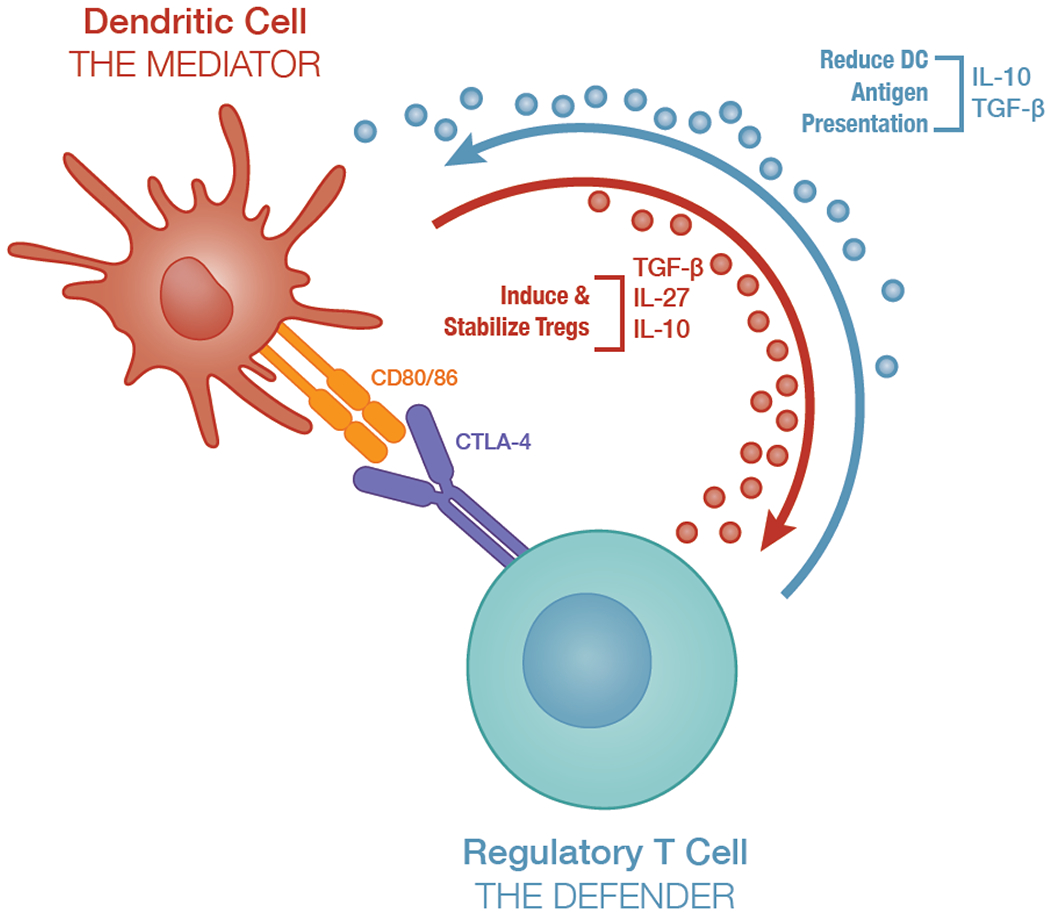
Figure 4.. DC- Treg interactions.
Within lymph nodes, DC induce the polarization of naïve T cells to Treg and stabilize that phenotype through the production of various cytokines, including (but not limited to) TGF-β [79], IL-10, and IL-27 [–77]. DC can also promote Treg polarization by inducing CTLA-4 upregulation [78]. These activities likely occur within tertiary lymphoid tissue that develops adjacent to bronchovascular bundles in advanced COPD [9]. Treg (blue arrows) can reduce DC antigen presentation via Treg-derived cytokines, including IL-10 and TGF-β [–86]. CTLA-4, highly expressed by Treg, binds CD80/CD86 on DC, reducing their ability to prime naïve T cells [56]. Illustration by Patricia Ferrer Beals.
Figure 5.
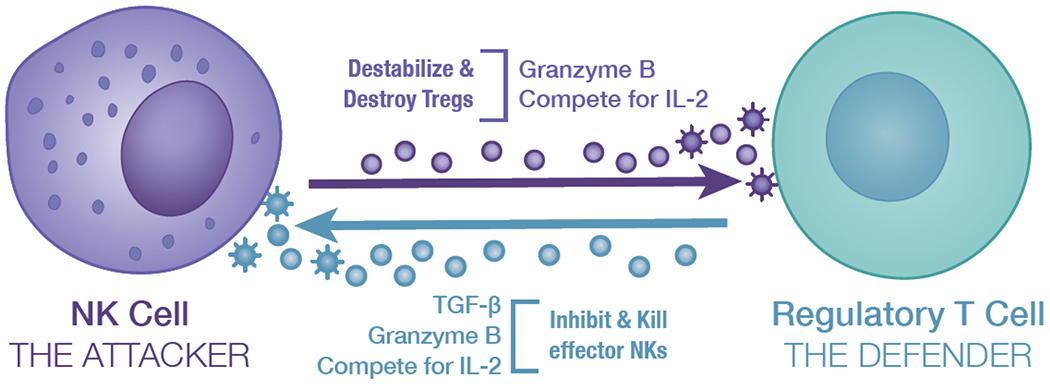
Figure 5.. NK-Treg interactions.
NK can destroy Treg via lytic granules such as Granzyme B [91] or destabilize them through competition for IL-2 [93]. Similarly, Treg can potentially kill NK via these same shared mechanisms [89], or alternatively, can suppress NK activity via TGF-β [57, 58]. Illustration by Patricia Ferrer Beals.

References

    1. Singh D. et al. (2019) Global strategy for the diagnosis, management, and prevention of chronic obstructive lung disease: the GOLD science committee report 2019. Eur. Respir. J 53, pii: 1900164. - PubMed
    1. Saint-André V. et al. (2024) Smoking changes adaptive immunity with persistent effects. Nature. 626, 827–835. - PMC - PubMed
    1. Su X. et al. (2023) Global, regional, and national burden of COPD attributable to occupational particulate matter, gases, and fumes, 1990-2019: Findings from the Global Burden of Disease Study 2019. Int. J. Chron. Obstruct. Pulmon. Dis 18, 2971–2983. - PMC - PubMed
    1. Shrine N et al. (2023) Multi-ancestry genome-wide association analyses improve resolution of genes and pathways influencing lung function and chronic obstructive pulmonary disease risk. Nat. Genet 55, 410–422. - PMC - PubMed
    1. Cho MH et al. (2022) Genetics of chronic obstructive pulmonary disease: understanding the pathobiology and heterogeneity of a complex disorder. Lancet Respir. Med 10, 485–496. - PMC - PubMed

Publication types

MeSH terms